As an Amazon Associate, UK Gold Prospector earns from qualifying purchases. We also have a commercial partnership with Regton (a reader discount code; no commission on Regton links at present). Links cost you nothing extra.
Short answer
You can pan for gold in four UK regions: Scotland (Leadhills and Wanlockhead in the Lowther Hills, the Strath of Kildonan and Helmsdale in Sutherland, and Tyndrum in the Highlands), Wales (the Dolgellau gold belt and Mawddach catchment near Snowdonia), England (Cornwall, Devon and the Lake District in Cumbria), and Northern Ireland (the Sperrin Mountains of County Tyrone). Scotland is the only nation with permit-backed sites open to the public, and Wanlockhead — licences sold by the Museum of Lead Mining (closed to visitors until spring 2027; buy by phone or email) — is the easiest place in Britain to pan legally, though a licence is the landowner's permission to pan that ground and does not by itself make the gold yours. Everywhere else you need the landowner's permission, and the gold itself is not yours by default.
Here is a fact that stops most people mid-sentence: there is gold in British rivers. Real gold — the same metal that made the rings on royal fingers and the crowns on Scottish kings. It is sitting in gravel beds within a day's drive of where you are reading this, and on a handful of carefully run sites you can legally crouch down, swirl a pan, and lift it out yourself this weekend. The question is not whether Britain has gold. The question is where.
And the answer is more specific — and more colourful — than you might think. Welsh gold from one small belt of hills has supplied the wedding rings of British royalty since 1923. In 1868, news of gold in a Highland strath triggered a genuine gold rush, with hundreds of hopefuls living in a shanty town they called Baile an Or — the "town of gold." Scotland's medieval crowns were struck from native gold panned in the Lowther Hills. This is not folklore. It is documented history, and the rivers that carried that gold still carry it today. If you want to know exactly which ones, we have listed 93 gold-bearing rivers in the UK, nation by nation.
This guide is the map of the map. It walks you through every genuine UK gold region, what each one offers, where the law lets you pan and where it does not, and which single site a complete beginner should start with. Every named river and goldfield is plotted on the UK Gold Prospector interactive map with GPS coordinates and access notes. If you do one thing after reading, open the live map and find the gold nearest you.
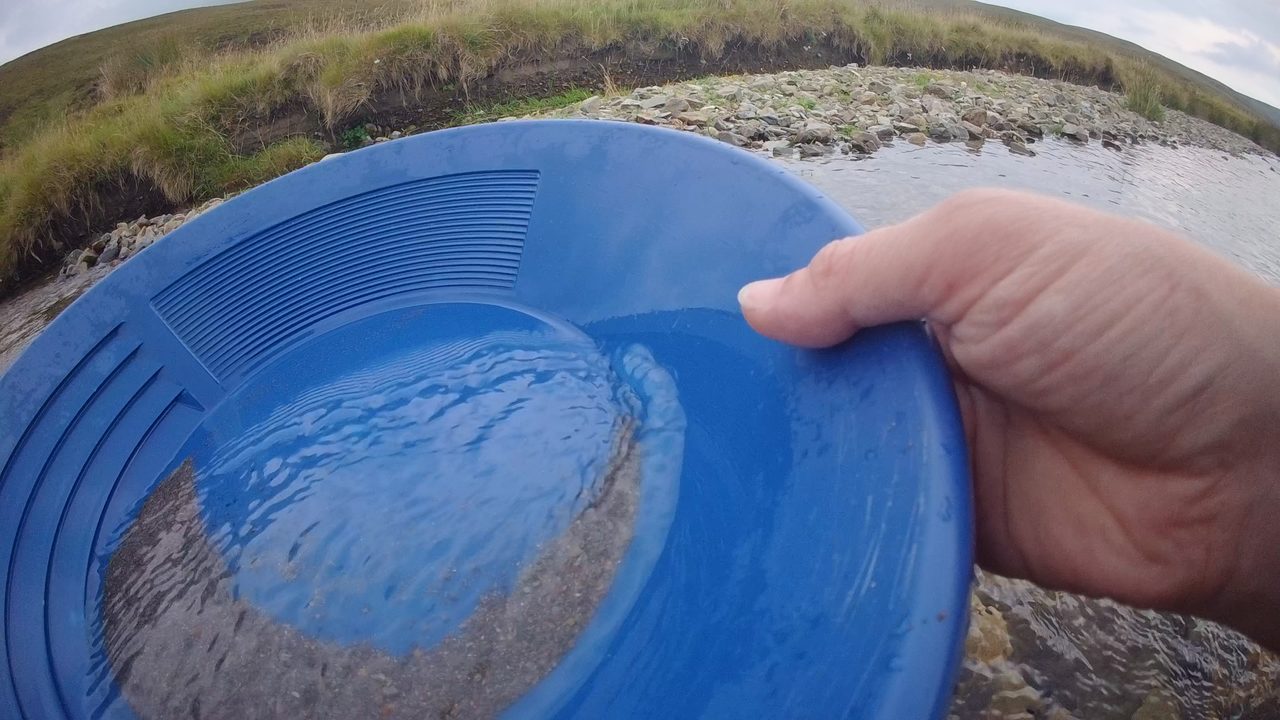
In this guide
- The UK gold-panning regions at a glance
- Yes, Britain really has gold
- The one rule that applies everywhere
- Can you keep the gold you find?
- Scotland — the UK's gold-panning capital
- Wales — the royal-gold belt
- England — Cornwall, Devon and Cumbria
- Northern Ireland — the Sperrins
- Where should a beginner start?
- Frequently asked questions
See every UK gold site on the live map
All 200 BGS-verified locations with GPS coordinates, access notes and geology — Wanlockhead, Kildonan, Tyndrum, the Dolgellau belt and the rest, mapped in seconds.
The UK Gold-Panning Regions at a Glance
Before the stories, here is the whole picture in one table — pick the row that matches you. The single most important practical question is in the last column: can you just turn up and pay, or must you arrange permission yourself before you travel?
| If you are… | Go to | Permission you need |
|---|---|---|
| A total beginner with no kit | Wanlockhead (Lowther Hills, Scotland) | Day, week or year licence from the Museum of Lead Mining (closed to visitors until spring 2027; buy by phone or email) |
| Chasing the history | Kildonan / Helmsdale (Sutherland) | Day permit from the Suisgill Estate |
| Touring the Highlands | Tyndrum (Strathfillan) | Permit from the Strathfillan Community Development Trust |
| Based in Wales | Dolgellau belt / Mawddach | Landowner permission + NRW compliance (no permit site) |
| In the South West / North West of England | Cornwall, Devon or the Lake District | Landowner permission + EA compliance (no permit site) |
| In Northern Ireland | The Sperrins (Tyrone / Londonderry) | Landowner permission + DAERA; some ground under mineral licence |
The headline: if you want to buy a permit and pan with no prior contacts, you go to Scotland — and specifically to Wanlockhead, with licences from the Museum of Lead Mining. Everywhere else in the UK is real gold country, but it requires you to secure landowner permission and meet environmental rules yourself. Who sells each Scottish permit, and what it costs, is in our list of UK permit prices.
Yes, Britain Really Has Gold
It is worth pausing on this, because the disbelief is the whole reason most people never try. Gold feels like a Klondike or an Australian-outback story — not a Sunday in the Scottish hills. Yet the evidence runs back centuries and is still being added to. If you want the short version first, read can you find gold in the UK? — it gives the direct yes, with the proof — and the best gold panning locations in the UK ranks the top ten spots.
The Crown of Scotland, remade in 1540 for James V and still part of the Honours of Scotland, was worked with Scottish gold from the Leadhills and Wanlockhead district. Welsh gold from the Dolgellau belt has gone into British royal wedding rings since the Queen Mother's in 1923, including the rings of the Princess of Wales in 2011. And the rivers are not finished: Scotland's Reunion Nugget, found in 2019, weighed 121.3 grams, and the Douglas Nugget of 2016 weighed 85.7 grams — both made national news. Hard-rock gold is still mined commercially today at Cononish near Tyndrum in the Highlands, and at the Cavanacaw (Omagh) and Curraghinalt deposits in Northern Ireland's Sperrins.
So the gold is real. What a recreational panner finds, though, is the alluvial version of it — fine flake washed out of those source rocks and trapped in river gravels. Set your expectations honestly: nuggets are once-in-a-lifetime events, and a good day is a scatter of flakes in a vial, not a pouch of metal. The pull of UK panning is the history, the landscape and the craft of reading a river — gold you can hold is the bonus, not the wage.
The One Rule That Applies Everywhere
Before you pan anywhere in Britain, understand the law in one sentence: gold is a Mine Royal — in most cases it belongs to the Crown, and it is never automatically yours. Under the Mines Royal rules (the Royal Mines Act 1424 in Scotland, royal prerogative in England and Wales), the gold and silver in the ground are vested in the Crown, not in whoever owns the land or the river; in Scotland the rights were granted away by deed in some areas, including Sutherland and parts of Argyll. The metal you recover is not automatically yours by right.
On top of Crown ownership there is no general public right to dig for or remove gold from a riverbed. To pan legally you need two things: the landowner's permission for the specific stretch, and compliance with the relevant environmental rules — SEPA in Scotland, the Environment Agency in England, Natural Resources Wales in Wales, and DAERA in Northern Ireland — including the salmon and trout spawning closures that protect most gold-bearing rivers over winter and spring.
The exceptions that make life easy are the Scottish permit schemes, where a landowner or community trust has already set up a recreational arrangement and sells you the cover over the counter. Wanlockhead and Leadhills are the main place in the UK set up for paid recreational permits. The full legal background, nation by nation, is in our UK gold panning laws guide — read it before your first trip.
Can You Keep the Gold You Find?
This is the question that follows naturally from the law above, and the honest answer has two layers. Strictly, because gold is Crown property, the flakes in your pan are not automatically yours by right. At Scotland's recreational permit sites, a Wanlockhead, Kildonan or Tyndrum permit is the landowner's permission to pan that ground; it does not by itself make the gold yours. The Strathfillan Community Development Trust's own Tyndrum page says "you can pan for gold, but it is against the law to remove or sell the gold you find". Keeping a few small flakes for personal use is, at most, tolerated in practice.
Where it changes is scale and intent. Selling gold, recovering it in quantity, or panning at all without permission are different matters and fall outside that informal recreational tolerance. The clean rule for any beginner: pan only under a valid permit or with explicit landowner consent, keep it to hand-panning and casual flakes, and confirm the permit's terms with the permit holder before you start.
Scotland — the UK's Gold-Panning Capital
If Britain has a gold heartland, it is Scotland — and it is the only place where a complete beginner can buy a permit and pan legally the same day. Three things line up here: real gold-bearing bedrock in the Highlands and Southern Uplands, a glaciated landscape that washed that gold into the rivers, and the main established permit schemes where the law, the landowner and the river finally agree. The full breakdown is in our best gold panning locations in Scotland guide; here are the three sites that matter most.
Wanlockhead and Leadhills (Lowther Hills)
The easiest entry point in Britain, and the place that crowned kings. The Wanlockhead and Leadhills district in the Lowther Hills has produced gold since at least the 16th century — gold from here went into the Scottish regalia. Today the Museum of Lead Mining at Wanlockhead sells panning licences for the Mennock Water and Wanlock Water on behalf of Buccleuch Estate, as day, week or annual options, and runs taught beginner courses where pans, classifiers and tuition are bundled in. Once the museum reopens (it is closed to visitors until spring 2027), you can arrive with no kit and no experience and be finding real Scottish flake gold the same afternoon. Check current licence prices and course availability with the Museum of Lead Mining before travelling.
Kildonan and Helmsdale (Sutherland)
The site with the gold-rush story. The Strath of Kildonan, running inland from Helmsdale on the Sutherland coast, is where Robert Nelson Gilchrist's prospecting trip sparked the 1868–69 Sutherland Gold Rush — hundreds of diggers, a tented settlement, and a place name, Baile an Or, that means "town of gold." The Kildonan Burn and Suisgill Burn still produce flake gold and the occasional picker, and the Suisgill Estate runs a day-permit scheme for one stretch of the Kildonan Burn, from the stone bridge at Baile an Or up to the Kildonan Falls; the Suisgill Burn needs the estate's written consent. Our dedicated Kildonan & Helmsdale guide covers it in full. Permit prices, season dates and conditions are set by the Suisgill Estate and change — confirm current details before you book.
Tyndrum (Strathfillan)
The Highland tourist option, in the shadow of a working gold mine. Tyndrum sits in Dalradian country at the head of Strathfillan, the same geology that hosts the commercial Cononish gold mine up the glen. The public don't pan at the mine — recreational panning is run by the Strathfillan Community Development Trust within the Tyndrum Community Woodland, with proceeds supporting local projects. Full detail is in our Tyndrum gold panning guide. Confirm current pricing and conditions on the Trust's site before travelling.
Wales — the Royal-Gold Belt
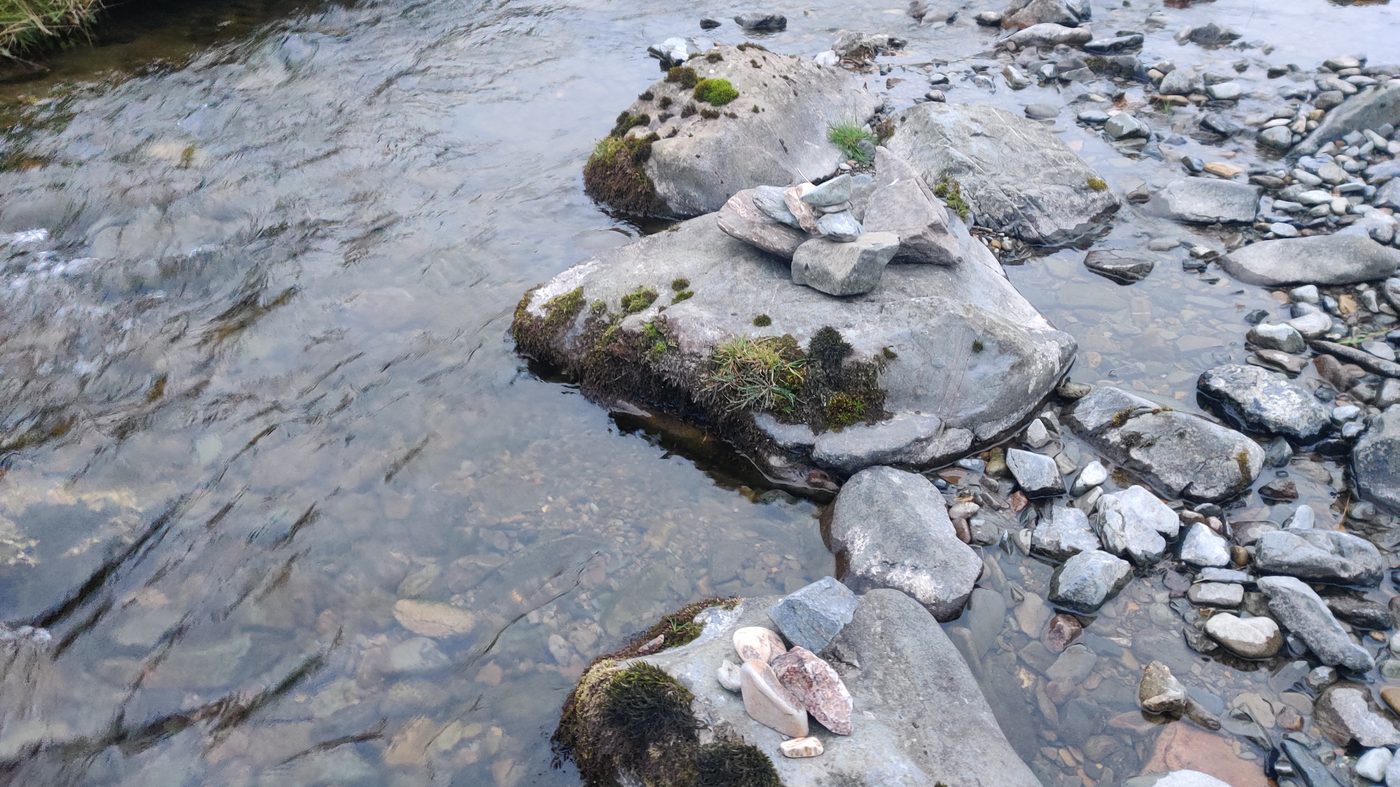
Wales has no gold rush in its past and no permit scheme in its present, but it has something rarer than either: the most prestigious gold in Britain. The Dolgellau gold belt, a strip of country running north-east from the Mawddach Estuary in Gwynedd, hosts the Clogau St David's and Gwynfynydd mines — the source of the gold used in royal wedding rings from the Queen Mother in 1923 to the Princess of Wales in 2011. That is the story behind Welsh gold and the Clogau name, and it is why a few grams of Welsh gold can be worth many times its weight.
For a recreational panner, the reality runs through the alluvial gravels of the Mawddach catchment and its feeders — the Afon Wnion, the Afon Eden and the burns of the Coed-y-Brenin forest — which carry fine flake gold eroded from the same source rocks the mines worked. The full regional picture is in our where to find gold in Wales guide.
A serious caveat: Wales has actively constrained unlicensed panning. The prime rivers are managed by Natural Resources Wales, many are protected SSSIs, and much of the productive country sits inside Eryri (Snowdonia) National Park. Legal panning in Wales depends on direct landowner permission and NRW compliance — it is not a turn-up-and-pan destination. The guided Roman gold experience at Dolaucothi in Carmarthenshire is the gentlest legal way to handle Welsh gold ground.
England — Cornwall, Devon and Cumbria
England has the quietest gold story of the mainland nations — no rush, no royal mine, no permit sites — but a thin, real distribution of alluvial gold across a few separated regions. Every English session needs landowner permission and Environment Agency compliance arranged separately. The full regional breakdown is in our where to find gold in England guide; here are the three areas worth knowing.
Cornwall
Cornwall has the longest continuous tradition of gold recovery in England — paradoxically, because it was never a gold county. The medieval and early-modern tin-streamers of the Carnon Valley, the Helford catchment and Restronguet Creek recovered placer gold as a by-product of working the alluvial tin. Cornish flake is distinctive — paler than Scottish gold because it carries more silver. The catch is access: much of the gold-bearing ground sits inside the Cornish Mining World Heritage Site. Full detail in is there gold in Cornwall?
Devon
Devon's gold comes from the eastern Cornubian granite system, particularly the catchments draining Dartmoor — the Bovey, the Teign and the tributaries of the Dart. The recovery history is quieter than Cornwall's, and Dartmoor National Park byelaws plus overlapping commons rights make the legal groundwork involved. It is best thought of as practice country for the local hobbyist. See is there gold in Devon?
The Lake District (Cumbria)
The Lake District is England's most consistently documented gold ground after Cornwall, with trace gold appearing as a by-product of the old copper and lead mining around Caldbeck and Coniston. Cumbrian flake is fine, and the country carries a heavy stack of designations — National Park, UNESCO World Heritage Site, SSSIs and National Trust land — so preparation matters. Our guide to gold in the Lake District sets out exactly what each designation means for a pan-only visitor.
Northern Ireland — the Sperrins
Northern Ireland has the smallest hobby scene of the four nations but, geologically, some of the best rock. The Sperrin Mountains of County Tyrone and Londonderry are built of the same Dalradian belt that hosts the Scottish Highland gold, and they contain world-class hard-rock deposits at Curraghinalt and the Cavanacaw (Omagh) mine. Those are commercial, licensed operations — not panning spots — but they confirm why the surrounding rivers carry the alluvial gold they do.
The recreational ground is the network of Sperrin rivers: the Glenelly and Owenkillew in Tyrone, and the Moyola on the Londonderry side. Northern Ireland's mineral law is different from the rest of the UK — under the Mineral Development Act (NI) 1969, most mineral rights are vested in the Department for the Economy (gold and silver remain Crown property), and there is no recreational permit scheme. Legal panning means direct landowner permission plus DAERA and Northern Ireland Environment Agency compliance, and some ground falls under commercial mineral licence. Anyone going beyond casual hand-panning should confirm the position directly with the Department for the Economy. Full detail in our where to find gold in Northern Ireland guide.

Where Should a Beginner Start?
If you have never panned before, start at Wanlockhead. Once the Museum of Lead Mining reopens (it is closed to visitors until spring 2027), it is the only place in the UK where you can turn up alone, with no kit and no knowledge, and be panning real Scottish flake gold before lunch — the licence, the equipment hire and the tuition are all handled in one place. The first time you tip the black sand off the bottom of the pan and see a fleck of gold stay put because it is heavier than everything around it, the whole thing makes sense. After that, the entire network of UK sites opens up.
From there, learning to read water is what separates a flake from an empty pan — our river-reading guide covers exactly that, and the equipment guide covers the kit. A free 16-page summary of the best beginner sites across the UK is in our Beginner's Pack. And the single best planning tool is the interactive map: every region in this hub, plotted with GPS coordinates and access notes, so you can see what is genuinely within reach of you. Grab a pan and open it.
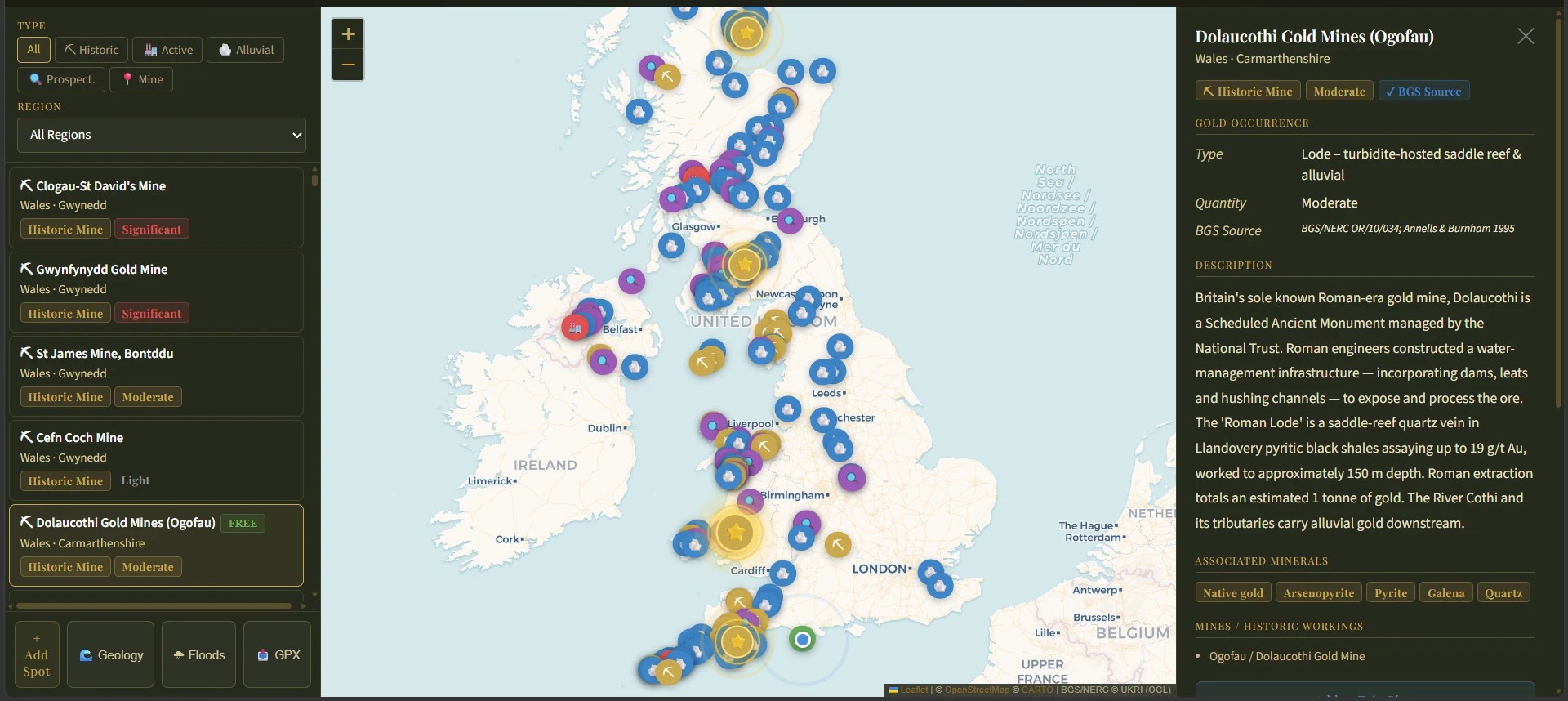
Find the gold near you
The UK Gold Prospector map plots all 200 BGS-verified sites across Scotland, Wales, England and Northern Ireland — with coordinates, geology and access notes.
Frequently Asked Questions
Where can you pan for gold in the UK?
The real regions are Scotland (Leadhills and Wanlockhead in the Lowther Hills, Kildonan and Helmsdale in Sutherland, and Tyndrum in the Highlands), Wales (the Dolgellau gold belt and Mawddach catchment), England (Cornwall, Devon and the Lake District), and Northern Ireland (the Sperrin Mountains). Scotland is the only nation with permit-backed sites open to the public, and Wanlockhead is the easiest place for a beginner to pan legally; the licence is the landowner's permission to pan, not ownership of the gold.
Is it true that there is gold in British rivers?
Yes. Welsh gold from the Dolgellau belt has supplied royal wedding rings since 1923, Scotland's medieval crowns were worked with Leadhills gold, and the Sutherland Gold Rush of 1868 drew hundreds to the Strath of Kildonan. Hard-rock gold is still mined commercially at Cononish in the Highlands and at Cavanacaw and Curraghinalt in Northern Ireland. For a panner, the river gold is fine alluvial flake from those same source rocks — genuine, but scattered and modest. The rivers themselves are named in our list of 93 gold-bearing rivers, burns and streams.
Is it legal to pan for gold in the UK?
Gold is a Mine Royal — under the Royal Mines Acts it belongs to the Crown, so the metal is not yours by right wherever you pan. There is also no general public right to dig for or remove gold from a river. Legal panning requires the landowner's permission for the specific stretch plus compliance with environmental rules (SEPA, the Environment Agency, Natural Resources Wales or DAERA), including spawning closures. The cleanest legal route is one of Scotland's three permit schemes.
Do I need a permit to pan for gold in the UK?
There is no UK-wide permit. The only over-the-counter recreational schemes are in Scotland: Wanlockhead (via the Museum of Lead Mining for Buccleuch Estate), Leadhills (a separate Leadhills Estate permit), the Strath of Kildonan (Suisgill Estate), and Tyndrum Community Woodland (Strathfillan Community Development Trust). Everywhere else you must arrange landowner permission and environmental compliance yourself. Always confirm current prices and conditions with the permit holder before you travel.
Where is the easiest place to pan for gold in the UK?
Wanlockhead, in the Lowther Hills of southern Scotland. The Museum of Lead Mining sells day, week and year licences for the Mennock Water and Wanlock Water and runs taught beginner courses with pans, classifiers and tuition included. Once the museum reopens (it is closed to visitors until spring 2027), you can arrive with no equipment and no experience and pan real flake gold the same afternoon — and the village offers shelter when the weather turns.
Can you keep the gold you find panning in the UK?
Strictly, gold is Crown property under the Royal Mines Acts except where the rights were granted away by deed (in Scotland including Sutherland and parts of Argyll), so it is not automatically yours by right. At Scotland's recreational permit sites — Wanlockhead, Kildonan and Tyndrum — a permit is the landowner's permission to pan that ground; it does not by itself make the gold yours, and the Tyndrum trust's own page says it is against the law to remove or sell the gold you find. Selling gold, recovering it in quantity, or panning without permission is a different matter. Always pan under a valid permit or with explicit consent, and confirm the permit's terms with the permit holder.
Is there gold in Welsh rivers?
Yes. The Dolgellau gold belt near the Mawddach Estuary is the source of Welsh royal gold from the Clogau and Gwynfynydd mines, and the rivers of the Mawddach catchment carry alluvial flake gold from those same source rocks. Wales has no permit scheme, the prime rivers are NRW-managed SSSIs, and much of the country lies inside Eryri (Snowdonia) National Park — so legal panning depends on direct landowner permission and NRW compliance. Seven Welsh rivers with recorded gold are named in the Welsh section of our river list.
How much gold will I realistically find panning in the UK?
Fine flake gold and the occasional small picker — not nuggets. Most UK pans yield flour gold and one- to two-millimetre flakes; a good day at a productive Scottish permit site is a dozen flakes in a snuffer bottle. Nuggets are exceptional: Scotland's Reunion Nugget (121.3 g, 2019) and the Douglas Nugget (85.7 g, 2016) made national news for a reason. The real reward is the history, the geology and the craft of reading water.
Important: All UK gold belongs to the Crown under the Royal Mines Acts and all panning is subject to access, environmental and protected-site law. Outside the Scottish permit schemes at Wanlockhead, Kildonan and Tyndrum there is no public right to pan: always obtain landowner permission, confirm designation status (SSSI, AONB, National Park, World Heritage Site, National Trust land) before visiting, comply with the relevant environmental regulator's conditions including spawning closures, and never dig the bank. Northern Ireland's mineral rights are administered by the Department for the Economy under the Mineral Development Act (NI) 1969. Permit prices, seasons and conditions are set by each permit holder and change — verify current details directly. This article is general guidance, not legal advice. Full detail in our UK gold panning laws guide.
Every UK gold region is on the UK Gold Prospector map
GPS coordinates, geology and access notes for Scotland, Wales, England and Northern Ireland — 200 verified sites in one place.
Free Beginner's Pack — 16-page PDF: top 10 UK locations with GPS, equipment checklist, legal cheat sheet and app tutorial.
Get the Free Pack →