Short answer
Yes — gold genuinely occurs in Devon, but in tiny, non-economic amounts: fine "flour" gold, far scarcer than Cornwall, Wales or Scotland. It turns up two ways — as lode gold in the old copper mines at North Molton, where an 1850s attempt to mine gold quickly failed, and as alluvial flakes that Dartmoor's tin-streamers recovered as a by-product of working tin. It is a heritage-and-novelty story, not a Klondike.
Devon has gold the way a county can have a rumour: real enough to follow, faint enough to disappoint anyone hoping for nuggets. The metal is genuinely there — recorded in old copper lodes, panned in trace amounts from valley gravels, and chased once, briefly, as an actual gold mine. But Devon sits at the lean end of south-west England's mineral province, and the honest version of the story is more interesting than the gold-fever one.
This guide covers what is actually documented: whether there is gold in Devon and where it sits, the failed gold mine at North Molton, Dartmoor's tin-streamers and the flakes they kept in bird quills, what the British Geological Survey found when it went looking, why Devon is gold-poor, the law, and a beginner-friendly way to try panning for yourself. Every English gold area is on the UK Gold Prospector interactive map, and the wider picture is in our guide to where to find gold in England.
In this guide
- Is there gold in Devon?
- North Molton: Devon's gold mine
- Dartmoor and the tin-streamers' gold
- Where gold has been found — rivers and areas
- The geology — why Devon is gold-poor
- Is it legal to pan for gold in Devon?
- What will you realistically find?
- Try it the easy way: a guided gold-panning day
- Frequently asked questions
See Devon's gold country on the live map
North Molton, the Dartmoor streams and the South Hams — with geology and access notes — alongside 200 verified UK gold sites.
Is there gold in Devon?
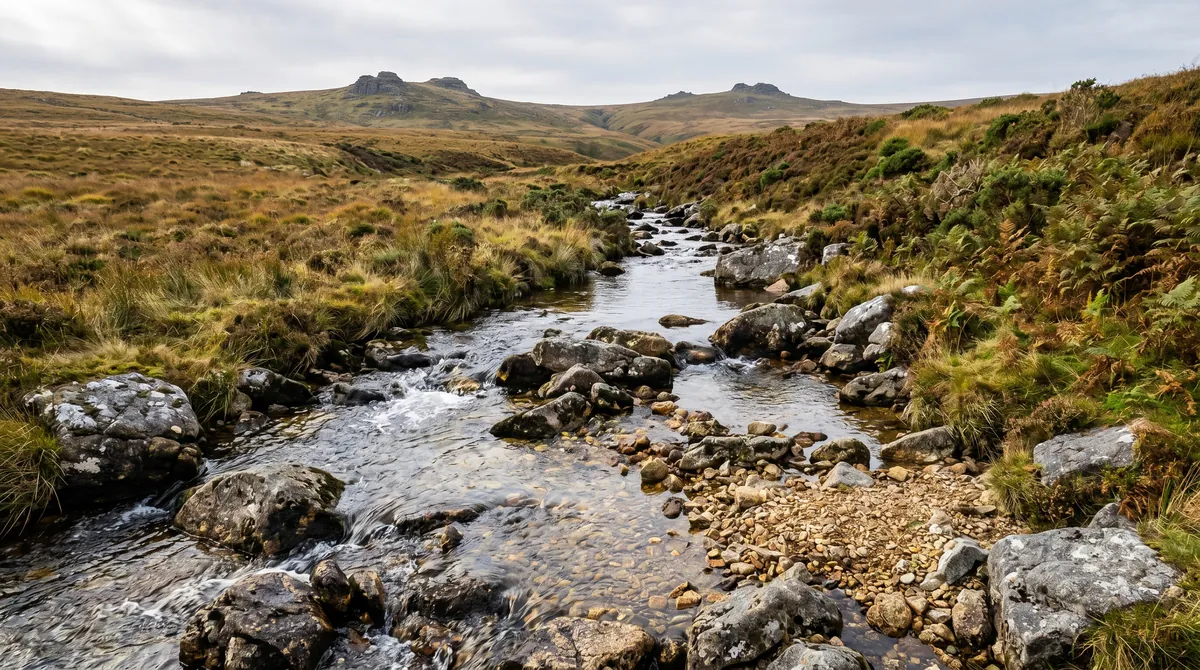
Yes — but read the small print. Devon's gold is real and documented, and it occurs in two distinct forms. The first is lode gold, locked in the old copper lodes around North Molton in the north of the county. The second is alluvial gold — fine flakes that washed out of those mineralised rocks over geological time and settled into the valley gravels, where the Dartmoor tin-streamers met it while working tin.
The honest framing comes from the mining-history and geological record: small grains of gold had been recovered in practically every alluvial deposit across Devon and Cornwall, but the gold was never systematically recovered — it was always incidental to the tin. That is the heart of it. Devon is markedly gold-poor compared with Cornwall, and poorer still beside the genuine gold districts of Wales and Scotland. There is gold here; there has never been enough of it, in one place, to be worth chasing for its own sake.
North Molton: Devon's gold mine
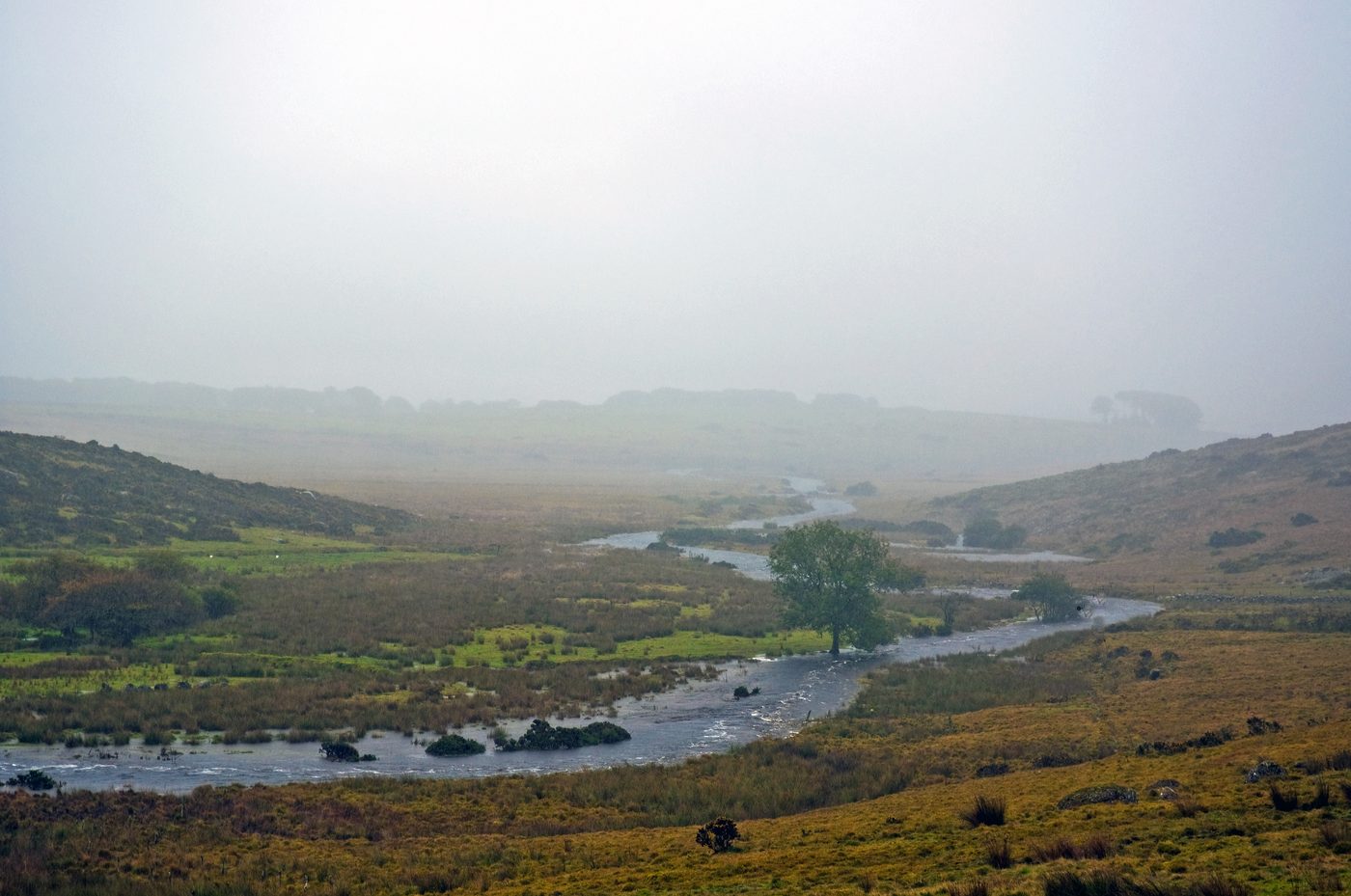
If Devon has a gold story, it is North Molton. The copper mines around the hamlet of Heasley Mill, in the parish of North Molton on the southern edge of Exmoor, are the one place in the county where people actually opened the ground for gold. The two principal workings were Bampfylde Mine (also known as Poltimore) and the Britannia, or Prince Regent, Mine. Gold in the copper lodes here had been known since the late 1700s.
The trigger was the California rush of 1848, which stirred fresh interest in home-grown gold. Britannia was opened up for gold and copper in 1852–53; gold was found over the iron and copper lodes — but gold working had failed by 1855, and the mine carried on only as a copper operation into the 1880s. The companies were serious enough to install dedicated gold-extraction machinery: a Perkes machine was set up at Britannia and a Berdan pan at Bampfylde in 1854. It was a genuine attempt, not a swindle — and it simply did not pay.
The story did not end entirely there. The British Geological Survey later appraised the gold potential of the North Molton mine dumps, and native gold has been panned from the Bampfylde dumps and recorded on Mindat. Any figure you may see for the gold tonnage in those dumps is best treated as a reported estimate rather than a proven resource. North Molton sits in the River Mole catchment; the gold field lies within that catchment, but that is not the same as saying people pan gold from the River Mole itself, which is not something we can verify.
Dartmoor and the tin-streamers' gold
Dartmoor's gold is a by-product of one of the oldest industries in the South West: tin streaming. For centuries, tinners worked the valley gravels for cassiterite, the heavy tin oxide that, like gold, concentrates in the basal gravels at the bottom of a deposit. Gold is even denser than cassiterite, so it settles in exactly the same traps — which means the tinners inevitably met gold while working tin, whether they were looking for it or not.
The colour they found was fine flake, and there is a charming detail in the record: the custom, noted by Mrs Bray in 1838, of Dartmoor tinners keeping their gold flakes safe inside hollow bird quills. Local Dartmoor history also preserves the account of an early-1800s tinner named Wellington, streaming near Sheepstor, who is said to have recovered enough gold to get £40 for it from a Plymouth silversmith. Treat these as the heritage tales they are — colour from the moor's working past rather than a promise of what you will find today.

Where gold has been found — rivers and areas
The most authoritative modern look at Devon gold comes from the British Geological Survey. In the 1990s the BGS actually went looking for it — and found only sub-economic traces. Stream-panned samples turned up anomalous gold between the lower Erme and Avon valleys in the South Hams, and the survey identified thin gold-bearing veins near Crediton, in the Crediton Trough — a couple of grams per tonne over narrow widths, nowhere near workable. Native gold is also recorded at Ivybridge on Mindat.
Beyond the BGS work, the River Teign is reported by prospecting sources — not by the BGS — to carry a little alluvial gold. We flag that clearly as reported rather than confirmed, and as everywhere in Devon, permission matters more than the rumour. Whatever the source of a tip, the rule is the same: check the ground, confirm who owns the bank, and never assume a right to pan. You can see how these areas sit on the UK Gold Prospector map, with the access notes you need before you ever fill a pan.
The geology — why Devon is gold-poor
The reason Devon is gold-poor is written into the bedrock. South-west England's mineral wealth was driven by the Cornubian batholith — the great mass of granite that surfaces as Dartmoor, Bodmin Moor and the other south-western moors, emplaced roughly 280–290 million years ago. The hot fluids that rose off and around that cooling granite created one of the richest mineral provinces in Britain. But it is a tin–copper–tungsten–arsenic province, with gold present only as a minor trace element.
That is the core explanation for why both Devon and Cornwall are gold-poor: gold simply was not a major part of the fluid chemistry here. And within that province Devon sits at the leaner, eastern end. Cornwall's intense western tin and copper lodes are richer and have the longer recovery history; Devon lies further from that focus, which is why its gold story is fainter again. If you want the broader picture of where Britain's gold actually concentrates, our England regional guide and the sister piece Is There Gold in Cornwall? set Devon in context.
Is it legal to pan for gold in Devon?
Only with permission. Gold and silver are "Mines Royal" — they belong to the Crown across the whole of the UK, a right reaffirmed by the Royal Mines Acts of the late 1600s, and that ownership covers gold in rivers just as much as gold in rock. The Crown Estate administers these rights. There is no public recreational gold-panning permit scheme in England and no general right to pan: you need the landowner's permission both for the land and for the riverbank and bed. Disturbing a riverbed can additionally require Environment Agency consent.
Devon offers a good example of doing this properly. Ivybridge Town Council publishes a Gold Panning Code of Conduct for its river, setting out how to pan responsibly on that stretch. That is the spirit to bring everywhere: confirm ownership and designation first, keep disturbance to a minimum, and treat the river with care. The full background — the Crown's rights, access law and environmental rules — is in our UK gold panning laws guide.
What will you realistically find?
Realistically: fine flake or flour gold at best, and found incidentally rather than systematically. That is not pessimism, it is the documented record — gold in Devon was never systematically recovered, and even the serious commercial attempt at North Molton failed within a couple of years. Anyone selling Devon as a place to strike it rich is selling a story.
It is also worth puncturing the obvious myth. The "gold nugget" found at Westward Ho! in 2014 made headlines, but it was a beach metal-detecting find that was most likely smelted or man-made gold — not natural Devon placer gold. Manage your expectations and Devon becomes genuinely rewarding: a chance to recover a real flake from country with a deep mining past. Learning to read the water is what separates a flake from an empty pan — our river-reading guide covers exactly that.
Try it the easy way: a guided gold-panning experience in Devon
Partner listing. A local operator we think readers will find genuinely useful — the wording below is the operator's own, approved by them.
Want to try panning without the hassle of finding your own spot and sorting landowner permission? Holsworthy Gold Panning runs a fun and friendly guided experience at Southcombe Farm near Holsworthy.
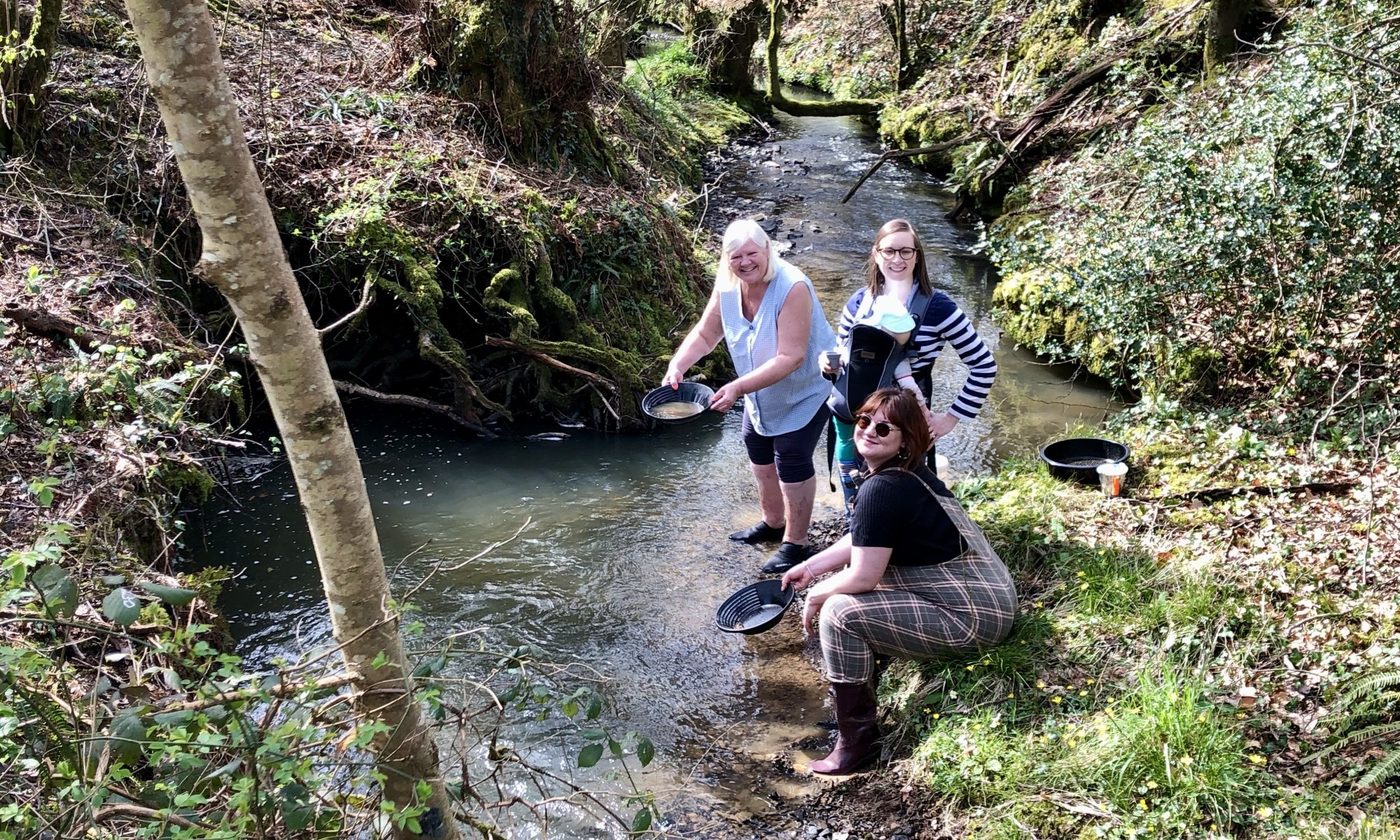
You will pan gravel beds using traditional equipment focusing on learning proper technique. They don't use suction pumps and sluices — it's about learning to pan, having fun and hopefully finding some gold!
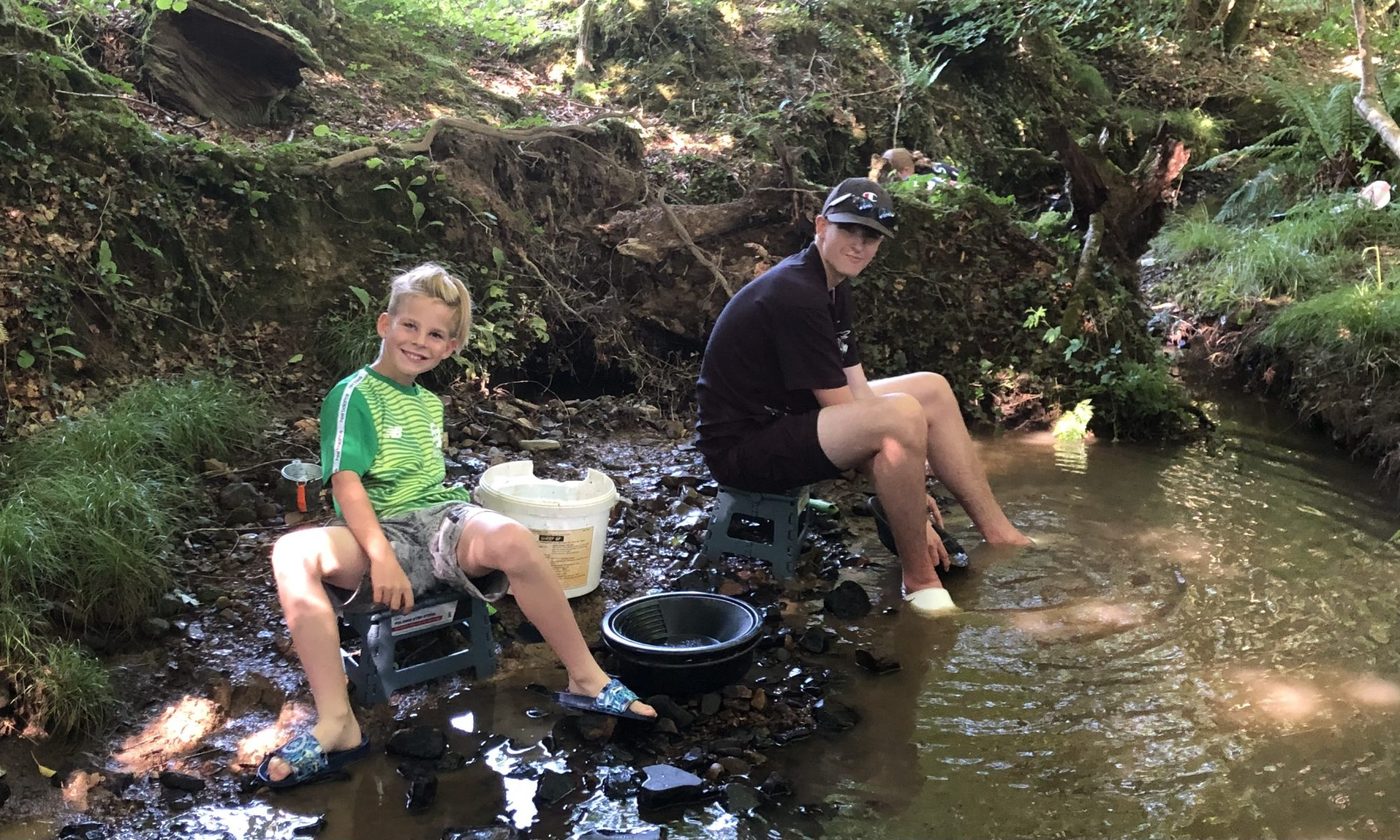
For more details including opening times, prices and booking, visit devongoldrush.com.
Frequently Asked Questions
Is there really gold in Devon?
Yes, genuinely — but in tiny, non-economic amounts. Devon's gold occurs as lode gold in the old copper mines at North Molton, where an 1850s attempt to mine gold quickly failed, and as fine alluvial flake recovered as a by-product by Dartmoor's tin-streamers. It is far scarcer than the gold of Cornwall, Wales or Scotland. Small grains were recovered from many alluvial deposits across Devon and Cornwall, but the gold was never systematically recovered. It is a heritage-and-novelty story, not a Klondike.
Where is the gold in Devon?
The headline location is North Molton in North Devon, where gold occurs in the copper lodes of the old Bampfylde and Britannia mines around Heasley Mill, in the River Mole catchment. Alluvial flake gold was recovered by tin-streamers across Dartmoor. In the 1990s the British Geological Survey found only sub-economic traces — anomalous gold between the lower Erme and Avon valleys in the South Hams, and thin gold-bearing veins near Crediton in the Crediton Trough. Native gold is recorded at Ivybridge, and the River Teign is reported by prospecting sources to carry a little alluvial gold.
Can I pan for gold in Devon rivers, and is it legal?
Only with permission. Gold and silver are Mines Royal — they belong to the Crown across the UK, a right reaffirmed by the Royal Mines Acts of the late 1600s, and that covers river gold too. There is no public recreational gold-panning permit scheme in England and no general right to pan, so you need the landowner's permission for the land and the riverbank or bed, and disturbing a riverbed can require Environment Agency consent. Ivybridge Town Council publishes a Gold Panning Code of Conduct for its river as a good local example of doing it responsibly.
Has anyone found a gold nugget in Devon?
Not a natural placer nugget of any size. The widely-reported gold nugget found at Westward Ho! in 2014 was a beach metal-detecting find that was most likely smelted or man-made gold, not natural Devon placer gold. Realistically Devon yields fine flake or flour gold at best, found incidentally. Even North Molton's gold mine failed within a couple of years in the 1850s.
Where can I try gold panning in Devon?
The easiest way for a beginner is a guided experience. Holsworthy Gold Panning runs a fun and friendly guided experience at Southcombe Farm near Holsworthy, where you pan gravel beds using traditional equipment and learn proper technique. They do not use suction pumps or sluices. For opening times, prices and booking, visit devongoldrush.com.
Is Devon better than Cornwall for gold?
No. Devon is markedly gold-poorer than Cornwall. Both sit on the tin-copper-tungsten-arsenic Cornubian province where gold is only a minor trace, but Devon lies at the leaner eastern end, away from Cornwall's intense western tin and copper lodes. Cornwall has the longer, better-documented tradition of recovered placer gold; Devon's is fainter still.
Is there gold on Dartmoor?
Yes, in tiny amounts. Dartmoor's gold is fine flake that settled with the heavy tin in the valley gravels, recovered for centuries as a by-product of tin streaming rather than mined in its own right. The UK Gold Prospector map plots trace-to-light alluvial occurrences on Dartmoor's Plym, Erme, Avon and Dart, but Dartmoor is a National Park, so assume access is restricted until the landowner and any designation have been checked.
Can you go gold panning near Holsworthy?
Yes. Holsworthy Gold Panning runs a guided experience at Southcombe Farm near Holsworthy, where you pan gravel beds with traditional equipment and learn the technique properly. It is the easiest way to try gold panning in Devon. The UK Gold Prospector map also plots British Geological Survey gold-sampling points on streams around Holsworthy, although no grades were published for them.
Important: All UK gold panning is subject to the Crown's Mines Royal rights over gold and silver, reaffirmed by the Royal Mines Acts of the late 1600s, and to access, environmental and protected-site law. In Devon there is no public permit scheme and no general right to pan. Always obtain landowner permission for the land and riverbank, confirm designation status before visiting, comply with Environment Agency conditions, and never dig the bank. This article is general guidance, not legal advice — verify current law and access with the Environment Agency, Natural England or the relevant authority. Full detail in our UK gold panning laws guide.
Devon's gold country is on the UK Gold Prospector map
Geology and access notes for North Molton, the Dartmoor streams and the South Hams, plus 200 verified sites across Britain.
Free Beginner's Pack — 16-page PDF: top 10 UK locations with GPS, equipment checklist, legal cheat sheet and app tutorial.
Get the Free Pack →