Short answer
The Dolgellau Gold Belt — a roughly 15-mile arc of gold-bearing rock around the Harlech Dome, north of Dolgellau in Gwynedd — is the richest hard-rock gold field in Britain. Its mines, Clogau-St David's and Gwynfynydd, produced the famous Welsh gold used in royal wedding rings. But the rich gold sat in hard-rock quartz veins that are now mined out and closed, and most of the belt's rivers sit under strict conservation rules — so this is a heritage story to understand, not an easy place to pan.
It is the strange paradox of British gold: the country's single richest gold field is a quiet stretch of Snowdonia hillside that almost nobody can dig. The Dolgellau Gold Belt gave the world the gold in royal wedding rings — and almost nothing for the visitor with a pan. This guide is the honest version of that story: where the belt is, why the gold is there, the great mines, and what you can and cannot legally do today.
This is a narrow, deep look at the Dolgellau belt itself. For the wider national picture — the law, the licence questions and the Roman south — see our pillar guide to where to find gold in Wales. The belt's known ground sits on the UK Gold Prospector interactive map with the access notes you actually need.
In this guide
See the Dolgellau gold ground on the live map
The Mawddach catchment, the Clogau and Gwynfynydd mine country and the conservation overlays — alongside 200 verified UK gold sites.
What is the Dolgellau Gold Belt?
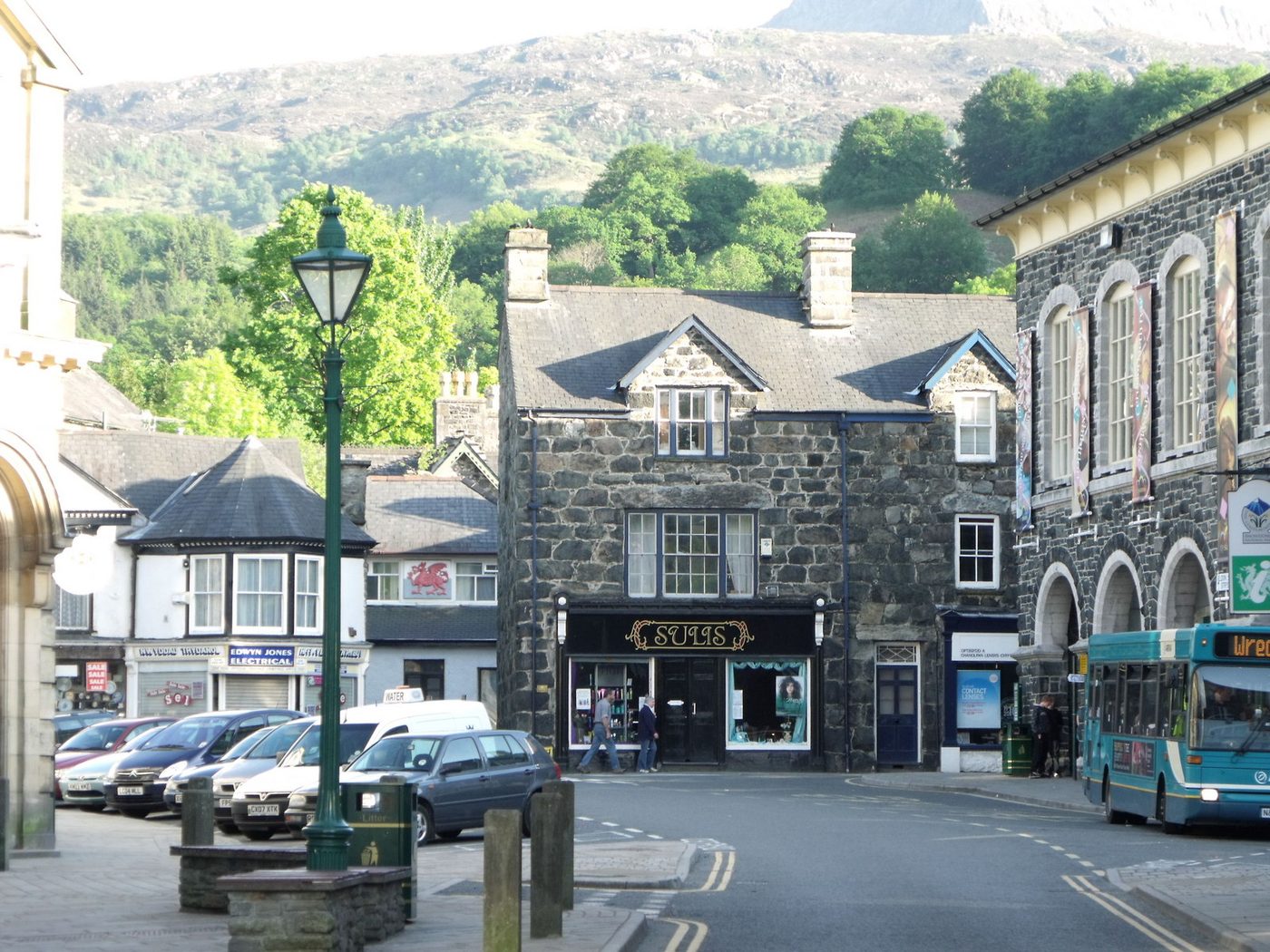
The Dolgellau Gold Belt is an arc of "black-shale-hosted" gold ground that flanks the south and east edge of the Harlech Dome — the big upland mass of Cambrian rock that forms the heart of southern Snowdonia. The arc runs roughly from Barmouth on the coast in the south-west, around the south and east of Dolgellau, and up towards Ganllwyd and Cwm Prysor in the north-east, a distance of something like fifteen miles.
There is no single official map of the belt — it is not a designated boundary so much as a recognised geological locality, mapped in detail by mineralogists and mining historians rather than drawn as a line on an Ordnance Survey sheet. But it is well defined for all that. The modern explorer Alba Mineral Resources has confirmed gold over a stretch of roughly six miles within it, which gives a sense of the scale of the mineralised ground rather than the full extent of the historic field.
The geology — why the gold is here
The gold of the Dolgellau belt is mesothermal lode gold: native gold carried in quartz veins, deposited from hot mineralising fluids deep in the crust. The host rocks are the Cambrian sediments of the Harlech Dome, and the key host of all is the Clogau Formation — a black, pyritous, graphitic shale.
That carbon-rich shale is the secret of the field. The gold mineralisation is structurally controlled, threaded along faults and shear zones, and restricted to the Clogau and Maentwrog formations. Where the upwelling hydrothermal fluids crossed the carbon-rich graphitic shales, the chemistry tipped and gold-bearing quartz veins were deposited. It is this concentration of primary, hard-rock gold — not merely flecks of placer gold washed into a river — that makes the Dolgellau belt the richest hard-rock gold field in Britain.
The distinction matters for anyone tempted to visit. The belt is rich because of what is locked in the rock — in quartz veins that needed deep mines and crushing mills to win. That is a very different thing from a river full of loose, pannable gold, and it shapes everything about what the modern visitor can realistically do here.
The great mines
The belt's reputation rests on two mines above all others.
Clogau-St David's
Sitting above Bontddu, between Dolgellau and Barmouth, Clogau-St David's is the most famous Welsh gold mine of them all. Gold was found here in 1854, and the workings took off in the great rush of 1862. Over its long life the mine reportedly produced around 78,500 ounces of gold from something like 165,000 tons of ore, with peak production around 1904. It finally closed in 1998 — and lent its name to the Clogau jewellery brand that still trades on the Welsh-gold story.
Gwynfynydd
Near Ganllwyd, on the northern reach of the belt, Gwynfynydd was discovered in 1860 and reported over 45,000 ounces of gold from 1884 onwards. In its final chapter in the 1990s the mine ran public tours and guided panning before closing in 1999. Those visitor experiences are firmly in the past tense now — there is no operating gold mine or mine tour to visit in the belt today.
The wider district
Around these two giants the district held 24 or more mines, plus dozens of lesser trials and prospects scattered across the hills, with outliers such as Castell Carn Dochan and Cwm Prysor extending the picture. The field saw three distinct waves of excitement: an early flurry in 1854–55; a rush around 1860, after which most workings were derelict by 1870; and the last and greatest boom from 1887, peaking around 1900 and over by the First World War. In 2007 it was reported that the last economically extractable gold had been removed, and all commercial mining in the belt is now closed.

Welsh gold and the royal rings
This belt is the source of the gold behind one of the most enduring royal traditions in Britain. It supplied the gold for royal wedding rings, a custom that began in 1923 with the marriage of the future Queen Mother. Rings followed for Queen Elizabeth II in 1947, for Princess Margaret in 1960, for Diana in 1981 and for the Sussexes in 2018. Kate Middleton's 2011 wedding ring was made from Clogau St David's gold.
The connection runs beyond rings. Queen Elizabeth II was given a one-kilogram ingot of around 99 per cent pure Gwynfynydd gold for her sixtieth birthday in 1986. And because genuine Welsh gold is now extraordinarily scarce, today's royal rings draw on carefully husbanded, stockpiled gold rather than freshly mined metal. It is exactly this rarity — a gold so identified with the Crown and so hard to come by — that gives Welsh gold its standing and commands a large premium over the ordinary spot price.
Can you actually pan the belt? The honest answer
This is the section that matters most, because the honest answer surprises people. The panning system of the belt is the Mawddach catchment, and several of its tributaries are reported to carry fine gold — among them the Afon Wnion, the Afon Eden, the Afon Wen and the Afon Gain. Treat those as reported colour rather than proven panning spots; the Mawddach itself is tidal and unproductive below Llanelltyd.
But here is the catch that turns the romance to caution. Much of the upper catchment lies within Coed y Brenin, the forest managed by Natural Resources Wales — and NRW does not permit gold panning on its land. This is not a grey area or a polite request. In 2021–22 a man was fined over £3,000 for illegal panning at Coed y Brenin. On top of that, stretches of the Mawddach carry SSSI and SAC conservation designations, which add a further layer of protection.
So be straight about it: most of the belt's best ground cannot legally be panned without permission, and panning on NRW land specifically is prohibited and actively enforced. None of this is a workaround to be found — it is a line not to cross. If you want to pan in Wales legally, the route is permission, in the right place, on land where that permission can actually be given. We cover that route in full in our UK gold panning laws guide, and the broader Welsh picture, including the guided experience in the south, sits in the Wales pillar guide.
The law in Wales
The legal framework is the same one that governs gold across England and Wales. Gold and silver are Crown property — they have been since the Mines Royal doctrine set out in the Case of Mines (1568) — and the Crown's interest is administered by The Crown Estate. The metal in the ground is not yours simply because you are standing on the bank.
The right to walk over open country under the Countryside and Rights of Way (CRoW) Act does not extend to prospecting, digging or removing material; access on foot is one thing, working the ground is quite another. You need the landowner's permission for the specific stretch, and on the forest you need NRW's — which, as above, it does not give for panning. There is no public recreational permit scheme in Wales. Whatever tolerance the Crown Estate shows towards tiny, casual takings is a matter of practice, not a legal right you can rely on. When in doubt, the safest reading is the strictest one.
What would you realistically find?
Set aside the access question for a moment and the geology gives the same answer anyway. The rich gold of the Dolgellau belt was hard-rock gold, locked in quartz veins that needed deep mines to win — and those veins are now mined out and closed. The rivers carry only fine flake gold in trace amounts, and the accessible placers have been picked over for more than 150 years. There is no bonanza waiting in the Mawddach gravels.
What there is, is heritage. The honest pull of the Dolgellau belt is the history and the royal connection — the sense of standing in the country that gilded a century of wedding rings — far more than any realistic yield. Genuine flakes of native gold from the Mawddach do exist; collectors buy and sell them as a colour curiosity, a nice detail rather than a day's reward. If you want to learn the craft of reading water properly, our river-reading guide is the place to start, and Cornwall tells a parallel by-product story in our guide to Cornish gold.
Is there still gold under Dolgellau?
The historic mines are closed, but the modern story is not quite finished. The explorer Alba Mineral Resources carried out the first-ever diamond drilling at Clogau in 2019 and, on its account, confirmed gold over a stretch of roughly six miles. In 2020 it took on the Gwynfynydd licence, where — according to figures reported at the mine's 1999 closure — a 140,000-tonne inventory grading around 15 grams per tonne of gold had been left in the ground.
Those numbers are Alba's and the historic operators', not independently confirmed here, and a reported resource is a long way from a working mine. But they are a reminder that the geology that made the belt the richest in Britain has not simply vanished. The belt may not be finished — even if, for the visitor with a pan rather than a drill rig, it has very little to offer.
Frequently Asked Questions
Where is the Dolgellau Gold Belt?
It is a roughly 15-mile arc of gold-bearing rock flanking the south and east edge of the Harlech Dome in Gwynedd, north Wales — running broadly from Barmouth in the south-west, around the south and east of Dolgellau, up towards Ganllwyd and Cwm Prysor. There is no single official map, but it is a well-defined geological locality, and Alba Mineral Resources has confirmed gold over roughly a six-mile section of it.
Can I pan for gold near Dolgellau, and is it legal?
Mostly no, not without permission. The panning system is the Mawddach catchment, and tributaries are reported to carry fine gold, but much of the best upper-catchment ground is Coed y Brenin forest, managed by Natural Resources Wales — and NRW does not permit gold panning on its land. A man was fined over £3,000 for illegal panning at Coed y Brenin in 2021–22, and stretches of the Mawddach carry SSSI and SAC designations. Legal panning needs landowner permission, and panning NRW land is prohibited and enforced.
What gold mines are in the belt?
The two great mines are Clogau-St David's at Bontddu near Barmouth, where gold was found in 1854 and which reportedly produced around 78,500 ounces before closing in 1998, and Gwynfynydd near Ganllwyd, discovered in 1860, which reported over 45,000 ounces from 1884 and closed in 1999. The district held 24 or more mines plus dozens of lesser trials, with outliers such as Castell Carn Dochan and Cwm Prysor. All commercial mining is now closed.
Is Welsh gold really used in royal wedding rings?
Yes. The Dolgellau belt supplied the gold for the royal wedding-ring tradition, which began in 1923 with the future Queen Mother and continued through rings for Queen Elizabeth II in 1947, Princess Margaret in 1960, Diana in 1981 and the Sussexes in 2018. Kate Middleton's 2011 ring was made from Clogau St David's gold, and Queen Elizabeth II was given a one-kilogram ingot of around 99 per cent pure Gwynfynydd gold for her 60th birthday in 1986. Welsh gold is now so scarce that royal rings draw on stockpiled gold.
Is there any gold left in the Dolgellau belt?
The rich, easily worked gold was hard-rock gold in quartz veins that are now mined out, and in 2007 it was reported that the last economically extractable gold had been removed. But the belt may not be finished: Alba Mineral Resources carried out the first-ever diamond drilling at Clogau in 2019, confirmed gold over roughly a six-mile section, and took the Gwynfynydd licence in 2020, where a 140,000-tonne inventory grading around 15 grams per tonne had been reported at the 1999 closure.
What will I realistically find panning the Mawddach?
Very little, where you can legally pan at all. The rich gold was hard-rock, and the rivers carry only fine flake gold in trace amounts, with accessible placers largely worked out over more than 150 years. The honest draw of the Dolgellau belt is its heritage and its royal connection, not the yield. Genuine native-gold flakes from the Mawddach are sold by collectors as a colour curiosity rather than a realistic field harvest.
Important: All UK gold panning is subject to Crown gold rights and to access, environmental and protected-site law. In the Dolgellau belt there is no public permit scheme; much of the gold-bearing country lies within Coed y Brenin, where Natural Resources Wales does not permit panning, and stretches of the Mawddach carry SSSI and SAC designations. Always obtain landowner permission, confirm designation status before visiting, and never pan NRW land — illegal panning at Coed y Brenin has been prosecuted. This article is general guidance, not legal advice — verify current law and access with Natural Resources Wales and the landowner. Full detail in our UK gold panning laws guide.
The Dolgellau belt is on the UK Gold Prospector map
The Mawddach catchment, the Clogau and Gwynfynydd mine country, the geology and the conservation overlays — plus 200 verified sites across Britain.
Free Beginner's Pack — 16-page PDF: top 10 UK locations with GPS, equipment checklist, legal cheat sheet and app tutorial.
Get the Free Pack →