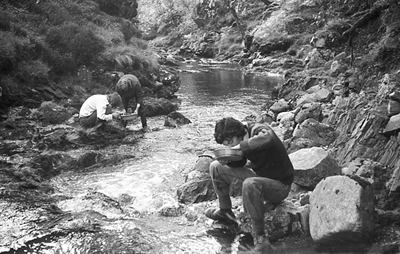
Short answer
Gold panning is legal across the UK, but the rules differ by nation and you must have the right permission. In Scotland, statutory access rights let you reach most rivers, though the Crown still owns the gold; in England and Wales there is no public right, so landowner permission is essential, and many prime Welsh rivers are protected SSSIs where panning is a criminal offence. There is no UK-wide permit — but designated Scottish sites at Tyndrum, Kildonan and Wanlockhead run permit schemes that are the clearest legal route.
The United Kingdom sits on some of the oldest gold-bearing geology in Europe. Welsh and Scottish rivers have yielded alluvial gold for millennia, and the hobby of recreational gold panning has enjoyed a quiet renaissance in recent years. If your question is simply can you find gold in the UK? — the short answer is yes, and that guide has the proof; this one has the rules. But the legal framework around prospecting is a patchwork of Crown mineral rights, wildlife protections, protected site designations, and jurisdiction-specific rules — and getting it wrong can result in a criminal conviction, not just a confiscated pan.
This guide covers the full legal picture as of 2026: Crown ownership, the Treasure Act and why it mostly does not affect you, country-by-country rules, the wildlife laws that carry unlimited fines, seasonal restrictions, and a practical code of conduct drawn from established guidance. England, Scotland, Wales, and Northern Ireland are covered separately, because the rules genuinely differ. If you are starting further back — wondering whether there is gold to find at all — start with can you find gold in the UK, then come back here for the law.
See where you can legally pan — every site mapped with access + permit notes
200 verified UK gold sites with GPS coords, geology and the permit/landowner context for each — pan inside the law.
Who owns the gold you find in the UK?
The foundation of UK gold law is the Mines Royal rules — royal prerogative (the Case of Mines, 1568) in England and Wales and the Royal Mines Act 1424 in Scotland — which vest ownership of naturally occurring gold and silver in the Crown in most cases: bedrock gold, alluvial gold in rivers and gold on the foreshore alike. In Scotland the rights were granted away by deed in some areas, including Sutherland and parts of Argyll. Owning the land does not by itself give you the gold: as Crown Estate Scotland puts it, the ownership of gold and silver is not linked to ownership of the land at the surface.
In practice, the Crown's mineral rights are administered by Crown Estate Scotland (for Scotland), The Crown Estate (for England and Wales), and equivalent arrangements in Northern Ireland. For recreational panners, the key implication splits sharply by jurisdiction. In Scotland, a permit at a designated site is the landowner's permission to pan that ground; it does not by itself make the gold yours. Casual recreational panners retaining small quantities of alluvial gold are tolerated in practice, with no documented enforcement action, but the Strathfillan Community Development Trust's own Tyndrum page says "you can pan for gold, but it is against the law to remove or sell the gold you find". In England and Wales, The Crown Estate says "we do not grant permission for people to remove any gold by panning", and GOV.UK says "if you find gold through panning it is unlikely that The Crown Estate will grant you permission to take it away", meaning there is currently no formal legal route for hobbyists to take gold away from Crown land. The legal position and the lived reality of casual panning are therefore different things — a distinction this guide returns to throughout.
The Treasure Act 1996 — Why It Doesn't Apply to Gold Panners
One of the most persistent myths in UK gold panning circles is that you must report gold you find to the coroner under the Treasure Act 1996. You do not — at least not for raw alluvial gold. Here is why.
The Treasure Act applies to manufactured objects with specific characteristics: items containing at least ten per cent gold or silver that are at least 300 years old; prehistoric base-metal assemblages of worked objects; and — under the Treasure (Designation) (Amendment) Order 2023 (SI 2023/404, in force 30 July 2023) — any metal object at least 200 years old that provides "exceptional insight into an aspect of national or regional history, archaeology or culture." These are all archaeological artefacts: coins, rings, brooches, hoards, significant historical objects.
Gold flakes, nuggets, and dust found while panning a riverbed are none of these things. Alluvial gold is a naturally occurring mineral — it has not been worked, manufactured, deposited, or buried by human hands. It has no archaeological significance in the legal sense. It is not reportable under the Treasure Act, and this position is unchanged by the 2023 amendment, which added a new significance-based category for worked objects but made no change to the treatment of raw minerals.
There is one important exception worth knowing. If you are panning and happen to find an object — an old coin, a brooch, a piece of worked jewellery, a fragment of a vessel — that looks like it might meet the Treasure Act criteria, the right first step is to contact your local Finds Liaison Officer (FLO) of the Portable Antiquities Scheme (PAS). The FLO will assess whether the find qualifies as treasure and will guide you through the formal process. The legal requirement is to notify the coroner within 14 days of believing an item may be treasure; the FLO route is the recommended way to initiate that process correctly. Failure to report genuine treasure is a criminal offence.
Scotland — Access Rights, Crown Restrictions, and the Permit Reality
Scotland offers the most accessible gold panning environment in the UK, though the situation is more layered than the standard summary suggests.
The Land Reform (Scotland) Act 2003 grants everyone statutory access rights to most land and inland water for recreational purposes, provided those rights are exercised responsibly under the Scottish Outdoor Access Code. This means you can legally reach most Scottish rivers to pan for gold without specific landowner permission — the access right is statutory, not conditional on the landowner's consent. The best gold panning locations in Scotland guide covers the most productive rivers in more detail.
Crown mineral rights still apply to the gold itself. Crown Estate Scotland's statement (July 2023) makes their position explicit: they do not grant permission for the removal of gold via recreational gold panning. You may pan; you may not legally take the gold away under current policy.
In practice, the gap between policy and reality is wide. Designated permit sites run by local trusts and estates provide the clearest legal footing for panning, though a permit is the landowner's permission to pan that ground and does not by itself make the gold yours:
- Tyndrum Community Woodland — Strathfillan Community Development Trust runs an online permit system for Gold Panning Season 2025 and 2026. Season: 1 June to 31 October. Rules include no powered machinery, no bank digging, fill all holes the same day, and no panning within 50 metres of freshwater pearl mussel habitat.
- Kildonan Burn (Baile an Or) — The Suisgill Estate offers permits for recreational panning on the Kildonan Burn in Sutherland, site of the 1868–69 Kildonan Gold Rush. Under the estate's published rules, panning is forbidden between 1 October and 15 April, protecting spawning salmon and trout.
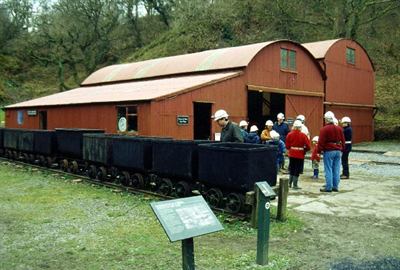
- Wanlockhead — Day, week and year licences are available through the Museum of Lead Mining. The surrounding Lead Hills area occasionally yields alluvial gold alongside the lead-mining heritage.
What each of these permits costs today, along with the separate Leadhills Estate permit, is set out in our guide to how much a gold panning licence costs.
For sites outside these arrangements, NatureScot's position is clear: if a location is a Site of Special Scientific Interest (SSSI), the landowner must obtain NatureScot consent before permitting panning, and consent would not be granted where it would damage the notified natural features of the site.
England — Private Land and No Permit Route
England is substantially more restrictive in practice than Scotland, and the reasons are structural rather than the product of any specific ban on gold panning.
The Countryside and Rights of Way Act 2000 grants public access to registered open access land on foot, but explicitly excludes "prospecting, digging, or removal of materials." You cannot gold pan under CRoWA access rights. Landowner permission is required everywhere. In rivers, the riparian landowner typically owns the riverbed to the centre line, meaning you need the permission of whoever owns the relevant section of bank — and in practice often both banks.
On the foreshore — tidal rivers, estuaries, and beaches — The Crown Estate owns around half of the foreshore around England, Wales and Northern Ireland. The Crown Estate says it does not grant permission for people to remove any gold by panning. There is currently no permit route for hobbyists to take gold from English foreshore, and gold found there legally belongs to the Crown. The equipment guide covers what tools are appropriate for small-scale recreational panning once you have the necessary permissions in place.
The Environment Agency has no gold panning licensing role but does enforce environmental law, including unlicensed water abstraction (relevant if you use pumps) and pollution of watercourses. If in doubt about a specific location, contacting the Environment Agency's local team before panning is a sensible precaution.
Wales — The Gold Belt, Protected Rivers, and Real Enforcement
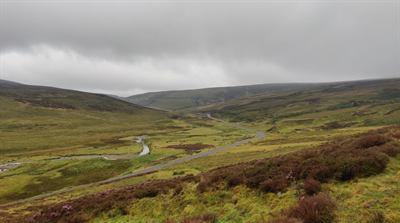
Wales contains some of the richest gold-bearing geology in the UK. Wales has produced gold since Roman times — the proven Roman workings are at Dolaucothi in Carmarthenshire — and the Dolgellau Gold Belt, running through the southern part of Snowdonia, has supplied the gold for royal wedding rings since 1923. But it is also the jurisdiction where prospectors are most likely to face active enforcement — and one prosecution makes that reality concrete.
Enforcement there is real, not theoretical. NRW's prosecution of a man caught repeatedly panning the Afon Wen at Coed y Brenin, a designated SSSI and SAC, ended in a May 2022 conviction at Llandudno Magistrates Court and just over £3,000 in fines and costs. NRW patrols, posted prohibitions are enforced, and the case sits in the heart of the Dolgellau Gold Belt — the very rivers most prospectors want to reach.
NRW's position is that gold panning is not permitted on any land they manage, and no permit system exists. The key rivers are SSSI- and SAC-designated, with protected species — including Wales's only viable freshwater pearl mussel population — raising the legal stakes further.
The National Trust's gold panning experience at Dolaucothi in Carmarthenshire is the most straightforward legal way to get a pan wet in Wales. The Wales locations guide covers these options and the wider picture of where gold occurs across the country, and our dedicated guide answers is gold panning legal in Wales in full — banned rivers, licences, and the legal routes in.
Northern Ireland — A Different Framework
Northern Ireland is covered by the Treasure Act 1996, including the 2023 amendment, but operates under additional NI-specific legislation that affects prospectors directly.
The Historic Monuments and Archaeological Objects (Northern Ireland) Order 1995 requires a licence from the Historic Environment Division (HED) for any search involving digging into the ground to find archaeological objects — this covers metal detecting and, by extension, any gold panning involving ground disturbance. HED licences are issued for archaeological projects only, not recreational prospecting. Surface panning in a flowing river without bank or ground disturbance occupies a greyer area, but the line is not clearly defined in official guidance.
For treasure finds in NI, the process differs from England and Wales: report to National Museums NI (treasure@nationalmuseumsni.org) within 14 days of believing an item may be treasure. For items found during archaeological excavations, report to HED first. The Coroners Service for Northern Ireland is involved in the formal inquest process. Crown gold rights (Mines Royal) apply.
Where You Can and Cannot Pan — A Practical Checklist
The following covers the key site designations that affect gold panning across all UK jurisdictions. Check each of these before approaching any river.
Sites of Special Scientific Interest (SSSIs)
If a location is a SSSI, the landowner must obtain consent from the relevant statutory nature conservation body — Natural England, NatureScot, or NRW — before permitting any activity listed as a "potentially damaging operation" for that site. Riverbed disturbance is typically such an operation on riverine SSSIs. Panning without the required consent on SSSI land is a criminal offence carrying an unlimited fine. Check before you go: Natural England's MAGIC Map (England), NatureScot's SiteLink (Scotland), or NRW's My Locations portal (Wales).
Special Areas of Conservation (SACs)
SACs carry stricter protection than SSSIs. Any activity likely to have a significant effect on a SAC's qualifying features requires an appropriate assessment. Most SACs that encompass gold-bearing rivers are designated for river habitat, fish species, or freshwater invertebrates. The Afon Mawddach and Afon Wen catchment are both SAC-designated — this is why panning there without NRW consent constitutes a criminal offence.
Scheduled Monuments
The Ancient Monuments and Archaeological Areas Act 1979 makes any ground disturbance within a Scheduled Monument a criminal offence without Scheduled Monument Consent from the Secretary of State (or devolved equivalent). Many old gold mine workings, stamps mills, and processing sites are scheduled. Old workings near Dolgellau and elements of the Wanlockhead mining landscape carry scheduling. Check Historic England's National Heritage List, Canmore (Scotland), or Coflein (Wales) before visiting old mining areas.
National Parks and private land
National park designation does not in itself prohibit gold panning, but parks contain a higher density of SSSIs, SACs, and Scheduled Monuments. Everywhere in England, Wales, and Northern Ireland, landowner permission is required — for the riverbank, the bed, and any land you must cross to reach the river. The UK Gold Prospector map shows locations across the country with access notes built in to help you identify where legitimate access is possible.
Wildlife Law — Unlimited-Fine Offences, Not Suggestions
The wildlife protections that apply to UK rivers are criminal statutes, not aspirational guidelines. They carry unlimited fines and, in some cases, custodial sentences. Understanding them clearly is not optional for anyone prospecting near watercourses.
The Wildlife and Countryside Act 1981 (WCA 1981) provides Schedule 5 protection to a number of species found in and around gold-bearing rivers. The Conservation of Habitats and Species Regulations 2017 extends European Protected Species (EPS) status to the most significant of these. The key offences are set out in section 9(4)(b) — intentionally or recklessly disturbing an EPS while it is occupying a place used for shelter or protection — and section 9(4)(c) — intentionally or recklessly obstructing access to such a place. Both carry unlimited fines and up to six months imprisonment.
Otter (Lutra lutra) — Schedule 5 WCA 1981 and EPS. Otters build holts — dens — in riverbanks, typically within the root systems of bankside trees. Digging a riverbank can and does destroy holts. This is not a grey area: it is a criminal offence.
Water vole (Arvicola amphibius) — Schedule 5 WCA 1981 and EPS. Water voles create burrow systems in the soil of riverbanks. Bank digging destroys them. Same offence provisions, same penalties.
Freshwater pearl mussel (Margaritifera margaritifera) — Schedule 5 WCA 1981 and EPS. One of the most endangered freshwater species in Europe. Populations survive in Scotland and in isolated Welsh catchments. Any disturbance of riverbed gravel near pearl mussel habitat risks a criminal offence. The Strathfillan/Tyndrum permit rules impose a 50-metre exclusion zone from pearl mussel habitat for exactly this reason.
Kingfisher (Alcedo atthis) — Schedule 1 WCA 1981. Special protection during the nesting season, typically April to August. Bank work near kingfisher nest sites during this period risks a species disturbance offence.
The practical message is this: bank digging is potentially criminal in many of the rivers where gold is found — not because of any gold-specific law, but because of what lives in those banks. This is why the British Gold Panning Association's Code explicitly prohibits bank digging, not as a matter of etiquette, but as a matter of criminal law.
Salmon, Spawning Seasons, and When Not to Pan
Gold-bearing rivers in the UK are also, by and large, salmon and sea trout rivers. The two facts are not coincidental — both gold and salmon favour clean, fast-moving water over gravel beds. That coincidence creates a direct conflict between gold panning and fish spawning.
The Salmon and Freshwater Fisheries Act 1975, as amended, protects salmon spawning grounds from disturbance and damage. Salmon spawn in gravel: females dig redds (spawning pits) in coarse riffle gravel, deposit eggs, and cover them. Those eggs, and the alevins that hatch from them in late winter and early spring, remain within the gravel for months. Removing or disturbing that gravel during the spawning and incubation period risks a fisheries offence. The redd can be difficult to spot — a subtle depression in otherwise unremarkable river gravel — which is why a precautionary approach to timing matters.
Statutory close seasons for salmon angling vary by river and region, but as a general guide:
- England: broadly 1 November to 31 January or 28 February, with exact dates set per-river by the Environment Agency
- Scotland: broadly October to February by district, set by District Salmon Fishery Boards
- Wales: NRW-managed, varies by river; broadly November through January
The British Gold Panning Association recommends a wider protection window: avoid salmon spawning gravel entirely from 1 October to 31 May. This significantly extends beyond the statutory angling close seasons, protecting not just spawning adults but the eggs and juveniles that remain in the gravel through late spring. This is not a legal requirement — it is best practice reflecting the biology of the fish, and the permit sites apply their own closed seasons in the same spirit (Tyndrum 1 November to 31 May, Kildonan 1 October to 15 April). Prospectors planning trips to rivers such as the Helmsdale — explored in more detail in the Scotland locations guide — should plan around this window.
The Code of Conduct — Law, Ecology, and Common Sense
The code of conduct maintained by the British Gold Panning Association, and reflected in SEPA's good practice guidance for Scotland, represents decades of accumulated experience about what responsible panning looks like. It is not a list of restrictions. It is the distilled wisdom of the prospecting community about how to pan without damaging rivers, alienating landowners, or providing ammunition to those who would close the hobby down entirely. The beginners' guide covers the practical side of getting started; what follows addresses the conduct framework underpinning every trip.
Permission and access
Before going anywhere, confirm in writing that you have permission from the landowner for the relevant section of riverbank and bed. In Scotland on open access land you have a statutory right to be there, but you do not automatically have the right to remove gold. Where permit schemes exist — Tyndrum, Kildonan, Wanlockhead — buy a permit before you arrive. It is the clearest evidence of legitimate presence; it is the landowner's permission to pan that ground and does not by itself make the gold yours.
Riverbed work — rules with real consequences
Take gravel and silt from the riverbed only, never from the bank. All material should be returned to the riverbed when you are finished — not piled on the bank where it smothers vegetation and alters the bank profile. Fill all holes before you leave, the same day if possible. SEPA guidance, as applied at the Tyndrum permit site, requires material to be replaced the same day. Do not pan within 50 metres of known freshwater pearl mussel habitat: the mussel's life cycle depends on undisturbed gravel, and any disturbance near a population carries potential criminal liability under both the WCA 1981 and the Habitats Regulations 2017.
Do not dig the bank — this is a legal point, not a request
Digging or undermining riverbanks increases erosion, smothers bankside vegetation, and destroys the homes of protected species. Otter holts and water vole burrows are built into the soil and root structure of riverbanks. Their destruction is a criminal offence under section 9(4)(b) and 9(4)(c) of the Wildlife and Countryside Act 1981, carrying an unlimited fine and up to six months in custody. The Code explicitly prohibits bank digging because of what lives there, not because it looks untidy.
Equipment limits
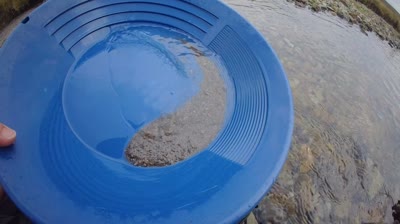
Permitted tools are: gold pan, sieve, shovel, portable sluice box, hand-operated gravel pump. Not permitted for recreational use without additional authorisation: powered machinery, electric pumps, high-bankers, suction dredges. Powered equipment capable of moving significant volumes of gravel causes disproportionate damage to river morphology and invertebrate habitat. Using it without appropriate Environment Agency, SEPA or NRW authorisation likely constitutes an unlicensed water activity. The equipment guide covers the tools that are both effective and appropriate for recreational use.
Seasonal timing
Do not pan in known salmon spawning gravels between October and May. If you are not certain whether an area contains redds, err on the side of caution — redds are not always visible to the untrained eye. Treat the BGA's October–May window as a practical minimum, not just a target.
Leave no trace
Take all litter home, including the small things. Do not wash hands, equipment, or clothing with soap or detergents in or near the watercourse — clean upland rivers are sensitive to surfactants, and sunscreen and insect repellent can affect invertebrates and aquatic flora. Keep your group small to minimise trampling of bankside vegetation and disturbance to nesting birds and burrowing mammals. Assess river flow before wading: cold upland rivers carry a real hypothermia risk, and water levels can rise quickly after rain.
Representing the hobby
Each prosecution — like the 2022 Coed y Brenin case in Wales — generates media coverage that shapes public and regulatory attitudes to panning for years. Thoughtful, law-abiding prospectors are the hobby's best advocates. NRW, NatureScot, and the Environment Agency are not uniformly hostile to recreational panning; the relationship is managed partly through how the community conducts itself.
What to Do If You Find Gold
If you find alluvial gold — flakes, dust, or a small nugget — at a permitted site in Scotland, keeping small finds is tolerated in practice rather than granted as a right. A permit is the landowner's permission to pan that ground; it does not by itself make the gold yours, and the Strathfillan Community Development Trust's own Tyndrum page says "you can pan for gold, but it is against the law to remove or sell the gold you find". Where the Crown holds the gold rights, Crown Estate Scotland's formal policy is not to grant permission for the removal of gold by recreational panning. The permit system creates a workable framework within which the hobby functions.
In England and Wales, the legal position is that the Crown owns naturally occurring gold. Readers should understand that position clearly and make their own informed decisions accordingly. There is no documented enforcement action in England or Wales against casual recreational panners retaining small quantities of alluvial gold; however, the legal framework does not confer a right to take it.
If, while panning, you find an object that looks as though it could be treasure — a coin, ring, brooch, or other worked metal item that appears old — stop handling it, note its exact find-spot, and contact your local Finds Liaison Officer (FLO) of the Portable Antiquities Scheme as your first step. The FLO will assess the find and guide you through the formal process that involves the local coroner. The legal deadline for reporting is 14 days from when you have reason to believe the item may be treasure. The free beginners' pack includes a quick-reference legal checklist covering reporting requirements and regional contacts.
Penalties at a Glance
| Offence | Legislation | Maximum penalty |
|---|---|---|
| Panning on NRW-managed land without permission | Environmental and byelaw regulations | Fine — see the 2022 Coed y Brenin case (£3,000+) |
| Damaging a Site of Special Scientific Interest | Wildlife and Countryside Act 1981 | Unlimited fine |
| Disturbing or killing a European Protected Species (otter, water vole, freshwater pearl mussel) | WCA 1981 s9(4); Habitats Regulations 2017 | Unlimited fine + up to 6 months imprisonment |
| Works on a Scheduled Monument without consent | Ancient Monuments and Archaeological Areas Act 1979 | Unlimited fine |
| Panning in Northern Ireland involving ground disturbance without HED licence | Historic Monuments and Archaeological Objects (NI) Order 1995 | Fine |
| Failing to report treasure within 14 days | Treasure Act 1996 | Up to 3 months imprisonment and/or fine |
Frequently Asked Questions
Is gold panning legal in the UK?
Yes, broadly — but the answer differs by country. In Scotland, statutory access rights under the Land Reform (Scotland) Act 2003 mean you can reach most rivers without landowner permission, though Crown mineral rights still apply to the gold itself. In England and Wales there is no equivalent right: landowner permission is essential everywhere. In Wales, many of the most productive rivers run through NRW-managed SSSIs where panning is prohibited and actively enforced. Legal panning requires the right location, the right permissions, and respect for protected sites and species.
Do I need a permit to pan for gold in the UK?
It depends on where you pan. In Scotland, designated sites at Tyndrum (Strathfillan Community Development Trust), Kildonan (Suisgill Estate), and Wanlockhead (Museum of Lead Mining) operate permit schemes and are the recommended route for anyone who wants legal clarity. No government permit scheme exists in England or Wales; landowner permission stands in instead. The Crown Estate currently has no licence route for recreational panners in England or Wales. In Northern Ireland, any panning involving ground disturbance requires a Historic Environment Division licence, issued only for archaeological projects.
Can I keep the gold I find while panning?
By royal prerogative (England and Wales) and under the Royal Mines Act 1424 (Scotland), naturally occurring gold belongs to the Crown in most cases; in Scotland the rights were granted away by deed in some areas, including Sutherland and parts of Argyll. In Scotland, a permit at a designated site is the landowner's permission to pan that ground; it does not by itself make the gold yours. Keeping small finds is tolerated in practice, with no documented enforcement against casual recreational panners, but it is not a right. In England and Wales, The Crown Estate says it does not grant permission for people to remove any gold by panning, meaning there is currently no formal route to take gold away from Crown land. Readers should understand this legal position clearly and make their own informed decisions accordingly.
Is it illegal to pan for gold in Wales?
The picture requires nuance. Gold panning is prohibited on all NRW-managed land — this covers the most productive rivers in the Dolgellau Gold Belt, including Afon Wen and the Coed y Brenin area, which are SSSIs and SACs. Panning there without NRW consent is a criminal offence, and NRW enforces actively — as the 2022 prosecution of a man caught panning there demonstrates. Supervised commercial gold panning experiences in the Dolgellau area offer a legal route. On private land elsewhere in Wales, landowner permission and protected site checks apply in full.
Do I have to report gold I find while panning?
No. Raw alluvial gold — flakes, dust, and nuggets found while panning — is not treasure under the Treasure Act 1996 and is not reportable. The Act covers manufactured objects with archaeological significance: coins, rings, hoards, and similar artefacts. This position is unchanged by the 2023 amendment (SI 2023/404). However, if you find a worked gold object — an old coin, ring, or brooch — that is different: contact your local Finds Liaison Officer of the Portable Antiquities Scheme first, as it may qualify as treasure and must be reported within 14 days.
What is the salmon spawning closed season — and does it affect gold panning?
Statutory salmon fishing close seasons vary by river: broadly November to January or February in England, October to February in Scotland, and NRW-managed dates in Wales. Gold panning is not a fishing activity, but disturbing salmon redds (spawning gravel beds) risks an offence under the Salmon and Freshwater Fisheries Act 1975. Beyond the statutory dates, the British Gold Panning Association recommends avoiding spawning gravel entirely from 1 October to 31 May, protecting eggs and juveniles — including alevins still in the gravel — right through spring.
Can I dig in the riverbank while gold panning?
Almost certainly not — and in many cases it is a criminal offence. Digging riverbanks can destroy otter holts (dens built into bank soil and root systems) and water vole burrows. Both species are European Protected Species under the Wildlife and Countryside Act 1981 and the Conservation of Habitats and Species Regulations 2017. Offences carry unlimited fines and up to six months imprisonment. The British Gold Panning Association Code explicitly prohibits bank digging because of what lives in the bank, not as a matter of style or preference.
Can I pan for gold on the beach or in a tidal river?
Around half of the foreshore around England, Wales and Northern Ireland — tidal beaches and tidal river sections — is owned by The Crown Estate. The Crown Estate says it does not grant permission for people to remove any gold by panning, meaning there is currently no permit route for hobbyists. Gold found on the foreshore legally belongs to the Crown. In Scotland, where the Crown holds the rights, Crown Estate Scotland's policy is not to grant permission to remove gold, though inland permit sites operate practical arrangements. Always check the ownership and designation status of any tidal area before attempting to pan.
What equipment is allowed for recreational gold panning in the UK?
The British Gold Panning Association Code and SEPA good practice guidance permit: gold pan, sieve, shovel, portable sluice box, and hand-operated gravel pump. Powered machinery, electric pumps, high-bankers, and suction dredges are not permitted for recreational use without additional authorisation from the Environment Agency, SEPA, or NRW. Powered equipment moves far greater volumes of riverbed material, causing disproportionate habitat damage. Using it without authorisation may constitute an unlicensed water activity under environmental regulations, regardless of other permissions obtained.
Is gold panning allowed in national parks?
National park designation does not by itself prohibit gold panning. However, national parks contain a high density of SSSIs, SACs, and Scheduled Monuments — all of which carry their own criminal restrictions. The Cairngorms, Eryri (Snowdonia), and Dartmoor all contain areas where panning is effectively prohibited under one or more of these designations. Always check the SSSI, SAC, and Scheduled Monument status of any specific location before visiting, regardless of whether it lies within a national park boundary.
What happens if I pan for gold on an SSSI?
If the landowner has not obtained consent from Natural England, NatureScot, or NRW, panning on a SSSI is a criminal offence under the Wildlife and Countryside Act 1981, carrying an unlimited fine. The 2022 prosecution in Wales — in which a man was convicted and ordered to pay just over £3,000 in fines and costs — involved panning on an SSSI and SAC at Coed y Brenin and Afon Wen. Check SSSI status before visiting using MAGIC Map (England), NatureScot SiteLink (Scotland), or NRW My Locations (Wales).
Is gold panning covered by the Scottish Outdoor Access Code?
The Land Reform (Scotland) Act 2003 grants statutory access rights for recreational purposes, and the Scottish Outdoor Access Code supports gold panning as a recreational activity. This means you can legally reach most Scottish rivers to pan without specific landowner permission. However, the access right covers the activity of panning, not the right to take the gold. Crown Estate Scotland's mineral rights apply regardless of access rights — removal of gold is a separate legal question from access to the riverbank.
Do I need a licence to pan for gold in Scotland?
There is no national gold panning licence in Scotland. Instead, the recognised route is a site permit at one of the designated locations — Tyndrum (Strathfillan Community Development Trust), Wanlockhead (Museum of Lead Mining), or Kildonan (Suisgill Estate). Statutory access rights under the Land Reform (Scotland) Act 2003 let you reach most other rivers without a licence, but those access rights cover the act of panning, not ownership of the gold, which remains with Crown Estate Scotland. For legal clarity, a permit site is the safest choice; elsewhere, treat the gold as the Crown's and pan responsibly under the Scottish Outdoor Access Code.
Are gold dredges and high-bankers legal in the UK?
For recreational use, no — not without specific authorisation. Suction dredges, high-bankers, electric pumps, and other powered machinery are not covered by the British Gold Panning Association Code or SEPA good-practice guidance, and using them needs additional consent from the relevant regulator: the Environment Agency in England, SEPA in Scotland, or Natural Resources Wales in Wales. These devices move far more riverbed material than a pan or hand sluice, so unauthorised use can breach water and habitat regulations on top of any trespass or Crown mineral-rights issues. Recreational panners should stick to a gold pan, sieve, shovel, hand sluice, and hand-operated gravel pump.
Legal disclaimer: This article is provided for general information only and does not constitute legal advice. Laws and policies change; always verify current guidance with Natural Resources Wales, NatureScot, Natural England, Crown Estate Scotland, The Crown Estate, and other relevant authorities before prospecting. If you need advice about a specific situation, consult a qualified solicitor. The authors accept no liability for decisions made in reliance on this article.
Find legally accessible gold locations across the UK with access notes and regional permissions built in.
Open the Interactive Map →Free Beginner's Pack — 16-page PDF: top 10 UK locations with GPS, equipment checklist, legal cheat sheet and app tutorial.
Get the Free Pack →