The short answer
Yes, you can still pan for gold at Kildonan, near Helmsdale in Sutherland, and it is the most famous gold-panning destination in Britain. The water to work is the Kildonan Burn at Baile an Or, a few miles up the strath from Helmsdale on the A897. Recreational hand panning is allowed under the Suisgill Estate's permit scheme: buy a day permit, use hand tools only, and pan the stretch between the stone road bridge at Baile an Or and the Kildonan Falls during the open season (15 April to 1 October). It is not a free public right, but it is open and affordable. The fee listed by the estate from April 2025, still current in October 2026, is £15 per adult per day. Always confirm the current arrangement with the estate before you go.
In the autumn of 1868 a Sutherland man named Robert Nelson Gilchrist came home from the Australian goldfields, walked up the burn behind the croft where he was born, and proved what locals had half-suspected for generations: there was gold in the Strath of Kildonan. By the following spring a tent town had sprung up on the banks of the burn, and somebody gave it a name that has never left the map — Baile an Or, the township of gold. More than a century and a half later the tents are gone, but the gold is still there, the burn is still open, and you can still kneel in the same cold water and swirl the same gravel. It is, quite simply, the one place in Britain where an ordinary person can legally pan the same river that triggered a gold rush. This is the authoritative, practical guide to going: exactly where it is, the permit and the law, the season, and what you will genuinely find.
Kildonan is one of the very few places in Britain where access is genuinely clear-cut: a named landowner, a published permit scheme, and a defined stretch of river you are allowed to work. That is rare, and it is why this single glen, rather than the dozens of other gold-bearing Scottish burns, remains the spiritual home of the UK hobby. The full historical story is in our deep-dive on the 1868-69 Sutherland Gold Rush; this guide gets you to the water. Every Scottish site sits on the UK Gold Prospector interactive map with access notes, and Kildonan sits inside our wider guide to where to pan for gold in the UK.
In this guide
Kildonan at a glance
| Location | Kildonan Burn at Baile an Or, Strath of Kildonan, Sutherland |
|---|---|
| Nearest village | Helmsdale (on the A9, about 1 hour north of Inverness) |
| Who owns it | The Suisgill Estate (private land, not open access) |
| Permit needed? | Yes, a Suisgill Estate day permit |
| Fee (from April 2025) | £15 per adult/day; 16-18 £10 and under-16s free, both with a permit-holding adult. Confirm current price with the estate. |
| Season | 15 April to 1 October (closed 1 Oct - 15 Apr for spawning) |
| Permitted stretch | Kildonan Burn, stone road bridge at Baile an Or up to the Kildonan Falls |
| Equipment | Hand tools only; no sluices or powered kit |
| What you'll find | Fine flake gold and flour gold; occasional small picker |
See Kildonan and Suisgill on the live map
The exact panning stretches, with GPS coordinates and access notes, alongside 200 verified UK gold sites.
Where is Kildonan and Baile an Or?
Kildonan lies in the Strath of Kildonan, a long Highland glen running north-west from the coastal village of Helmsdale into the interior of eastern Sutherland. Helmsdale sits on the A9 about an hour north of Inverness and is a stop on the Far North Line railway; from there the A897 single-track road runs the length of the strath towards Kinbrace and Forsinard.
A few miles up that road is Baile an Or, Gaelic for the "township of gold", on the Kildonan Burn near where it joins the Helmsdale River. This is the heart of it: the site of the principal 1869 rush settlement and the marker for the modern panning ground. A short distance further up the strath is the Suisgill Burn, a second gold-bearing tributary that fed the satellite diggings of the rush. Both burns drain country built on Moine metasedimentary rock cut by the Strath Halladale Granite, which is the ultimate bedrock source of the gold.
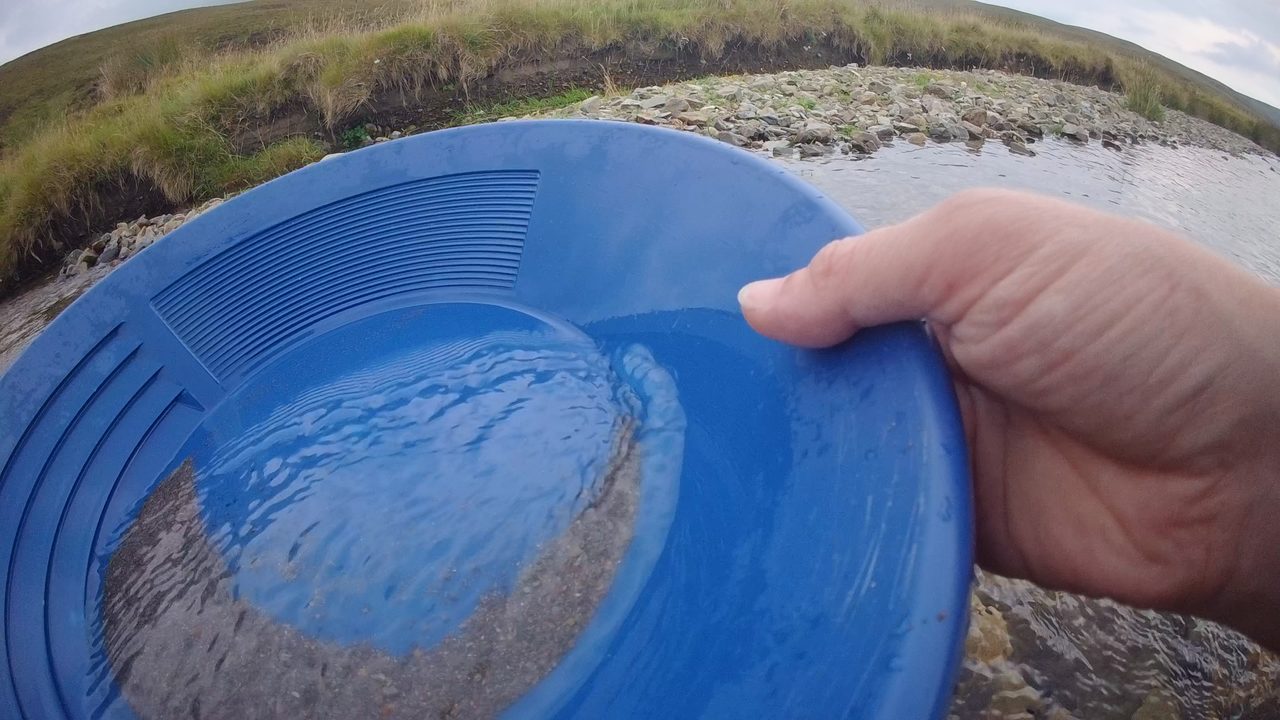
The geography is compact and friendly to a first visit. The drive from Helmsdale to Baile an Or takes only minutes, there is roadside parking near the stone bridge, and the burn is right there. You do not need to walk far or carry much. That accessibility, gold ground a short hop from a working village with hotels, shops and a museum, is a large part of why Kildonan rather than the more remote glens became, and remains, the home of the British hobby.
The 1868-69 rush: why it matters
The history is not decoration here, it is the reason Kildonan is on the map at all. Robert Nelson Gilchrist, a local man who had spent seventeen years on the Australian diggings, returned to Sutherland and in 1868 found gold in the Kildonan Burn. Word spread, and through 1869 several hundred hopefuls converged on the strath, throwing up the rough settlements of Baile an Or on the Kildonan Burn and Carn nam Buth on the Suisgill. At its peak the diggings were a tented and turf-hutted shanty town with its own informal stores.
The Duke of Sutherland, who owned the land, regularised it rather than banning it: prospectors paid a licence of roughly £1 a month to dig. The rush was short. By the end of 1869 it had largely wound down, partly because returns thinned and partly because the estate grew concerned about damage to the salmon rivers and the surrounding sheep ground. Estimates of the gold recovered vary, but it was measured in thousands of pounds of value at the time rather than a Klondike fortune. The lasting legacy is cultural: Kildonan established Scotland, and Sutherland in particular, as Britain's gold country, and the modern permit you buy today is the direct descendant of the Duke's 1869 licence. For the full account, the records and the people, see our Sutherland Gold Rush deep-dive.
The permit and the rules
The single most important practical fact about Kildonan is that the Kildonan Burn at Baile an Or is on the Suisgill Estate, and you need the estate's permit to pan there. This is private land, not open-access common, but the estate runs a long-established recreational permit scheme that keeps the famous water genuinely accessible to visitors.
Kildonan Burn — the Suisgill Estate permit (listed by the estate “from April 2025” and still current in October 2026):
• Fee: £15 per adult per day; ages 16-18 at £10 and under-16s free, both when accompanying a permit-holding adult. On proof of a stay in a Helmsdale B&B or hotel, the permit holder may bring a companion panner.
• Where: the Kildonan Burn between the stone road bridge at Baile an Or and the Kildonan Falls.
• Season: 15 April to 1 October. Panning is forbidden between 1 October and 15 April.
• Hours: 08:00 to 22:00, or dusk if earlier.
• Time limit: a maximum of two weeks per person per year, in no more than two periods.
• Tools: hand tools only — a pan, a hand sieve or riddle, a hand trowel, a small spade, and a gravel pump with a barrel no wider than 2.5 inches. Sluices and any powered or mechanical equipment are prohibited. No digging into or undercutting the banks. No commercial or competitive panning.
• Permits: sold in Helmsdale (for example at Glencoast) and online.
Confirm the current fee, season and process directly with the Suisgill Estate before you travel — terms and prices can change between seasons, and the figures above are those the estate lists from April 2025, still current in October 2026.
A note on the Suisgill Burn itself, the second tributary: access there is more restricted than on the Kildonan Burn. As published, the Suisgill Burn is generally reserved for guests staying in estate accommodation, with a limited concession for older visitors, so for most day-trippers the Kildonan Burn at Baile an Or is the water to plan around. Again, check the current position with the estate. Our guide to what each Scottish permit costs sets the Suisgill fees beside the Tyndrum, Wanlockhead and Leadhills permits.
The permit model at Kildonan descends directly from the licensing regime the Duke of Sutherland imposed in 1869. The modern Suisgill scheme is a private landowner arrangement, not a Crown grant: Crown Estate Scotland does not issue recreational gold-panning permits. How Kildonan compares to the schemes at Wanlockhead and Tyndrum is covered in our UK gold panning laws guide and our Scotland locations guide.
Season, weather and the midges
The permit season runs 15 April to 1 October, and within that window the best conditions are usually the settled low-water spells of high summer, roughly late June through August. Low water exposes the gravel bars, bedrock cracks and the slack water behind boulders where gold concentrates, and makes the burn far easier to read and to work safely.
Two Highland realities to plan for. First, the midges: from roughly late June through August they can be relentless on a still, damp day in the strath, so a head net and repellent are not optional. Second, the weather: even in summer the strath gets wet and cold quickly, so layers, waterproofs and something warm for when you are stood in the water pay off. After heavy rain the burn runs high and coloured for a day or two, and there is no point panning a burn in spate, so build a little flexibility into your dates.
How to pan the Kildonan Burn
The technique at Kildonan is ordinary gold panning applied to ordinary alluvial features, the same reading that works on any gold-bearing river. The gold here is heavy and the burn has been concentrating it into predictable traps for thousands of years; your job is to find those traps and process the gravel patiently.

Look for the inside of bends where the current slackens and drops its heavy load, the downstream side of large boulders, the cracks and crevices in exposed bedrock, and the gravel packed in behind natural obstructions. Classify your material through the hand sieve to remove the big stones, then pan the fines down patiently: the gold is fine and will sit at the very bottom of the pan with the black sand. A snuffer bottle is the easiest way to lift the recovered flakes off the water at the end.
If you have never read a river before, half an hour of preparation pays off, knowing where the gold sits turns a frustrating day into a productive one. Our guide to reading a river for gold covers exactly the features to target, and the 1869 prospectors worked these same burns using nothing more than this intuition and a pan.
What you'll realistically find
Be honest with yourself before you go. Kildonan produces fine flake gold and flour gold, with the occasional small picker on a good day. It does not produce nuggets to order, and anyone promising you a Klondike day is selling a fantasy. A fair, well-worked day on the permit is realistically a handful of flakes in the bottom of a vial and a snuffer bottle of black sand: modest by weight, but real gold, and the same gold that triggered the only gold rush in British history.
That is the right way to frame a Kildonan trip. The value here is not the metal, the few flakes you recover are worth very little in pure cash terms. The value is standing in the exact water the 1869 rush worked, recovering the same fine Sutherland gold by hand, in a glen that is the cultural home of the British hobby. Come for the history and treat the flakes as the souvenir, and Kildonan rarely disappoints. Come expecting to get rich, and it always will.
For a sense of the scale of British gold and the rare exceptional finds, including the modern Reunion Nugget, the largest natural gold nugget recovered in Britain, our Sutherland Gold Rush deep-dive covers the records and what the rush actually produced.
The law: gold is the Crown's
One legal point surprises many first-time panners: the gold you recover is not yours by default. In Scotland gold and silver belong to the Crown under the Royal Mines Act 1424 except where the rights were granted away by deed, which includes Sutherland, where Kildonan lies. Whether Suisgill Estate holds the gold rights at Kildonan is not published, and its permit covers the ground and its rules, not the metal.
In practice, the tiny amounts a recreational panner recovers are not pursued, and the Suisgill permit gives you legitimate access and permission to pan. But it is worth understanding the framework: you are panning with permission on private land, recovering a metal that belongs to the Crown or to whoever holds the rights by deed, not to you by default. You are not exercising a free public right to keep whatever you find. Combine that with the estate's hand-tool-only rules and the no-bank-digging condition, and you have the complete legal and practical picture. Full detail is in our UK gold panning laws guide.
Planning the trip from Helmsdale
Helmsdale is the base for any Kildonan trip and the right place to start: a small, planned fishing village at the mouth of the Helmsdale River, with hotels, B&Bs and self-catering, a couple of shops and pubs, and crucially the Timespan Museum, which holds material from the Baile an Or rush and tells the full story of 1869. Twenty minutes in the museum before you drive up the strath turns the panning trip from a stand in a stream into a walk through the most famous chapter in British gold history.
A simple plan that works: buy your permit (in Helmsdale or online), start at the Timespan Museum for context, drive up the A897 to Baile an Or, park near the stone bridge, and work the burn upstream towards the Kildonan Falls within the permitted stretch. Pack light, a pan, a classifier sieve, a trowel, a snuffer bottle and a vial will outperform a heavy rig if you read the water well. Neoprene waders make sustained work in the cold burn far more comfortable; wellies are fine for a short session in low water.
Kildonan is the one place in Britain where you can pan the exact water that made history under a clear, published permit. Buy the permit, respect the hand-tool rules, read the burn, and treat the flakes as the souvenir. The history is the prize.
Frequently Asked Questions
Can you still pan for gold at Kildonan and Helmsdale?
Yes. The Kildonan Burn at Baile an Or, a few miles inland from Helmsdale in Sutherland, is the most famous gold-panning spot in Britain, and recreational hand panning still happens there today under the Suisgill Estate's permit scheme. You buy a day permit, use hand tools only, and work the stretch between the stone road bridge at Baile an Or and the Kildonan Falls during the open season. Helmsdale is the base for any trip.
Do you need a permit to pan at Kildonan?
Yes. The Kildonan Burn at Baile an Or is on the Suisgill Estate and panning requires the estate's permit. As listed by the estate from April 2025 and still current in October 2026, the fee is £15 per adult per day, with 16 to 18-year-olds at £10 and under-16s free, both when accompanying a permit-holding adult; on proof of a stay in a Helmsdale B&B or hotel, the permit holder may bring a companion panner. Permits are sold in Helmsdale (for example at Glencoast) and online. Always confirm the current fee and process with the estate before you travel.
Where is Baile an Or?
Baile an Or, Gaelic for the township or village of gold, sits on the Kildonan Burn in the Strath of Kildonan, a few miles inland from Helmsdale in eastern Sutherland. It is reached on the A897 road up the strath, and it is the site of the principal 1869 gold-rush settlement. The stone road bridge at Baile an Or marks the start of the permitted panning stretch.
Is there still gold at Helmsdale and Kildonan?
Yes. The Kildonan and Suisgill Burns still produce gold, predominantly fine flakes and flour gold with the occasional small picker. The gold erodes out of the altered Strath Halladale Granite and concentrates in the stream gravels, which the rivers re-sort every winter. The 1869 prospectors did not remove it all, and fresh gold has been delivered to the gravels in the 150-plus years since. A fair day is realistically a handful of flakes, not nuggets.
Is gold panning at Kildonan free?
No. The Kildonan Burn is on private estate land and a Suisgill Estate permit is required, so it is not free public access. The fee listed by the estate from April 2025, still current in October 2026, is £15 per adult per day. The water is open to anyone holding a valid permit during the season, so it is affordable and open, but it is a paid permit rather than a free right. Confirm the current price with the estate before travelling.
What will you find panning at Kildonan?
Predominantly fine flake gold and sub-millimetre flour gold, with the occasional small picker on a good day. Nuggets are exceptional and never the realistic expectation. Alongside the gold you will recover black sand (magnetite), and the satisfaction of working the exact water that triggered Britain's only true gold rush. The real draw at Kildonan is the history and the reliability of the flake gold rather than the cash value of the metal.
When is the season, and is the gold yours to keep?
The Suisgill Estate permits panning on the Kildonan Burn between 15 April and 1 October; it is forbidden between 1 October and 15 April to protect spawning fish. Permitted hours are 08:00 to 22:00 (or dusk if earlier), with a maximum of two weeks per person per year in no more than two periods, hand tools only. On ownership: in Scotland gold and silver belong to the Crown under the Royal Mines Act 1424 except where the rights were granted away by deed, which includes Sutherland; whether Suisgill Estate holds the gold rights at Kildonan is not published. In practice the tiny amounts a recreational panner recovers are not pursued, and the Suisgill permit covers the ground and its rules, not the metal.
Important: The Kildonan Burn at Baile an Or is on the Suisgill Estate, and recreational panning requires the estate's permit, a private landowner arrangement, not a delegated Crown grant. Crown Estate Scotland does not issue recreational gold-panning permits. The fees, season and rules in this article reflect the Suisgill Estate's arrangement as listed from April 2025 and still current in October 2026, and can change between seasons — confirm the current permit, fee and process directly with the estate before you travel. In Scotland gold and silver belong to the Crown under the Royal Mines Act 1424 except where the rights were granted away by deed, which includes Sutherland; whether Suisgill Estate holds the gold rights at Kildonan is not published, and its permit covers the ground and its rules, not the metal. Use hand tools only, never dig the banks, follow SEPA good-practice criteria, and do not pan outside the permitted season or stretch. This article is general guidance, not legal advice. Full detail in our UK gold panning laws guide.
Plan your Kildonan trip on the UK Gold Prospector map
The exact panning stretches at Baile an Or and Suisgill, with GPS coordinates, geology and access notes, plus 200 verified sites across Britain.
Free Beginner's Pack — 16-page PDF: top 10 UK locations with GPS, equipment checklist, legal cheat sheet and app tutorial.
Get the Free Pack →