Short answer
Yes — Cornwall has real placer gold, but it is fine, scarce and recovered as a by-product rather than mined for its own sake. The medieval and early-modern tin-streamers of the Carnon Valley, the Helford catchment and Restronguet Creek pulled small amounts of alluvial gold from the same gravels they worked for tin, and documented Cornish gold finds run from the late medieval period to today. Cornish flake is distinctive — slightly paler than Scottish gold because it carries more silver. The catch is access: much of the gold-bearing country sits inside the Cornish Mining World Heritage Site, and there is no permit scheme, so legal panning needs careful preparation.
Cornwall is the most paradoxical gold ground in Britain: a county world-famous for mining that was never really a gold county at all. The gold came up alongside the tin — a by-product of the great alluvial tin-streaming industry that worked the valley gravels of west Cornwall for the better part of a thousand years. It is real, it is documented, and it has a chemistry all its own. But it is not the place to go for an easy day's panning.
This guide covers what you actually need to know: whether there is gold in Cornwall and where it sits, the famous Carnon Valley and the other granite-aureole catchments, why Cornish gold looks paler in the pan, the demanding legal picture, and what a hobbyist will realistically recover. Every site is on the UK Gold Prospector interactive map with the access notes you need, and the wider picture is in our guide to where to find gold in England.
In this guide
See the Cornish gold ground on the live map
The Carnon Valley, Helford and West Penwith catchments — with GPS coordinates and access notes — alongside 200 verified UK gold sites.
Is there gold in Cornwall?
Yes. Cornwall has the longest continuous tradition of gold recovery in England — paradoxically, because Cornwall was never primarily a gold-mining country. The medieval and early-modern tin-streamers of the Carnon Valley, the Helford catchment and the Restronguet Creek area worked the alluvial cassiterite (tin ore) deposits and recovered small quantities of placer gold alongside the tin as a by-product. Documentary references to Cornish gold finds run from the late medieval period through to the present day.
So the honest answer is layered: there is genuinely gold in Cornwall, it is in the rivers and valley gravels rather than in workable lode form, and it has always been incidental to the tin. That makes Cornwall geologically interesting and historically rich, but it does not make it an easy or generous place to pan — the gold is fine and thinly spread.
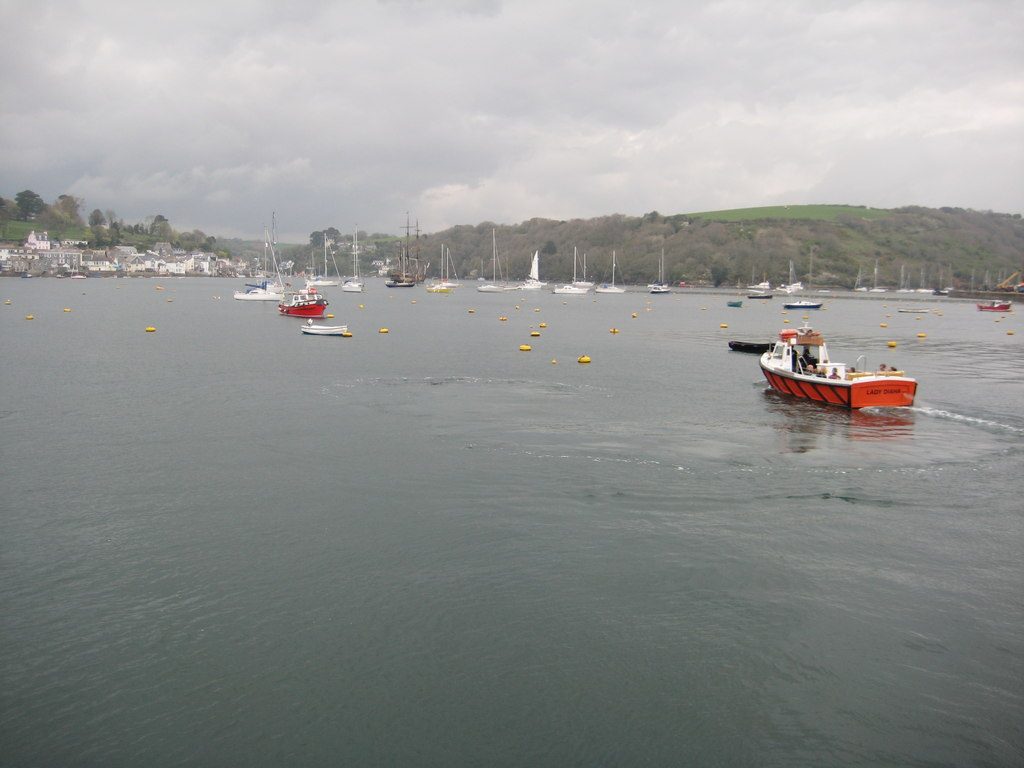
The Carnon Valley
The Carnon Valley, running through the parishes of Perranarworthal, Devoran and Bissoe in west Cornwall, is the most famous of the historic Cornish tin-streaming districts. The valley gravels were worked continuously from the medieval period through to the early twentieth century, producing the bulk of Cornwall's recorded alluvial tin output and a documented but minor stream of recovered gold. The mineral assemblage of the Carnon Valley placer is unusually rich for a small alluvial field — cassiterite, gold, the lead-arsenic compound mimetite, and trace tungsten — and the gold itself sits in flat flakes of high silver content reflecting the granite-aureole source.
Modern recreational access to the Carnon Valley operates under the standard England framework — landowner permission, Environment Agency compliance — plus the additional considerations of the Cornish Mining World Heritage Site, which inscribes much of the valley and constrains how much of the historic mining landscape can be disturbed. The valley is not a permit-backed site in the Wanlockhead sense; it is a landscape with documented gold-bearing gravels and a legal framework that requires careful navigation.

Helford, Restronguet and West Penwith
The Helford catchment and the Restronguet Creek area on the Fal Estuary carry the same kind of granite-aureole alluvial gold in smaller and more dispersed concentrations. The recovery history is less prominent than the Carnon but the underlying geology is the same, and both areas sit inside the Cornish Mining World Heritage Site footprint and operate under the same constraints.
One further district worth a mention is the St Just area in West Penwith, the granite peninsula at the western end of Cornwall. The streams draining the granite into the Atlantic carry trace alluvial gold in the same broad pattern as the Carnon and Helford catchments, with the additional consideration that much of the West Penwith mineral country is now part of the Cornish Mining World Heritage Site at a high inscription density. Recreational access here is constrained by a combination of National Trust land holdings, AONB designation, and the heritage-site framework — the country is geologically rich and historically productive, but legally demanding.
Why Cornish gold is silver-rich
One geochemical detail worth knowing because it shapes how Cornish gold looks in the pan: placer gold recovered from the Carnon Valley and adjacent catchments characteristically carries a slightly higher silver content than typical Scottish placer gold, sitting at roughly 15–20 per cent silver compared with the 5–15 per cent typical of Highland flake. The visual effect is that Cornish flake gold has a marginally paler, more electrum-like colour in the pan than Scottish flake.
Most prospectors will not notice this on a casual inspection, but it is part of why anyone trying to match a recovered specimen to its likely source region can sometimes do so confidently. The silver-rich composition reflects the granite-aureole hydrothermal source — a different fluid chemistry from the Dalradian or Moine-hosted Scottish deposits. If you want the full picture of what you are looking at in the pan, our UK gold minerals guide covers gold versus fool's gold and the mineral tags around it.
Is it legal to pan for gold in Cornwall?
Only with permission — and Cornwall is more constrained than most of England. There is no Scottish-style statutory access right here: you need the landowner's consent for the relevant riverbank, you must comply with Environment Agency conditions including the salmon-spawning closure where it applies, and you must respect SSSIs and other protected designations. The gold itself, as almost everywhere in Britain, belongs to the Crown by royal prerogative.
On top of all that, much of the historic gold-bearing country — the Carnon Valley, Helford, Restronguet and West Penwith — sits inside the Cornish Mining World Heritage Site, which limits how much of the mining landscape can be disturbed. The practical upshot is that Cornwall rewards careful preparation: confirm ownership and designation before you go, never dig the bank, and treat the heritage landscape with the same care as a protected site. The full legal background is in our UK gold panning laws guide.
What will you realistically find?
Realistically, a few fine flakes for a lot of patient work. Cornish gold is fine, scarce and slow to reward concentrated effort — the realistic outcome for a hobbyist on a permitted Cornish stretch is small flakes and the satisfaction of having worked country that has been producing gold since the medieval period. Anyone promising nuggets is selling a fantasy.
That is not a reason to write Cornwall off — it is a reason to come for the right reasons. The pull here is the history and the geology: the chance to recover a paler, silver-rich flake from the same gravels the tin-streamers worked a thousand years ago. Learning to read the water is what makes the difference between a flake and an empty pan, and our river-reading guide covers exactly that. A free 16-page summary of the best beginner sites across the UK is in our Beginner's Pack.
Frequently Asked Questions
Is there gold in Cornwall?
Yes. Cornwall has real placer (alluvial) gold, recovered for centuries as a by-product by the tin-streamers who worked the Carnon Valley, the Helford catchment and Restronguet Creek. Cornwall was never primarily a gold county — the gold came up alongside the alluvial tin — but documented finds run from the late medieval period to the present day. It is fine, scarce flake gold, not nuggets.
Where is the best place to find gold in Cornwall?
The Carnon Valley — through Perranarworthal, Devoran and Bissoe in west Cornwall — is the most famous historic tin-streaming district and produced the bulk of Cornwall's recorded alluvial output, with a documented minor stream of gold. The Helford catchment, Restronguet Creek on the Fal Estuary, and the St Just streams of West Penwith carry the same granite-aureole gold in smaller, more dispersed concentrations.
Can you legally pan for gold in Cornwall?
Only with permission, and Cornwall is more constrained than most. There is no Scottish-style access right in England: you need landowner consent, Environment Agency compliance, and respect for protected sites. On top of that, much of the gold-bearing country sits inside the Cornish Mining World Heritage Site, which limits how much of the mining landscape can be disturbed. Cornwall is not a permit-backed site like Wanlockhead — it requires careful legal navigation.
Why is Cornish gold a paler colour than Scottish gold?
Cornish placer gold characteristically carries more silver — roughly 15 to 20 per cent, against the 5 to 15 per cent typical of Highland flake. The higher silver content gives Cornish flake a marginally paler, more electrum-like colour in the pan. It reflects the granite-aureole hydrothermal source, a different fluid chemistry from the Scottish deposits.
How much gold will I realistically find in Cornwall?
Very little, slowly. Cornish gold is fine, scarce and slow to reward concentrated effort — the realistic outcome on a permitted Cornish stretch is a few small flakes and the satisfaction of working historic ground. Anyone expecting nuggets will be disappointed; the draw is the history and the geology as much as the metal.
Is Cornwall Gold the same as finding gold in Cornwall?
No. Cornwall Gold is a jewellery and visitor centre at Tolgus Mill near Redruth, built around the historic Tolgus tin-streaming works, where visitors can try panning in the mill's panning troughs. It is a family day out, not a natural gold deposit. The gold in this guide is the real thing: fine flake from Cornwall's tin-streaming valleys, which takes permission, patience and a great deal of gravel.
Important: All UK gold panning is subject to Crown gold rights and to access, environmental and protected-site law. In Cornwall there is no public permit scheme, and much of the gold-bearing country lies within the Cornish Mining World Heritage Site and other designations (SSSI, AONB, National Trust land). Always obtain landowner permission, confirm designation status before visiting, comply with Environment Agency conditions, and never dig the bank. This article is general guidance, not legal advice — verify current law and access with the Environment Agency, Natural England or the relevant authority. Full detail in our UK gold panning laws guide.
Cornwall's gold ground is on the UK Gold Prospector map
GPS coordinates, geology and access notes for the Carnon Valley and the wider Cornish catchments, plus 200 verified sites across Britain.
Free Beginner's Pack — 16-page PDF: top 10 UK locations with GPS, equipment checklist, legal cheat sheet and app tutorial.
Get the Free Pack →