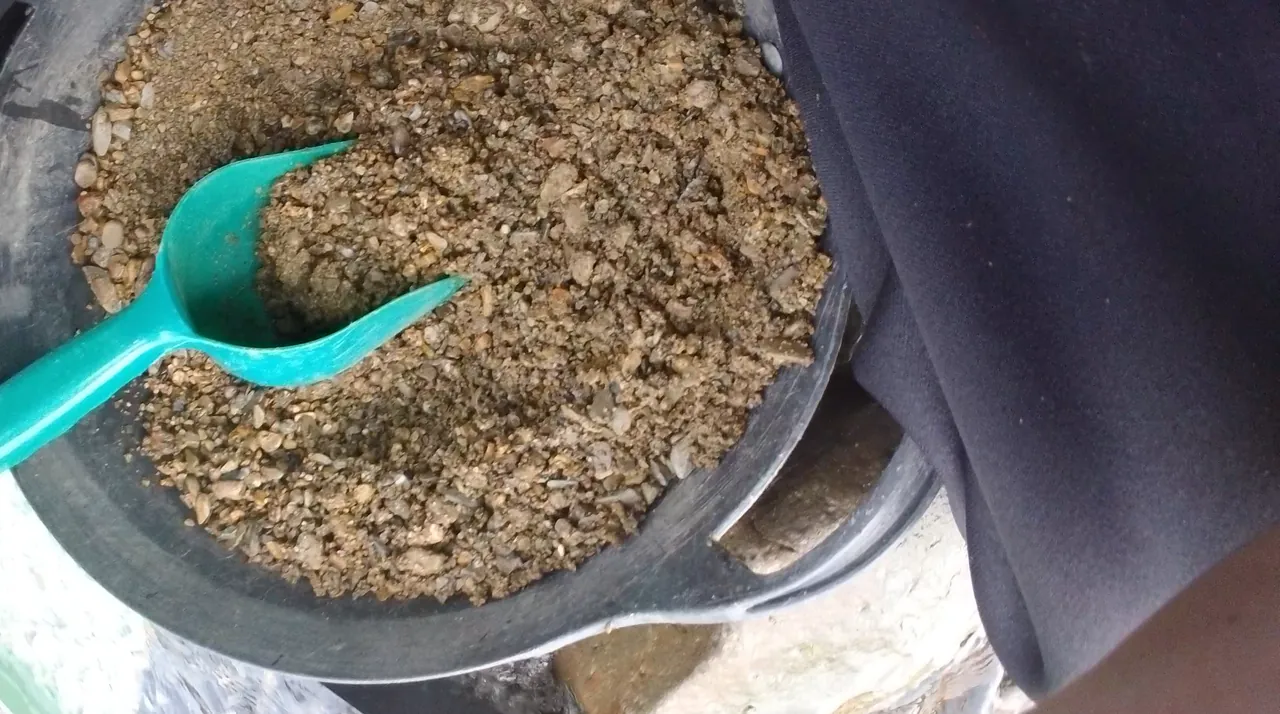
You do not need a fortune in equipment to find gold in the UK. Experienced prospectors consistently emphasise that location knowledge and technique matter far more than the gear you carry — and gold panning is genuinely one of the cheapest outdoor hobbies to start. That said, the right tools, used well, will dramatically improve your results and save you a lot of wasted effort streamside. This is our complete, no-nonsense buyer's guide to UK gold panning equipment: what to buy first, the kit that actually earns its place in your bag, where to buy it, and the gear beginners waste money on.
Every item below is keyed to the comparison table further down the page, so you can read the reasoning here and then click straight through to a current option. If you would rather not agonise over individual pieces, start with the hero recommendation immediately below — it is genuinely all most beginners need.
If you buy just one thing, start here
Best gold panning starter kit for UK beginners
For nine out of ten people reading this, the smartest first purchase is a complete gold panning starter kit rather than a pile of separate items. We'd point you at the Garrett gold panning starter kit: it bundles two pans, a classifier sieve, a snuffer bottle and sample vials into one box — every tool you need to find, recover and store gold from a UK river, for a single modest one-off price. It removes the guesswork, it is the cheapest way in per item, and there is nothing in it you will outgrow in your first season. Buy this, get to the water, and add specialist gear only once you know what you actually reach for.
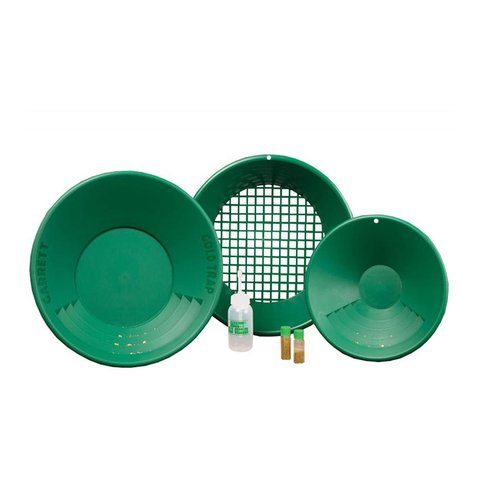
Get the Garrett kit at Regton — 10% off with UKGP →Also on Amazon
As an Amazon Associate, UK Gold Prospector earns from qualifying purchases. We also have commercial partnerships with Gold Magnet UK (which pays us commission and has gifted us equipment) and Regton (a reader discount code; no commission at present). Links cost you nothing extra. Prefer a UK specialist? See where to buy in the UK below — or view the whole kit laid out in three simple tiers on our starter-kit page.
Put your kit to work — find verified spots
200 verified UK gold sites with GPS coords, access notes and geology — plan a trip the moment your kit lands.
The Gold Pan — your single most important tool
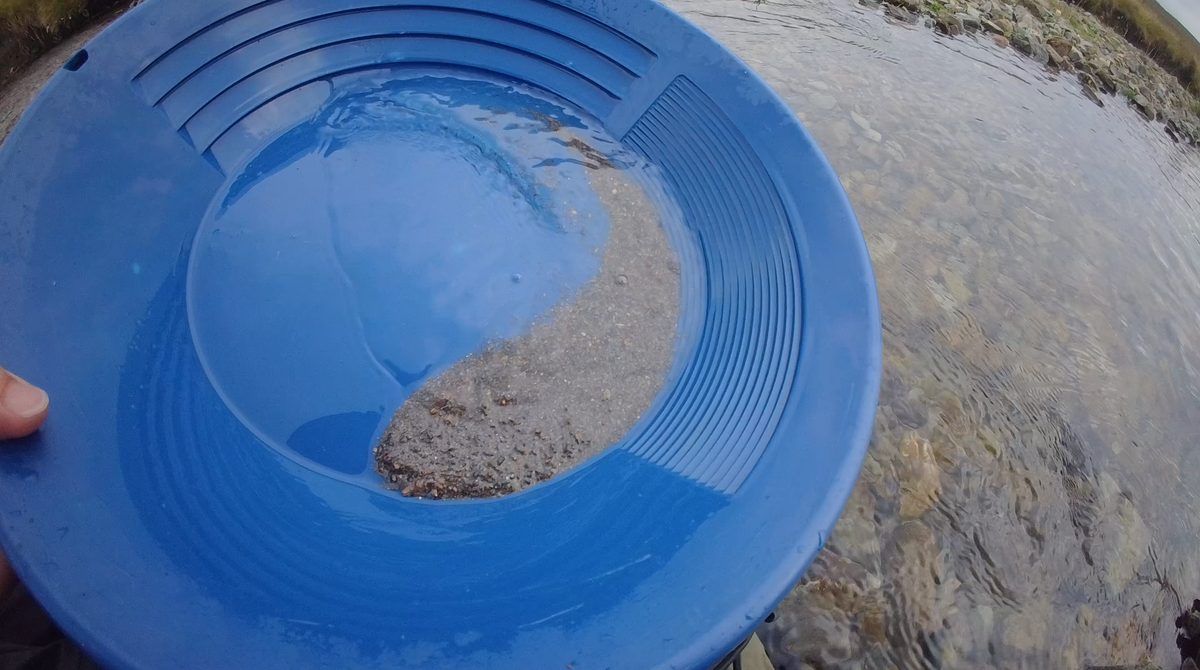
If you own one piece of gold panning equipment, make it a good pan. Everything else supports it. The pan is where the actual recovery happens: you wash lighter sand and gravel over the lip while the dense gold sinks and lodges against the riffles. Get the pan right and a beginner can find colour; get it wrong and you will lose flakes you never even saw.
What to look for. Buy a modern plastic pan, not a traditional steel one. Plastic is lighter, never rusts, and — crucially — comes in dark green or black, against which the tiny flour-fine flakes typical of UK gold stand out far better than on shiny metal. You want moulded riffles (the stepped ridges along one side) to trap gold during the final wash. Size matters too: a 10 to 14 inch pan suits British burns and rivers, with 12 inches the comfortable all-rounder. Bowls that are too big are tiring to work; too small and you process too little material.
Beginner vs better. A beginner is perfectly served by a single dark plastic riffle pan. As you progress, most prospectors end up carrying two: a larger pan for rough work and a smaller finishing pan for the delicate final clean-up. The American-style pan with stepped riffles is the easiest to learn on; the Russian-style oval pan has a devoted following for fine-gold recovery once your technique matures.
Our pick. A dark 10–14 inch riffle pan is the cheapest meaningful thing in your whole kit and the one item never worth skimping on — buy one from UK specialist Regton (10% off with code UKGP). Better still, the Garrett starter kit includes two pans so you get the rough-and-finish pairing in one purchase. Learning to use it well is covered in our how to start gold prospecting guide.
Classifier / Screen — the speed multiplier
A classifier is a sieve that drops neatly over the top of your bucket or pan and screens out the oversized rocks, roots and pebbles before you ever start panning. It is the single biggest time-saver in your bag. Without one you waste effort washing material that obviously holds no gold; with one you only pan the fine fraction where gold actually concentrates.
What to look for. A stacking classifier with a 1/4 inch (about 6mm) mesh is the standard starting point and handles most UK gravel. As you get more serious, a nested set of mesh sizes — typically 1/2 inch, 1/4 inch and 1/8 inch — lets you pre-sort material into grades for much faster and more thorough final panning. Look for a screen sized to sit securely on a standard bucket.
Beginner vs better. One 1/4 inch classifier is plenty to begin. A graduated set is a worthwhile upgrade once you are working Scottish and Welsh rivers where coarse gravel is abundant and a classifier becomes close to essential. Our pick is a stainless-steel classifier sieve from Regton (10% off with code UKGP) — and again, a premium multi-piece kit on Amazon bundles two stackable classifiers if you want to skip straight to a graded set.
Trowel and Crevice Tools — getting at the gold
Gold collects in specific traps: behind boulders, against bedrock, and packed into cracks that have been catching the heavy fraction for decades. You need something to dig and scrape it out. A sturdy stainless steel trowel handles general sampling and digging gravel traps on the bank, while crevice tools — long, narrow scoops and picks — reach into bedrock cracks where the richest concentrated material hides.
What to look for. Choose a strong, stiff trowel that will not flex when you lever gravel; a flimsy garden trowel bends and frustrates. For crevicing, purpose-made tools with a narrow profile reach deeper than improvised ones, and plastic crevice tools avoid scratching bedrock — preferred and sometimes expected at sensitive or protected sites.
Our pick. A solid trowel plus a set of crevice tools from the table is all you need here. Knowing where to dig matters more than the tool itself — our how to read a river for gold guide explains exactly which traps to target.
Snuffer Bottle and Tweezers — don't lose what you find
This is the stage where beginners quietly lose most of their gold. Once you have washed your pan down to a few flakes sitting in a little water, picking them up by hand is hopeless — they cling, they float, they vanish. A snuffer bottle solves it: a small squeeze bottle with a narrow tip that you use to suck fine flakes and water up together, trapping them safely inside. Tweezers or a fine stainless pick handle the larger flakes and the occasional small nugget.
What to look for. A snuffer bottle with a thin, rigid pick-up tube and a soft, easily squeezed body. Pointed, non-magnetic tweezers help, and a magnet or magnetic pick is useful for lifting off black sand (magnetite) once your concentrate is down to the heavy minerals.
Our pick. Have a snuffer bottle in your hand before you spot colour, not after — it is inexpensive and saves more gold than almost anything else in the bag. A folding jeweller's loupe alongside it lets you confirm a flake is gold and not mica or pyrite — our beginners guide covers telling them apart.
Sample Vials and Storage
You have found gold — now keep it. Small glass or plastic vials with tight, leak-proof lids store flakes safely, and a clear vial doubles as the nicest way to show off a season's finds. The detail that turns this from storage into a tool is labelling: mark each vial with the location and date.
Our pick. A handful of glass vials costs almost nothing and lasts for years. Logging where each flake came from quietly builds a personal record of which stretches produce — pair it with the location notes on the UK Gold Prospector map and you will return to productive spots far more efficiently.
Clothing and Safety
UK rivers are cold year-round and the weather in Scotland and Wales can turn in minutes. Shakespeare Sigma neoprene chest waders or sturdy wellington boots keep you comfortable working in the water, and waterproof layers are essential in upland country. A wading staff or walking pole is genuinely valuable for crossing moving water safely — never underestimate the push of a UK river in spate.
Waders are usually the most expensive single item in a panning kit, so they are also the most reasonable thing to defer: wellies and cold hands will get you through your first few trips. Always carry a first aid kit and a mobile phone with the ukgoldprospector.co.uk map loaded for remote locations, and tell someone where you are going. A humble bucket rounds out the list — unglamorous, but it carries gravel, water and your whole kit.
Where to buy gold panning equipment in the UK
There are two sensible routes, and the right one depends on what you value most.
Regton — pans, classifiers & UK specialist advice. Regton is a long-established British metal-detecting and prospecting retailer — our recommended source for gold pans and classifiers, from people who actually know the kit. Regton is a partner of ours and UK Gold Prospector readers get 10% off with code UKGP. Browse their full range at regton.com.
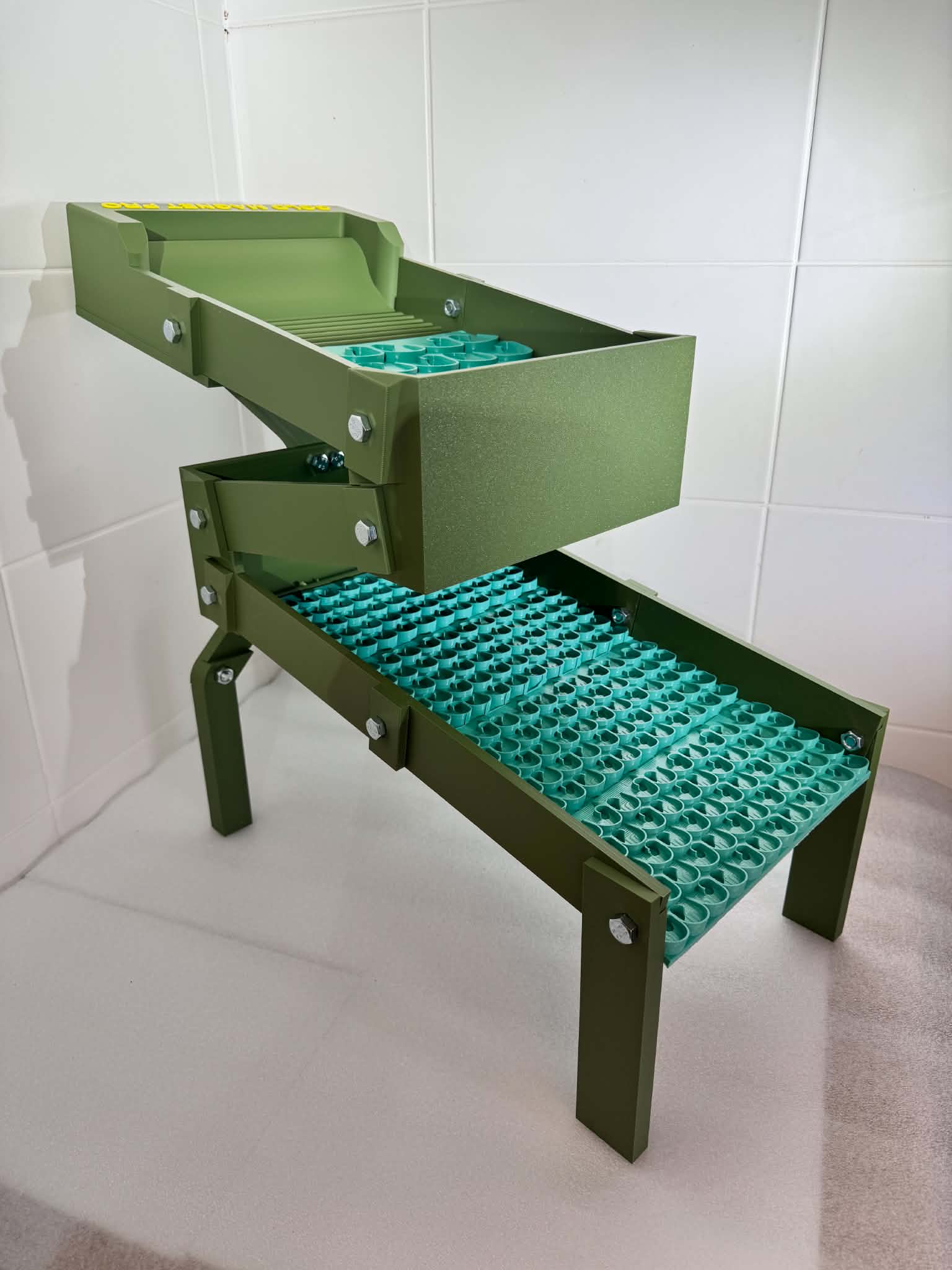
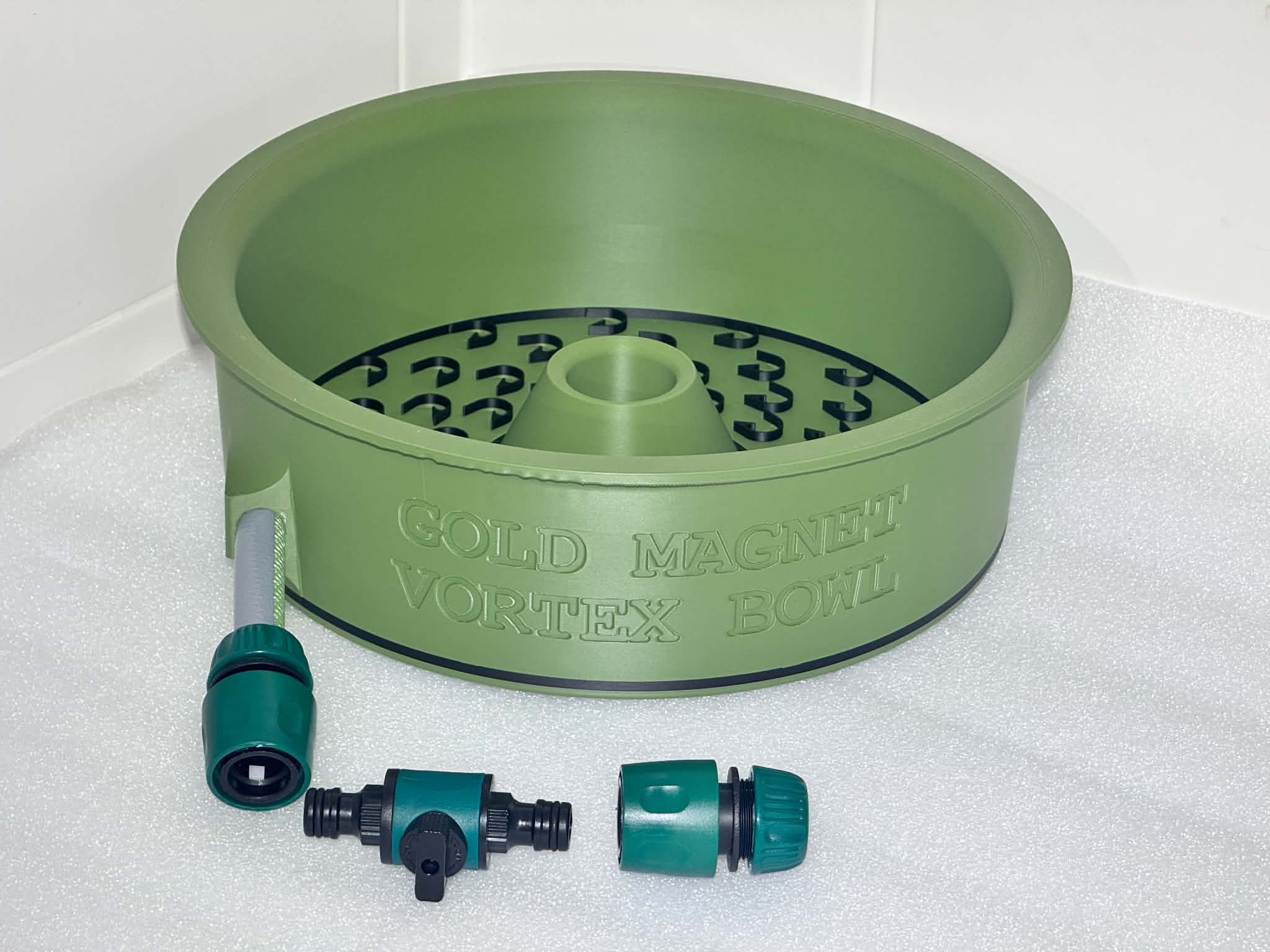
Gold Magnet UK — British-made sluices & recovery gear. For sluices and fine-gold recovery kit, Gold Magnet UK makes it here in Britain — sluice boxes, clean-up sluices, vortex matting and concentrate bowls. Readers get 10% off with code GOLD10; see our fine-gold recovery guide for the full range.
Amazon — for the basics. The fastest way to get a complete starter kit plus the odds and ends — snuffer bottle, vials, loupe, trowel and waders — delivered quickly.
What to Avoid (and what beginners waste money on)
The most common beginner mistake is buying a sluice box or a metal detector before mastering the pan. Both have their place — a British-made sluice from Gold Magnet UK processes far more gravel once you can already find gold, and detectors suit nugget hunting in known nugget country — but UK gold is overwhelmingly fine flake, which a detector will rarely register, and a sluice only earns its keep when you can read the water. Bought too early, they add cost, weight and complexity to trips better spent learning technique. Learn to pan well first, then add a sluice when you are genuinely ready to scale up — a small clean-up sluice is a more useful early upgrade than a full-size one. Our fine-gold recovery guide walks through the British-made kit (10% off with GOLD10).
British-made sluices & fine-gold recovery — Gold Magnet UK
Made in Britain by a UK prospector — sluice boxes, pro sluices with vortex matting, and concentrate bowls. UK Gold Prospector readers get 10% off with code GOLD10.
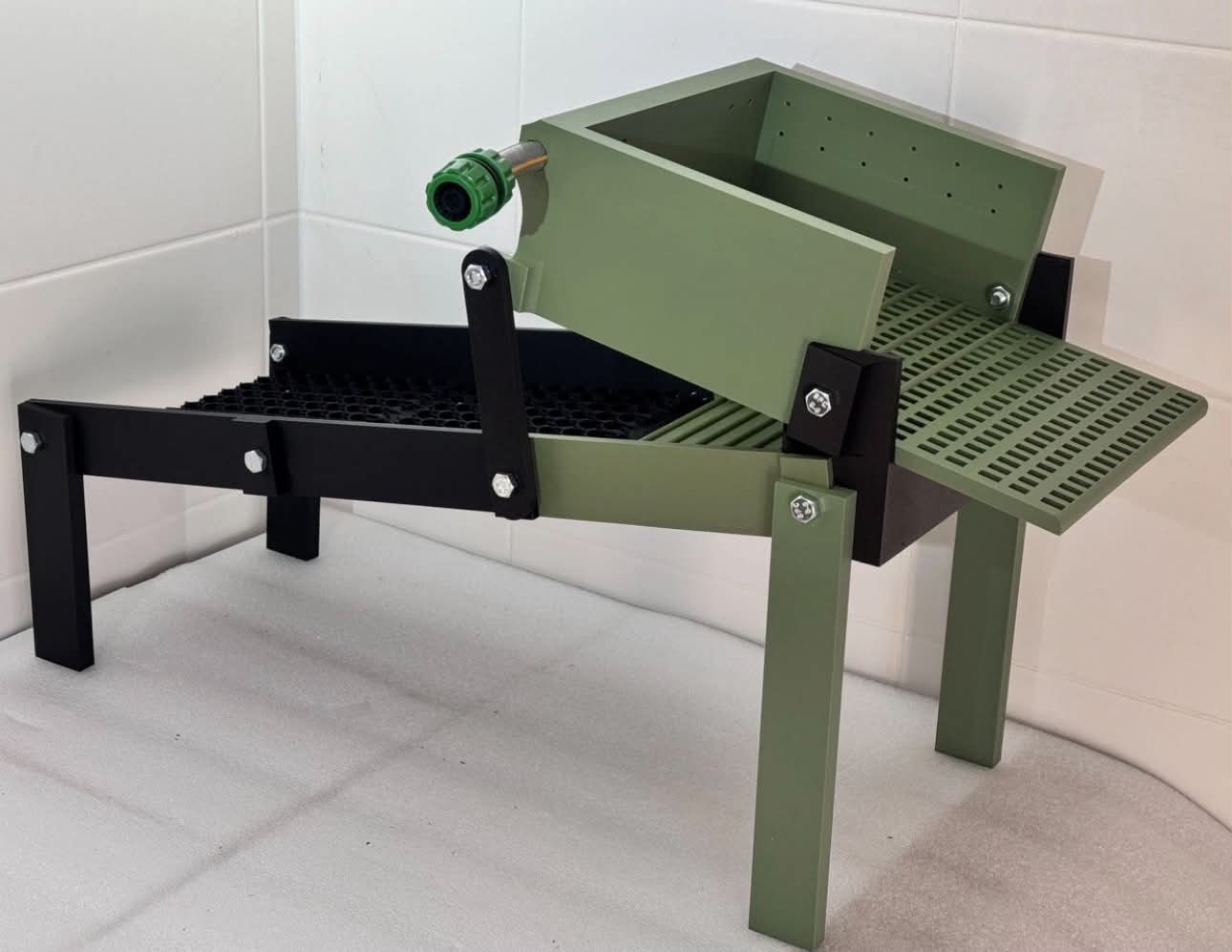
The other thing to avoid is improvising the pan itself. A kitchen sieve makes a passable rough classifier in a pinch, but a smooth frying pan has no riffles and a shiny surface that hides flakes — you will lose almost everything. Given a real gold pan costs so little, it is the one tool always worth buying properly.
Finally, remember the law. Gold and silver are generally Crown property (by royal prerogative in England and Wales, and the Royal Mines Act 1424 in Scotland), and you must have landowner permission to prospect in England and Wales — buying the kit is the easy part. Our UK gold panning laws guide covers permissions before you head out.
Plan your equipment purchase around the specific locations you intend to visit. The UK Gold Prospector map at ukgoldprospector.co.uk includes location-specific notes on likely gold types, helping you choose the right tools before you go.
The essential kit at a glance
These are the core hand tools most UK panners actually use day to day. Tap any item to see a current option — pans, classifiers and the Garrett kit from UK specialist Regton, the rest from Amazon.
Garrett starter kitRegton · 10% off UKGP →
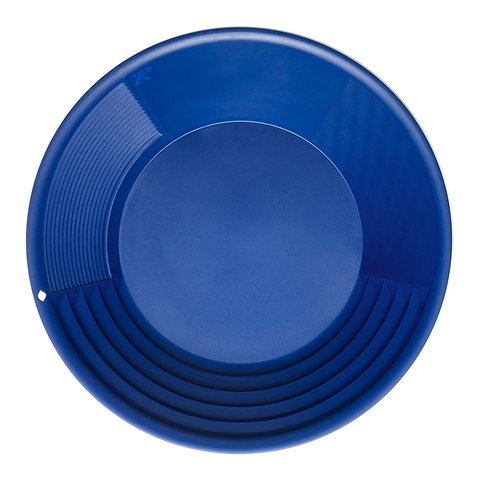 Gold panRegton · 10% off UKGP →
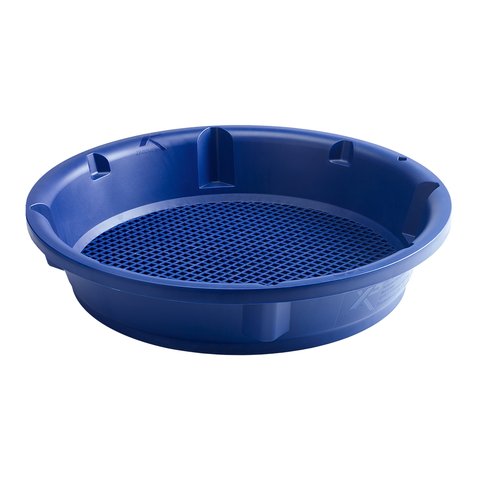 Classifier sieveRegton · 10% off UKGP →
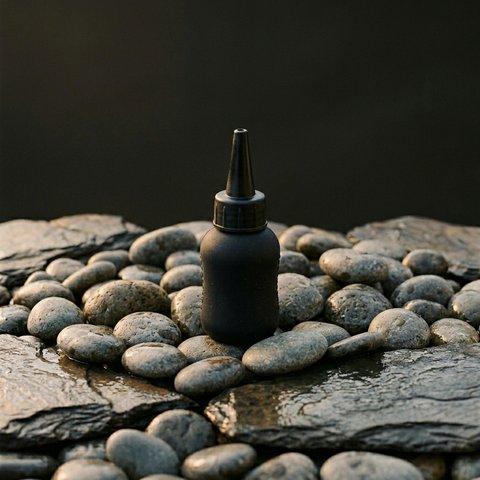 Snuffer bottleView on Amazon →
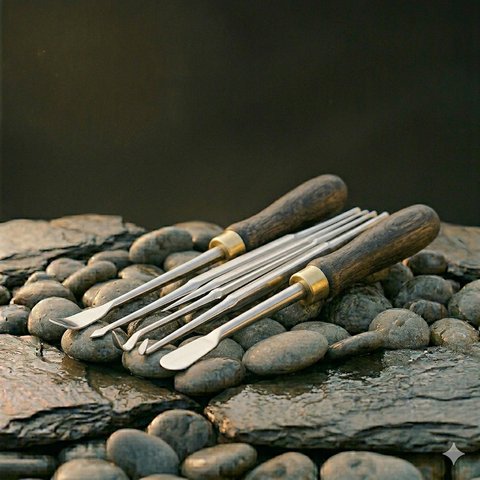 Crevice toolsView on Amazon →
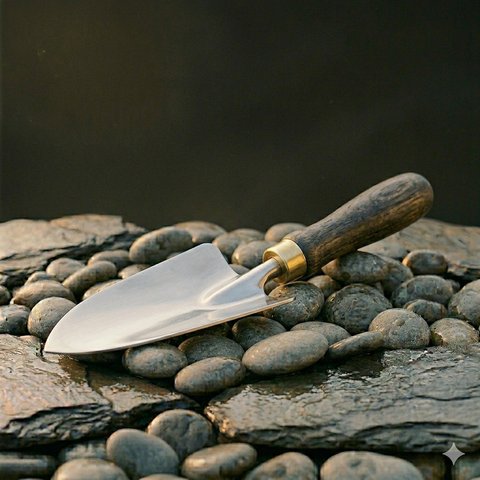 TrowelView on Amazon →
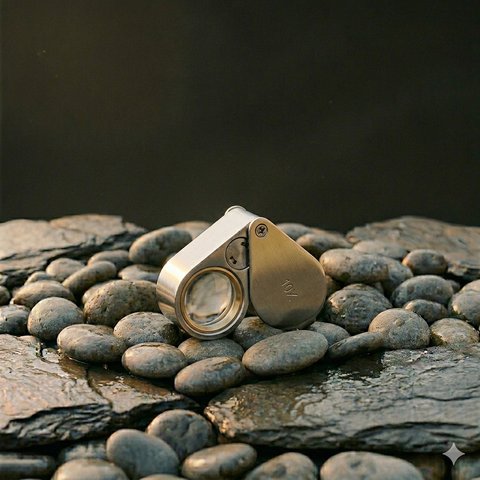 Jeweller's loupeView on Amazon →
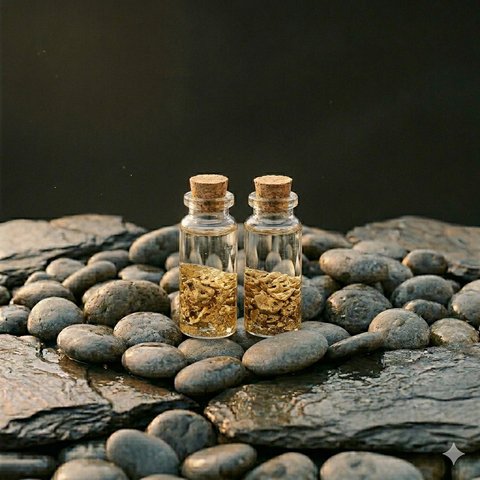 Glass vialsView on Amazon →
Equipment Comparison Table
As an Amazon Associate, UK Gold Prospector earns from qualifying purchases. We also have commercial partnerships with Gold Magnet UK (which pays us commission and has gifted us equipment) and Regton (a reader discount code; no commission at present). Links cost you nothing extra.
| Item | What it does | |
|---|---|---|
| Premium multi-piece kit | Two pans, two stackable classifiers and accessories — a step up for serious work. | View on Amazon → |
| Complete starter kit (Garrett) | Pans, classifier, magnifier, vials and wash bottle in one box — the simplest way to begin. | Regton — 10% off with UKGP → |
| Gold pan (10–14″, riffled) | Core tool — sharp riffles trap fine flour gold. | Regton — 10% off with UKGP → |
| Classifier sieve (stainless steel) | Stackable sieves screen out oversized gravel so you process concentrate faster. | Regton — 10% off with UKGP → |
| Snuffer bottle (SE) | Lifts fine flakes off the water without losing them. | View on Amazon → |
| Glass vials | Store and show off what you find. | View on Amazon → |
| Folding jeweller's loupe | Magnifies flakes to tell gold from mica and pyrite. | View on Amazon → |
| Trowel | Digs gravel traps and crevices on the bank. | View on Amazon → |
| Crevice tools | Works gold out of bedrock cracks where it settles. | View on Amazon → |
| Sluice box (British-made, Gold Magnet UK) | Processes far more gravel than a pan on a productive stretch. | Gold Magnet UK — 10% off GOLD10 → |
| Clean-up sluice (British-made, Gold Magnet UK) | A mini sluice for working your concentrates down at home or streamside. | Gold Magnet UK — 10% off GOLD10 → |
| Chest waders (Shakespeare Sigma) | Keeps you dry in cold UK burns and rivers. | View on Amazon → |
| Bucket | Carries gravel, water and kit — the unglamorous essential. | View on Amazon → |
Frequently Asked Questions
What equipment do I need to start gold panning in the UK?
Very little. You need a good plastic gold pan with riffles (10 to 14 inches), a classifier sieve to screen out large gravel, a small trowel, a snuffer bottle and tweezers to recover the fine flakes, and a vial to store finds. A jeweller's loupe helps you tell gold from fool's gold. The simplest route is a complete starter kit that bundles all of this together. Waders or wellies are useful but optional at first, and you do not need a sluice box or a metal detector to begin.
What is the best gold pan for UK rivers?
A dark-coloured plastic pan, 10 to 14 inches across, with moulded riffles along one edge. Plastic is lighter than steel, will not rust, and the dark green or black colour makes the flour-fine flakes typical of British gold far easier to spot. A 12 inch pan is the sweet spot for most UK burns and rivers. Many prospectors carry two: a larger pan for rough work and a smaller finishing pan for the final clean-up.
Do I need a sluice box or metal detector to begin?
No. Both are useful later, but neither is needed to start. UK placer gold is overwhelmingly fine flake rather than nuggets, so a metal detector will rarely register it, and a sluice only pays off once you can read the water and find gold-bearing gravel with a pan. Begin with a pan and classifier, learn where gold settles, and add a sluice when you are ready to process more material.
How much does a beginner's gold panning kit cost?
Gold panning is one of the cheapest ways into any outdoor hobby. A single gold pan is inexpensive, and a complete starter kit bundling two pans, a classifier, a snuffer bottle, vials and a magnifier is still a modest one-off outlay — typically in the low tens of pounds. Waders are usually the most expensive item if you choose to buy them. You can begin for very little and add gear gradually.
Where can I buy gold panning equipment in the UK?
For gold pans and classifiers we recommend UK specialist Regton — a long-established British prospecting retailer, and readers get 10% off with code UKGP. For sluices and fine-gold recovery kit, Gold Magnet UK makes British-made gear (10% off with GOLD10). Amazon is handy for the basics — the starter kit, snuffer bottle, vials, loupe and waders — where it usually wins on price and speed.
Can I just use a kitchen sieve and a pan?
A kitchen sieve can serve as a rough classifier in a pinch, but a frying pan is a poor substitute for a real gold pan. A proper gold pan has moulded riffles that trap fine gold and a dark colour that makes flakes visible; a smooth, shiny pan has neither and you will lose most of your gold. Given how cheap a real gold pan is, it is the one piece of purpose-made kit genuinely worth buying from the start.
See location-specific notes on gold type and likely yield before you pack your kit.
Find Your Next Prospecting Location →Free Beginner's Pack — 16-page PDF: top 10 UK locations with GPS, equipment checklist, legal cheat sheet and app tutorial.
Get the Free Pack →