As an Amazon Associate, UK Gold Prospector earns from qualifying purchases. We also have a commercial partnership with Regton (a reader discount code; no commission on Regton links at present). Links cost you nothing extra.
Short answer
Can you pan for Welsh gold today? Only with permission, and realistically it is more romance than reality. Welsh gold drains the Mawddach and Wnion catchments of southern Snowdonia (Eryri), but there is no recreational permit scheme in Wales, most of the ground sits inside Eryri (Snowdonia) National Park, much of the best catchment is Coed y Brenin where Natural Resources Wales does not allow panning, and finds are vanishingly rare. The one fully legal beginner route is the guided session at the National Trust's Dolaucothi Gold Mines. If you simply want to own some, the realistic answer is to buy verified Welsh-gold jewellery — and below we explain how to tell it is genuine.
Three questions bring almost everyone to "Welsh gold": can I go and pan some myself, where exactly is it, and — if not — how do I get a piece that is genuinely Welsh? This guide answers all three honestly and practically. It is the can-I-get-some companion to our deeper Dolgellau Gold Belt guide, which covers the geology and mining history in full.
The short version: Welsh gold is real and genuinely scarce, the panning dream is mostly a dead end for legal and practical reasons, there is exactly one clean place to pan as a beginner, and the dependable way to actually own Welsh gold is to buy it from the established houses with the right marks. Every documented site referenced here sits on the UK Gold Prospector interactive map with the access notes you actually need.
In this guide
See the Welsh gold country on the live map
The Dolgellau belt, the Clogau and Gwynfynydd mine country and the Mawddach catchment — with access notes — alongside 200 verified UK gold sites.
Can you pan for Welsh gold today?
The blunt answer is: not freely, and not anywhere you like. Welsh gold genuinely exists in the rivers of southern Snowdonia, but every layer of the picture pushes against the casual visitor turning up with a pan.
Start with the law. Gold and silver in England and Wales are Mines Royal — Crown property by royal prerogative, administered by The Crown Estate. The metal is not yours just because you are standing on the bank, and there is no general right to pan for it. There is also no recreational permit scheme in Wales like the day-ticket arrangements you find at some Scottish sites — no office you can book through. The only lawful way onto a natural Welsh river is direct permission from the landowner for that exact stretch.
Then add geography. Most of the productive ground sits inside Eryri (Snowdonia) National Park, which brings byelaws on disturbing ground and removing natural material. Much of the best upper catchment is Coed y Brenin forest, managed by Natural Resources Wales — and NRW does not permit gold panning on its land. This is enforced, not theoretical: in 2021–22 a man was reportedly fined over £3,000 for illegal panning at Coed y Brenin. Stretches of the Mawddach also carry SSSI and SAC conservation designations.
Finally, add the geology. Even where you could legally pan, the rich gold of the belt was always the hard-rock vein gold that needed deep mines to win. The rivers carry only fine flake gold in trace amounts, the accessible placers have been picked over for more than 150 years, and finds today are vanishingly rare. Please do not read any of this as a how-to for sneaking onto protected or mine ground — the closed mine sites and the National Park are exactly where not to go.
Your three honest routes to Welsh gold
If the dream is "I want some Welsh gold," it helps to separate the three things people actually mean. Here is the honest scorecard.
| What you want | The realistic route | Honest verdict |
|---|---|---|
| To pan it yourself | Guided session at Dolaucothi, or a Welsh river only with landowner permission off NRW/National Park land | Possible at Dolaucothi; very hard and finds tiny anywhere wild |
| To visit the gold country | Walk the Mawddach Trail, see Dolgellau and Bontddu, tour Dolaucothi in the south | Easy and rewarding — heritage, not harvest |
| To own a piece of it | Buy verified Welsh-gold jewellery from an established house, with the marks and certificate | The dependable route — see the buying guide below |
Notice what the table makes clear: the panning fantasy is the least reliable of the three. The visit is genuinely good. And buying verified jewellery is the only route that actually puts Welsh gold in your hand on demand.
Where the gold belt and the mines are
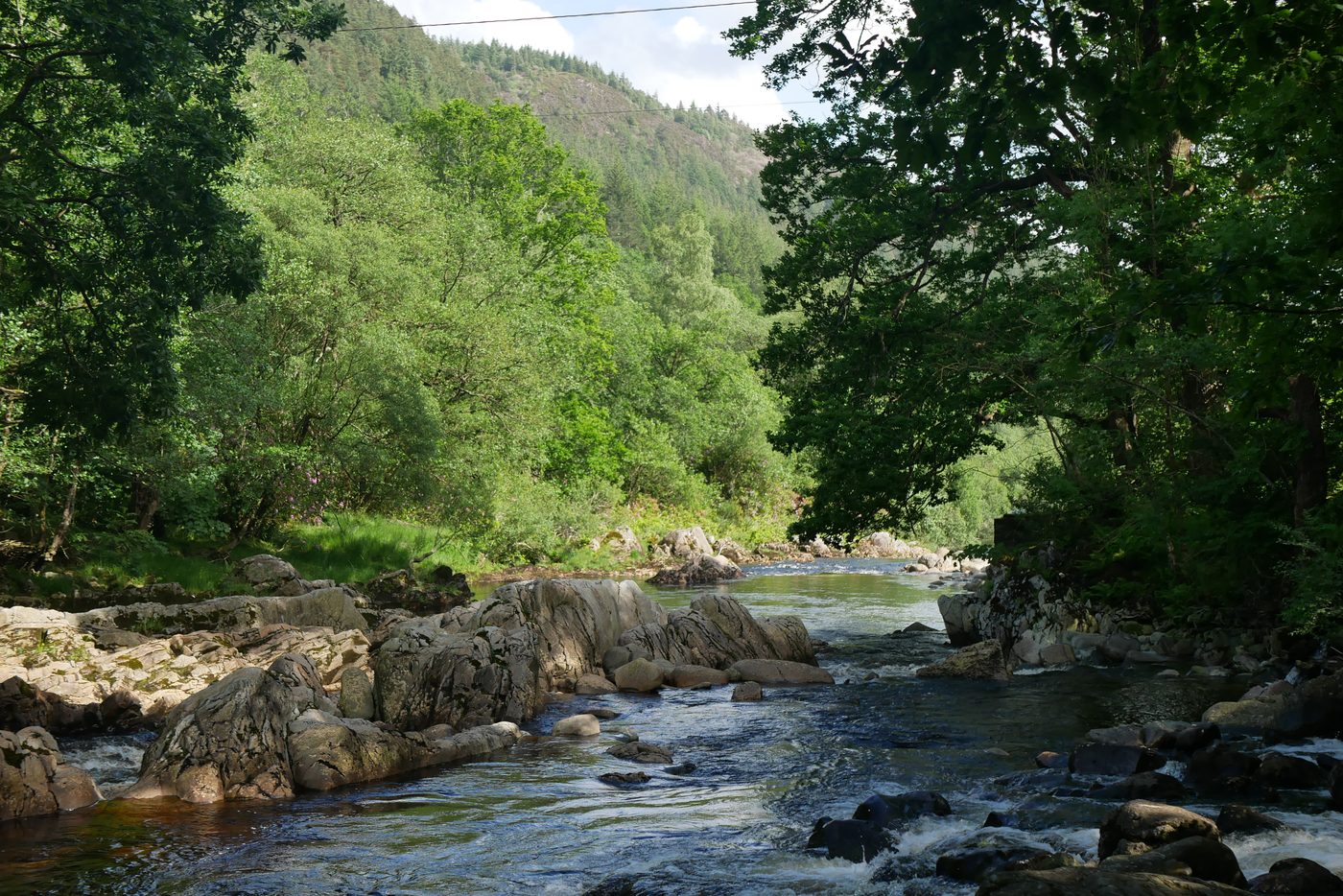
Welsh gold in the modern, royal-ring sense comes from the Dolgellau Gold Belt — an arc of gold-bearing Cambrian rock around the Harlech Dome in southern Snowdonia, in Gwynedd. The name attaches above all to two mines:
- Clogau St David's, above Bontddu near Barmouth — the most productive Welsh gold mine, source of much of the royal wedding-ring gold, closed in 1998.
- Gwynfynydd, near Ganllwyd on the upper Mawddach — the second great mine, closed in 1999.
People search specifically for the difference between the two, so here is the head-to-head. Treat the Victorian-era output figures as the reported historic record rather than audited modern data — they vary between sources — but the rank order is consistent: Clogau was the largest and richest Welsh gold mine, and Gwynfynydd the second.
| Clogau St David's | Gwynfynydd | |
|---|---|---|
| Location | Above Bontddu, near Barmouth | Near Ganllwyd, upper Mawddach |
| Gold found | 1854; rush from the 1860s | Discovered 1860 |
| Reported historic output | The most productive Welsh gold mine | The second-richest of the belt |
| Closed | 1998 | 1999 |
| Royal link | 1923, 1947 & 2011 ring gold | 1981 (Diana) ring; 1986 royal ingot |
Both are closed for production and not open to visit — there is no operating gold mine or mine tour in the belt today. The rivers that drain the belt — principally the Mawddach and tributaries such as the Afon Wnion — are where any pannable Welsh gold ends up, worn loose from the same source rocks the mines once worked. For the full mine roll-call, the Clogau-vs-Gwynfynydd output detail and the geology of the black Clogau Shale, see our companion Dolgellau Gold Belt guide; the wider national picture of where Britain's gold sits is in the where to pan for gold in the UK hub, and the all-Wales view is in where to find gold in Wales.
The one legal beginner route: Dolaucothi
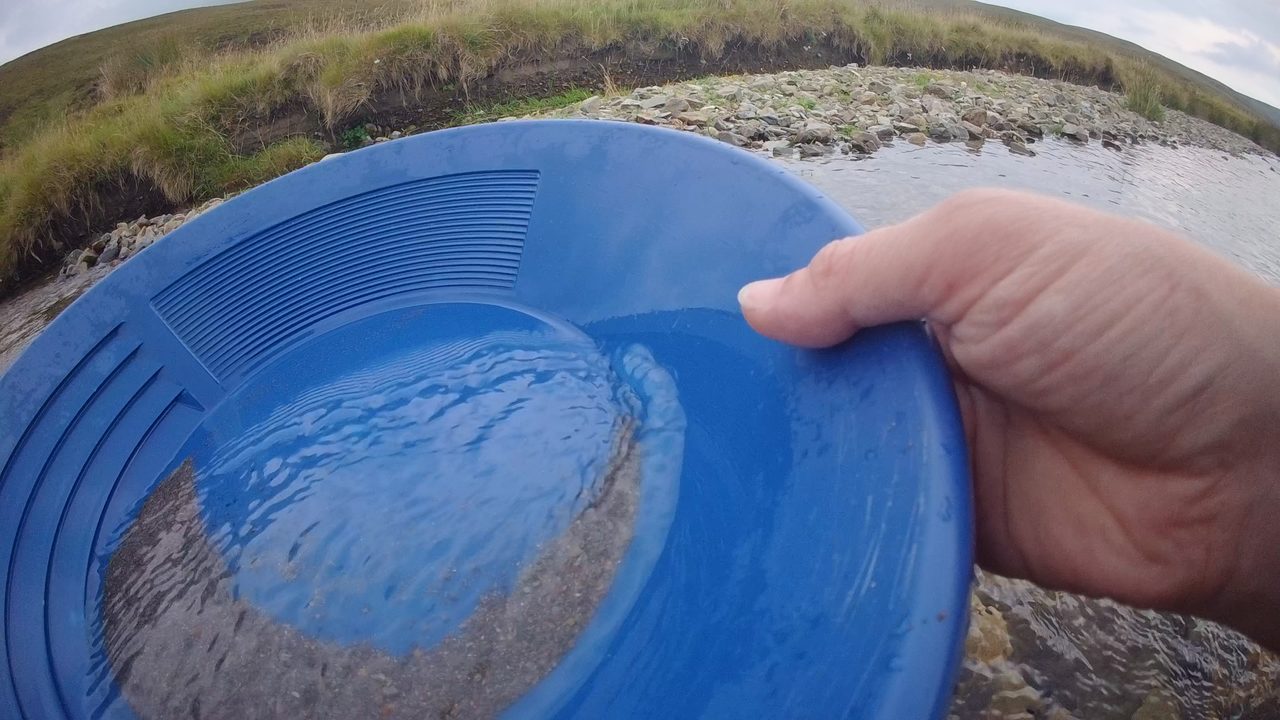
If you want to actually pan Welsh gold as a beginner without chasing permissions, there is exactly one clean answer: the guided panning experience at the National Trust's Dolaucothi Gold Mines, near Pumsaint in Carmarthenshire. This is a very different place from the Dolgellau belt — it is the Roman-origin gold mine in mid/south Wales, the only confirmed Roman gold mine in Britain — and the National Trust runs underground tours and supervised gold-panning sessions there.
The honesty caveat: at Dolaucothi you pan prepared gold-bearing material under instruction, so it is a learn-the-technique experience rather than a wild-river strike. But it is legal, it is open to families and beginners, and it lets you handle the craft properly — exactly the grounding you want before you ever pan a river for real. The catch you should expect with anything you recover is covered in the buying and law notes below.
The key distinction: "Welsh gold" usually means the Dolgellau belt gold of the north (Clogau, Gwynfynydd) — which you cannot pan. "Where can I pan in Wales as a beginner" almost always lands you at Dolaucothi in the south. They are two different stories that share a country, and it is easy to conflate them.
Panning a Welsh river the legal way
If you do want to try a wild Welsh river one day, the route is the same one we set out across the site — and it is permission first, every time. In practical order:
- Find out who owns the bank and the fishing rights for the exact stretch, and ask for written permission. A verbal nod is not enough to rely on.
- Rule out Natural Resources Wales land. NRW does not permit panning — Coed y Brenin is the obvious trap, and it has been prosecuted.
- Check for protected status. Confirm the stretch is not SSSI, SAC or a National Park area with byelaws against disturbing ground; if it is, do not dig or remove material.
- Keep it tiny and non-destructive. Whatever tolerance exists toward a casual flake is a matter of practice, not a legal right — and gold is still Crown property.
To learn where gold actually settles before you go, our how to read a river for gold guide is the place to start, and the legal background in full is in our UK gold panning laws guide. A free 16-page summary of the most beginner-friendly UK sites is in our Beginner's Pack.
How to tell — and buy — genuine Welsh gold
For most people the practical answer to "can I get some Welsh gold" is yes — by buying it, not panning it. But Welsh gold's premium makes provenance everything, so here is how to know what you are getting.
First, a reality check on what "Welsh gold jewellery" means. Because natural Welsh gold is now so scarce, it is blended with other gold to make wearable pieces — there is far too little to cast a solid Welsh-gold ring from scratch. So a "Welsh gold" item contains a portion of genuine Welsh-origin gold within a documented chain of custody; the value is in that verified origin and the cultural story, not in a lump of pure Welsh metal. (We deliberately quote no specific Welsh-gold percentage or price here — figures circulate but vary by maker, piece and date, so treat any single number with caution.)
What genuine branded Welsh gold carries
- A UK assay-office hallmark — the legal mark guaranteeing the metal's gold standard. Clogau, for example, reports its pieces are tested and marked by the Edinburgh Assay Office.
- The maker's own Welsh-gold marks — Clogau pieces carry a Welsh dragon stamp and the CG initials to indicate Welsh gold is contained within; other established houses use their own registered marks.
- A certificate of authenticity attesting to the Welsh-gold content and chain of custody, usually with branded packaging.
Buyer's rule of thumb: buy from an established Welsh-gold house, insist on the certificate, and keep it. If you are ever unsure about an unbranded or second-hand piece, a high-street jeweller can confirm the hallmark — but remember a hallmark alone proves the gold standard, not the Welsh origin. The Welsh origin is what the brand's marks and certificate are for.
And the flip side, for the prospector: a flake you legally pan from a Welsh river is genuinely Welsh by virtue of where you found it, but it carries no certificate and sits entirely outside the branded premium. It is worth roughly its melt value, plus whatever a Welsh jeweller might pay to set it as a curiosity. That is the honest reason the panning route does not make you rich — the premium is on the documented story, not on the metal you can wash from gravel.
Frequently Asked Questions
Can you pan for Welsh gold today?
Only with permission, and realistically it is more heritage than harvest. Welsh gold drains the Mawddach and Wnion catchments in southern Snowdonia (Eryri), but there is no recreational permit scheme in Wales. You need the landowner's permission for the exact riverbank, most of the productive ground sits inside Eryri (Snowdonia) National Park with conservation designations, and much of the upper catchment is Coed y Brenin forest where Natural Resources Wales does not allow panning. Finds are vanishingly rare. The only fully legal beginner route is the guided panning experience at the National Trust's Dolaucothi Gold Mines in Carmarthenshire.
Where can I legally pan for gold in Wales?
The single fully legal, no-permission-hassle route for a beginner is the guided gold-panning session at the National Trust's Dolaucothi Gold Mines near Pumsaint in Carmarthenshire, where you pan prepared gold-bearing material under instruction. Anywhere on a natural Welsh river you must have the specific landowner's permission, you must avoid Natural Resources Wales land such as Coed y Brenin where panning is prohibited, and you must check for National Park byelaws and SSSI or SAC conservation status first. Gold is also Crown property, so there is no automatic right to keep it.
Where is the Welsh gold belt and the Clogau and Gwynfynydd mines?
The Welsh gold belt — the Dolgellau Gold Belt — is an arc of gold-bearing Cambrian rock around the Harlech Dome in southern Snowdonia, in Gwynedd. The two great mines are Clogau St David's above Bontddu near Barmouth, the most productive Welsh gold mine, and Gwynfynydd near Ganllwyd on the upper Mawddach. Both are now closed for production — Clogau in 1998 and Gwynfynydd in 1999 — and there is no operating mine or mine tour to visit in the belt today. The rivers draining the belt, principally the Mawddach and tributaries such as the Afon Wnion, carry only fine, scarce flake gold.
How can I tell if Welsh gold is genuine?
Genuine branded Welsh gold jewellery is sold within a documented chain of custody and carries identifying marks. Clogau pieces, for example, carry a UK assay-office hallmark plus the brand's own marks — a Welsh dragon stamp and CG initials — and come with a certificate of authenticity. Because Welsh gold is blended with other gold to make jewellery (it is too scarce to use alone), the marks and paperwork attest to the Welsh-gold content and chain of custody rather than to a pure-Welsh-gold object. If you are buying for the provenance, buy from the established Welsh-gold houses, keep the certificate, and if in doubt have a jeweller confirm the hallmark.
Why is Welsh gold so expensive?
Because of scarcity and provenance, not chemistry. There has been no commercial Welsh gold production for over two decades, the historic mines are closed, and natural Welsh gold is now extremely limited. Combined with the royal wedding-ring association, that rarity means verifiably-sourced Welsh gold commands a large premium over the ordinary bullion spot price. The premium is on the documented Welsh origin and the cultural story, not on the metal itself — a flake of Welsh gold is still gold like any other, and a flake you panned yourself carries no certificate and sits outside that branded premium.
Is it illegal to pan for gold at Coed y Brenin?
Yes — gold panning is not permitted on Natural Resources Wales land, and Coed y Brenin forest in the upper Mawddach catchment is NRW land. This is enforced: a man was reportedly fined over £3,000 for illegal panning at Coed y Brenin in 2021–22. Several stretches of the Mawddach also carry SSSI and SAC conservation designations. Do not treat the Welsh gold country as open ground to pan; the closed mine sites and the National Park are exactly where not to go.
Are the Welsh gold mines still open to visit?
Not in the Dolgellau belt. Clogau St David's closed in 1998 and Gwynfynydd in 1999, and there is no operating gold mine or public mine tour in the belt today; modern explorer Alba Mineral Resources holds exploration interests but that is drilling, not tourism. The only Welsh gold mine you can visit and pan at is the National Trust's Dolaucothi Gold Mines in Carmarthenshire — a Roman-origin site in the south, separate from the Dolgellau belt, which runs underground tours and guided panning.
Important: All UK gold panning is subject to Crown gold rights (royal prerogative in England & Wales) and to access, environmental and protected-site law. Gold is Crown property and there is no general right to pan; the Crown Estate does not issue recreational gold-panning licences and there is no permit scheme in Wales. Much of the Welsh gold country lies within Eryri (Snowdonia) National Park, and the upper Mawddach catchment includes Coed y Brenin, where Natural Resources Wales does not permit panning — illegal panning there has been prosecuted. Always obtain landowner permission, confirm SSSI/SAC and National Park status before visiting, and never disturb closed mine sites or protected ground. This article is general guidance, not legal advice — verify current law and access with Natural Resources Wales, Cadw or the relevant authority. Full detail in our UK gold panning laws guide.
The Welsh gold country is on the UK Gold Prospector map
The Dolgellau belt, the Clogau and Gwynfynydd mine country and the Mawddach catchment — plus 200 verified sites across Britain.
Free Beginner's Pack — 16-page PDF: top 10 UK locations with GPS, equipment checklist, legal cheat sheet and app tutorial.
Get the Free Pack →