As an Amazon Associate, UK Gold Prospector earns from qualifying purchases. We also have a commercial partnership with Regton (a reader discount code; no commission on Regton links at present). Links cost you nothing extra.
Short answer
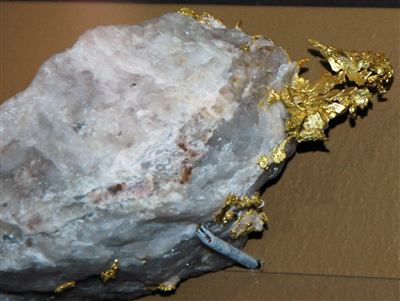
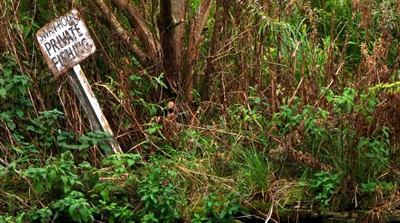
The richest gold-bearing ground in Wales is the Dolgellau Gold Belt, running north-east from the Mawddach Estuary through Snowdonia — home of the Clogau St David's and Gwynfynydd mines that supplied royal wedding rings. The Roman mine at Dolaucothi in Carmarthenshire is the other major site. Wales has no permit-backed recreational panning scheme: the prime rivers are NRW-managed SSSIs where panning is a criminal offence, so legal access depends on landowner permission or supervised commercial experiences in the Dolgellau area.
Wales does not have a gold rush in its history and it does not have a permit-backed recreational site in its present. What it has is something stranger and rarer: a single small belt of country running north-east from the Mawddach Estuary that has been producing gold for two thousand years, supplied the wedding ring for every senior royal bride from the Queen Mother in 1923 to the Princess of Wales in 2011, and is now mostly dormant for commercial production while remaining the most prestigious source of gold in the United Kingdom. This is the definitive 2026 guide to all of it — what is real, what is accessible, what is not, and what the law actually says.
The article covers the geology of the Dolgellau Gold Belt, the two famous royal mines (Clogau St David's and Gwynfynydd), the Mawddach catchment as the practical recreational district, the Roman gold mine at Dolaucothi as the legal entry point, Welsh gold-panning law and the Crown Estate's position, the Welsh gold premium and the brands that trade on it, and the realistic recovery expectation. Every named river is on the UK Gold Prospector interactive map. The companion guides for Scotland and England sit either side of this one.
In this guide
- The royal gold of Wales
- The geology of the Dolgellau Gold Belt
- Clogau St David's Mine — Bontddu
- Gwynfynydd — the quiet royal mine
- The Mawddach and the Cymerau
- Dolaucothi — the Roman gold mine
- Welsh gold-panning law
- Welsh gold pricing and the premium
- Best season, conditions and realistic expectations
- Frequently asked questions
See the verified Welsh gold sites on the live map
200 verified UK locations with GPS coords, access notes and geology — the Dolgellau belt, Mawddach catchment, Dolaucothi and the rest, mapped in seconds.
Unlock the Wales gold map — £19.99, one-off
Every verified Welsh gold site on the live GPS map — the Dolgellau belt, Mawddach and the rest, with exact coordinates and access notes. Pay once, claim it with your email — no subscription.
The Royal Gold of Wales
The defining cultural fact about Welsh gold is that it has been the metal of every senior royal wedding ring for the last century. The tradition began in 1923, when Lady Elizabeth Bowes-Lyon — later Queen Elizabeth The Queen Mother — was given a wedding ring made from gold supplied from the Clogau St David's mine near Bontddu for her marriage to the future George VI. The Royal Household formalised the practice over the following decades, and the wedding rings of Queen Elizabeth II (1947), Princess Margaret, Princess Anne, Diana Princess of Wales (1981) and Catherine, Princess of Wales (2011) have all been made from Welsh gold supplied principally from either the Clogau or Gwynfynydd stockpiles.
The continuity is the point. No other royal house in the world has built a comparable single-country wedding-ring lineage. The cultural premium that Welsh gold commands in 2026 — the brand recognition of Clogau Gold of Wales as a jewellery company, the consistent willingness of British buyers to pay a substantial multiple of spot for verified Welsh-gold pieces — rests almost entirely on the Royal Household's century of choices. The metal itself, chemically, is gold like any other; what makes it sell at premium is the chain of custody from a small Welsh hillside to a single ring on a single famous hand.
The documented ring chronology has a few details worth setting out, because popular coverage sometimes blurs what is firmly established with what is plausible attribution. The 1923 Queen Mother ring is the anchor — Clogau-mine provenance is firmly established in the historical record, and it was from the same block of Clogau material that the 1947 ring for Princess Elizabeth, later Queen Elizabeth II, was subsequently cut, a deliberate act of continuity rather than coincidence. The specific mine source for the rings of Princess Margaret and Princess Anne is less precisely documented in accessible public sources; both are associated with Welsh gold in the published record, but attribution to a particular mine should be understood as the generally accepted version rather than a formally confirmed one. The 1981 ring for Diana, Princess of Wales is most commonly attributed to Gwynfynydd gold in the contemporary coverage, consistent with that mine's active production at the time. Catherine, Princess of Wales, received a Welsh-gold ring in 2011, confirmed in the coverage at the time of the marriage.
What the ring chronology collectively establishes is a degree of institutional intentionality that goes beyond casual tradition. The Royal Household's consistent return to the same small Welsh mining district — across a period in which world gold supply from South Africa, Australia and Canada offered far larger, cheaper and more convenient alternatives — is a deliberate cultural statement that has proved durable across six reigns and a century of social change. It is also the foundation on which every commercial premium attached to Welsh gold ultimately rests: not the metal's rarity in any geological sense, but the consistent choice of a single famous family, repeated across generations, that made a geographical origin mean something in the jewellery market.
For a recreational prospector, the royal tradition is the cultural backdrop rather than the immediate reality. The mined gold that fed the royal contracts came from underground workings at Clogau and Gwynfynydd — neither of which is open to recreational visitors and neither of which would be panned in any case. What a 2026 hobbyist can do in Welsh gold country is much more modest: pan the alluvial gravels of the Mawddach catchment under landowner permission, visit Dolaucothi for the guided experience, and absorb the geological and historical context that the royal tradition has built up around the country.
The Geology of the Dolgellau Gold Belt
The Dolgellau Gold Belt is a strip of country roughly twenty kilometres long running north-east from the head of the Mawddach Estuary in north-west Wales, in the modern county of Gwynedd. The bedrock here is Cambrian sedimentary rock — slates, mudstones, and the famous black, pyrite-bearing slates that gave the belt its mineralogical character — laid down in shallow Cambrian seas roughly 500 million years ago and subsequently folded, metamorphosed and intruded by gold-bearing quartz veins during the long Caledonian orogenic cycle.
The gold sits in those quartz veins, often in association with pyrite and arsenopyrite and concentrated within structurally favourable zones close to bedding-parallel faults. There are perhaps twenty individual mining sites distributed along the twenty-kilometre belt — most of them small and short-lived, two of them substantial. The two substantial sites are Clogau St David's at Bontddu near the head of the estuary and Gwynfynydd in the upper Mawddach catchment ten kilometres or so to the north-east. Together they account for the vast majority of recorded historical Welsh gold production.
Why the belt is unique
The Dolgellau Gold Belt is geologically unusual in a UK context because it represents a concentration of vein-style primary gold mineralisation of a size and grade that supported sustained underground mining for over a century. Scotland's Cononish vein at Tyndrum is a single major exception of comparable scale; the Welsh belt has multiple smaller equivalents distributed across a small geographical footprint. The reasons sit deep in the Caledonian tectonics: the right rock chemistry, the right structural framework of faults to channel mineralising fluids, the right erosion history to expose the deposits at workable depths.
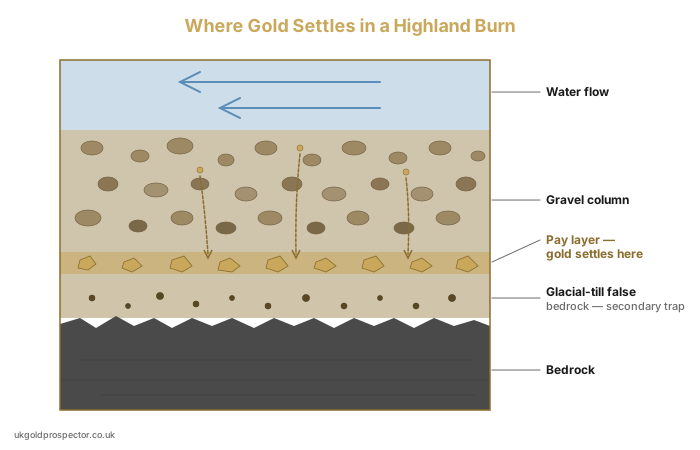
For recreational alluvial panning, the geological story translates into one practical fact. The rivers draining the belt — principally the Mawddach itself and its main feeders — have been receiving fresh gold from the source veins for the entire post-glacial period and continue to do so today. The flake gold a hobbyist can recover from the Mawddach in 2026 is alluvial reworking of the same source rocks that fed the mined production at Clogau and Gwynfynydd over the previous 150 years. The Mawddach system and other Welsh gold rivers, seven entries in all, are listed by name in the Welsh section of our river list.
The Harlech Dome and the Clogau Shale
The structural context for the belt is the Harlech Dome — a broad upward fold in the Cambrian rock sequence whose axis runs roughly north-south through the country to the west of Dolgellau, bringing some of the oldest exposed rocks in Wales to the surface through long erosion. The gold-bearing country of the Mawddach catchment sits on the dome's eastern flank, where the arching of the strata produced the fracture systems that provided pathways for deep mineralising fluids moving through the crust during and after the Caledonian orogeny. This structural position is generally accepted in the geological literature as one of the reasons the Dolgellau belt concentrates its gold where it does, though the complete explanation for why this short strip of Wales produced economic lodes when most comparable Caledonian-province country did not remains an area of active research rather than settled consensus.
Within the Cambrian stratigraphy, one unit is particularly associated with the gold and is worth understanding by anyone who wants to read the belt with geological purpose: the Clogau Shale Formation. This is a dark, carbonaceous, pyrite-rich shale horizon that runs through the sequence and is directly associated with the gold-bearing quartz veins at both major mines. The prevailing view in the published geological literature is that the organic carbon and sulphide chemistry of these black shales created a reducing chemical environment that promoted gold deposition as hydrothermal fluids moved along the fault and vein networks — the gold came out of solution where the fluid chemistry changed against the black rock. This mechanism is broadly accepted as a contributing factor, with the caveat that the precise fluid source, temperature history and depositional trigger are still subject to debate in the specialist literature. The practical significance for a prospector is direct: the Clogau Shale is where the primary gold concentration sits, and the alluvial flake gold recoverable from the Mawddach catchment today is derived from the slow weathering of that same formation over post-glacial time.
Clogau St David's Mine — Bontddu
Clogau St David's mine, in the hills above the village of Bontddu near the head of the Mawddach Estuary, is the original Welsh royal mine and the source of the 1923 ring. The mine was worked from the early nineteenth century, initially for copper, and the discovery of economically significant gold in quartz veins running through the copper workings led to its repurposing as a gold mine in the middle of the century. Clogau reached its productive peak in the later 1800s and continued in intermittent production through the early twentieth century before falling into long-term decline.
The mine's significance is not its tonnage but its single contribution to British royal jewellery. The 1923 wedding ring for the future Queen Mother was made from Clogau gold by the Royal Household's jewellers, and a block of Clogau material was subsequently reserved for royal use and held in stockpile against future requirements. The Clogau brand name remains in commercial use today as a jewellery company that markets Welsh-gold pieces drawn from the historical stockpile and from related sources, with a chain-of-custody framework that lets the company claim Clogau provenance for pieces that contain Clogau-origin metal.
Discovery and production history
The Clogau area was known as copper country before it was known as gold country. Early nineteenth-century workings targeted the copper mineralisation in the hillside above Bontddu, and it was in the course of those workings — in the middle decades of the century, with the precise discovery date uncertain in the available record — that gold-bearing quartz veins were found to run through the copper ground at grades worth pursuing in their own right. By the 1860s the mine was working the gold primarily, and the decades that followed are the high-water mark of Welsh gold production. Output figures from the Victorian period vary between sources and should be treated with caution, but Clogau is consistently described in the geological and mining literature as the most productive single gold mine ever operated in Wales, with the bulk of the country's recorded historic gold production attributed to its Victorian workings.
Production declined through the early twentieth century and the mine passed through several owners, with working periods interrupted by long pauses as the economics of a narrow, deep-vein operation in a remote location fluctuated with the gold price. There were further working periods in the mid-twentieth century and renewed investment interest in the 1980s and 1990s as the gold price rose. Commercial production had effectively ended by the early 2000s. Proposals for reopening have surfaced periodically since, but at the time of writing no confirmed resumption of production has been established and the workings remain dormant.
One distinction is worth making clearly, because it is frequently blurred in popular coverage. The Clogau mine and the Clogau Gold of Wales jewellery company are separate entities. The brand — which markets rings, bracelets and pendants at a substantial premium over the bullion spot price — holds stockpiled Welsh gold sourced from the historic operation and draws on that material, along with other verified Welsh-origin gold where the chain of custody allows, to supply its jewellery range. A piece bearing the Clogau name contains metal that was mined during the operation's earlier working periods; it does not reflect current production. The royal connection runs to the mine, not to the jewellery brand directly — the rings were made from Clogau-mine gold long before the modern business existed in its current commercial form.
The mine today
Clogau is not in commercial production in 2026 and there is no recreational access to the mine workings. The mine has been the subject of intermittent reopening discussions over the last two decades but, at the time of writing, remains dormant. The surrounding country — the hills above Bontddu and the smaller streams draining the immediate Clogau hill — is private land with overlapping conservation and heritage designations, and any recreational session in the immediate area would require careful landowner-permission groundwork.
The downstream alluvial picture
The streams draining the Clogau hill feed into the Mawddach Estuary directly, and the alluvial fans and bars along the estuary's south shore have been documented over the years as producing fine flake gold derived from the eroded vein system. The estuary itself is a complex tidal environment with its own access and consenting framework — the Crown Estate as foreshore owner, Natural Resources Wales as in-river regulator, multiple SSSI and SAC designations on the estuary and its margins. The Mawddach is not a casual session destination; it is a serious piece of legal preparation followed by a serious piece of fieldwork.
Gwynfynydd — the Quiet Royal Mine
Gwynfynydd sits in the upper Mawddach catchment in the country around Ganllwyd and the Coed-y-Brenin forest, a short distance up the catchment from the village of Dolgellau. The mine was worked through the late nineteenth and twentieth centuries on the same Dolgellau-belt quartz-vein style of mineralisation as Clogau, and through the late twentieth century it became, increasingly, the partner royal mine — the working source for several later royal pieces after Clogau's commercial production declined.
The 1981 wedding ring for Diana, Princess of Wales, was widely attributed at the time to Gwynfynydd gold, with the metal supplied through the Royal Household's then-current chain of custody. Gwynfynydd closed for commercial production in the late 1990s but, like Clogau, retained stockpiles of mined material reserved for jewellery production. The mine has been the subject of intermittent reopening discussions and brief reopening attempts over the following two decades; at the time of writing it is not in active production.
Production history and the 1992 royal gift
Gwynfynydd operated alongside Clogau as one of the two main producers on the Dolgellau Gold Belt through the late nineteenth and much of the twentieth century, working the same style of gold-bearing quartz veins in rock of the same Cambrian age. Its working history followed the same broad pattern as its near-neighbour — active production in the Victorian period, twentieth-century revivals as the gold price justified further investment, and eventual closure for commercial production in the late 1990s. Its most publicly noted moment in the modern era came in 1992, when, by contemporary account, a forty-ounce piece of Gwynfynydd gold was presented as a gift to Queen Elizabeth II to mark the fortieth anniversary of her accession to the throne. This figure and the occasion are well-attested in contemporary reporting; the Royal Household has not formally confirmed the specific details in any accessible public statement, and the account should be understood as credibly documented rather than officially verified.
The mine has been the subject of successive reopening proposals since its late-1990s closure, with brief periods of exploratory and small-scale working at various points in the intervening decades. As of the time of writing, Gwynfynydd is not in commercial production. Gold material from its stockpile is understood to continue supplying hallmarked Welsh-gold jewellery through various brand arrangements, maintaining the mine's contribution to the Welsh gold tradition even in dormancy. The upper Mawddach country in which the mine sits falls inside the Eryri National Park boundary, which adds a significant layer of planning and conservation consent to any future commercial proposal beyond the standard mineral-rights and environmental framework.
Access reality
The Gwynfynydd mine itself is not open to recreational visitors. The surrounding Coed-y-Brenin forest, managed largely by Natural Resources Wales as a working forest with public access for walking, cycling and other outdoor activity, includes the upper catchments of several Mawddach tributaries that drain country geologically related to the Gwynfynydd vein system. Recreational alluvial panning in those tributaries operates under the same framework as the rest of the Welsh belt — landowner permission (in the forest's case, NRW as land manager), in-river NRW compliance, and any National Park, AONB or SSSI conditions that overlap the specific site.

Gold Panning in Wales: The Mawddach and the Cymerau
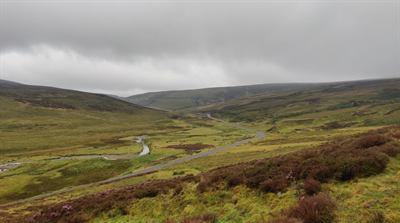
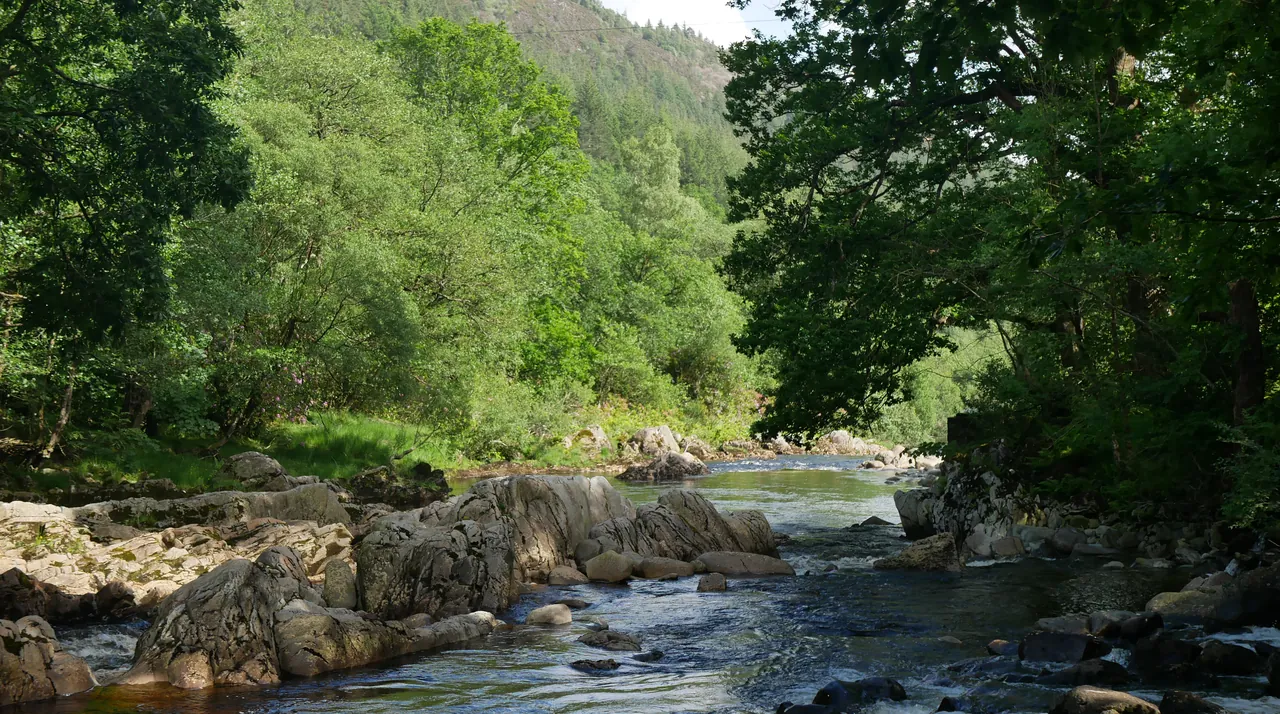
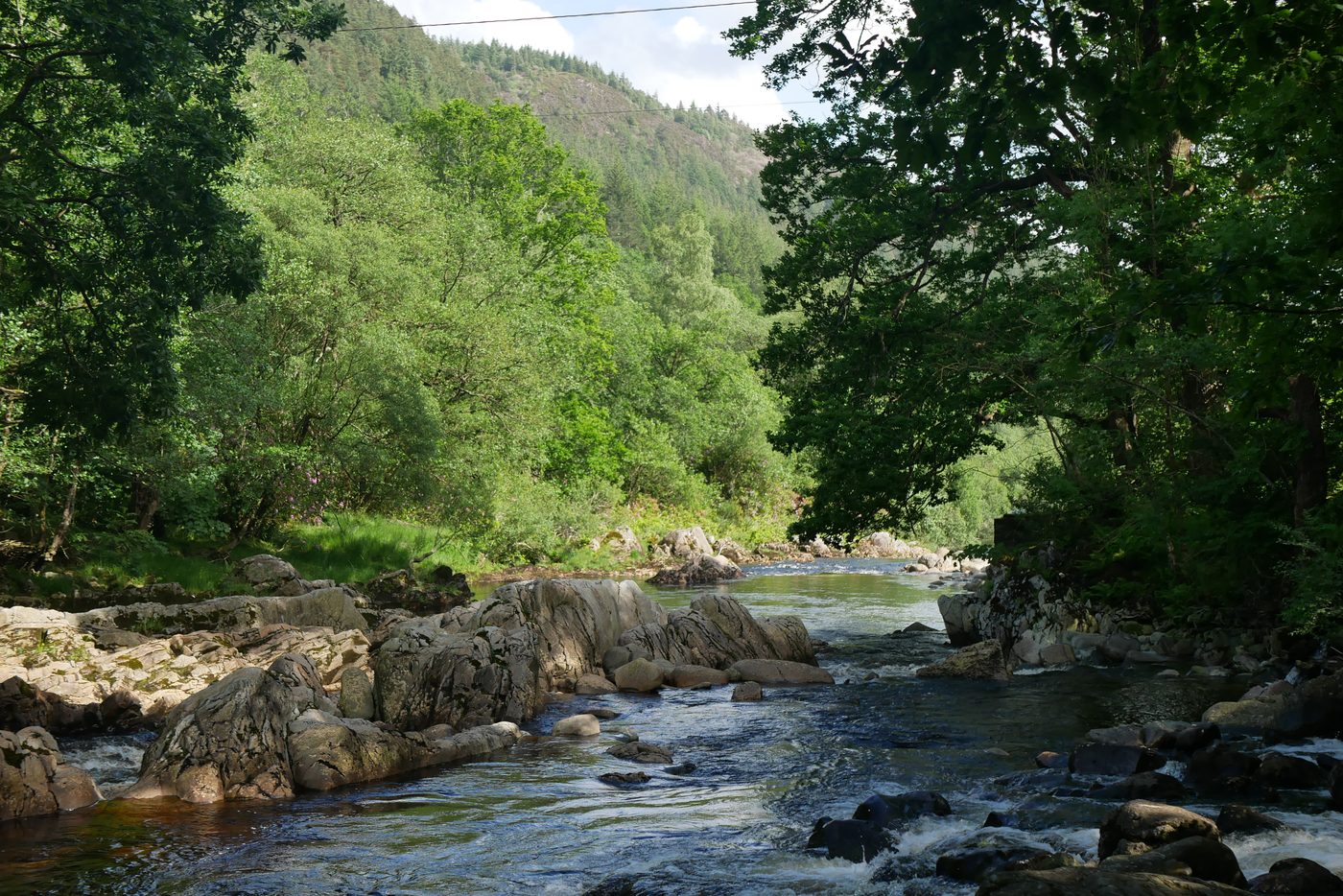
The recreational reality of Welsh gold panning runs through the alluvial gravels of the Mawddach catchment and its main tributaries. The Mawddach drains from the high country around Coed-y-Brenin and the Rhinog and Aran mountains, runs west through Dolgellau, and reaches the sea at the broad tidal estuary that gives the catchment its character. The principal feeder tributaries on the upper river — the Wnion, the Eden, the Mawddach's own upper reaches above Llanelltyd, and the smaller burns draining the gold-bearing country — carry alluvial flake gold derived from the Dolgellau belt source rocks.
The documented tributaries
The tributaries most consistently associated with fine gold in the historical and recreational record are the Afon Wnion, which drains south-eastward into the Mawddach above Dolgellau, and the Afon Eden, which joins the main river from the north near Llanelltyd. Both catchments drain country that includes the eastern margin of the Dolgellau Gold Belt and carry alluvial flake gold derived from the same source rocks as the Clogau and Gwynfynydd veins. Smaller burns in the Coed-y-Brenin forestry to the north-east drain gold-relevant country and recreational finds from those streams appear in the modern hobby literature, though none of the area has been formally evaluated in publicly available geological surveys in sufficient detail to allow precise comparison of productivity. The Mawddach main channel is tidal below Llanelltyd and is not productive recreational panning ground in the conventional sense; the alluvial material worth working is on the middle and upper river, above the tidal limit, and on its feeder streams.
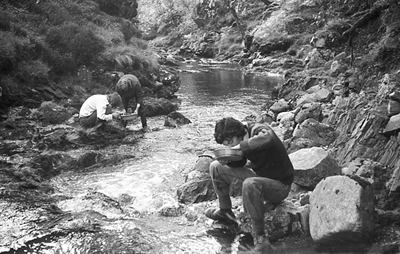
The permissions required for any Mawddach-system session are layered and need to be organised separately for each site, unlike the single-ticket model at a Scottish permit scheme. You need direct written permission from the landowner or land manager for the specific bank-side parcel — which may mean approaching a private landowner, a tenant farmer, or Natural Resources Wales in its capacity as land manager for the Coed-y-Brenin forestry. You also need to comply with NRW's good-practice framework for in-river activity: hand tools only, same-day restoration of any disturbed material, and the salmon-spawning closure that prohibits panning between November and May on the salmonid-supporting stretches of the system. Any session inside the Eryri National Park boundary — which covers most of the productive upper catchment — is subject to the Park Authority's additional conditions on ground disturbance and removal of natural materials. A prospector who works through this preparation and arrives on the river in a settled late-summer period can realistically expect fine flake gold from a productive feature; the administration is considerably heavier than a Kildonan day-permit, but the gold-bearing country is genuine.
Cymerau and the meeting of waters
The Welsh word cymer describes the meeting of two waters, and the Mawddach catchment contains several historically significant cymerau — confluences where two productive feeder streams join, and where the slower water and reorganised gravel beds below the confluence can concentrate alluvial gold. The classic example is the meeting of the Eden and the Mawddach near the head of the estuary, with several other significant confluences upstream around Dolgellau and Llanelltyd. None of these is a permit-backed site; all of them require landowner permission for the specific bank-side parcel.
Reading the Welsh upland streams
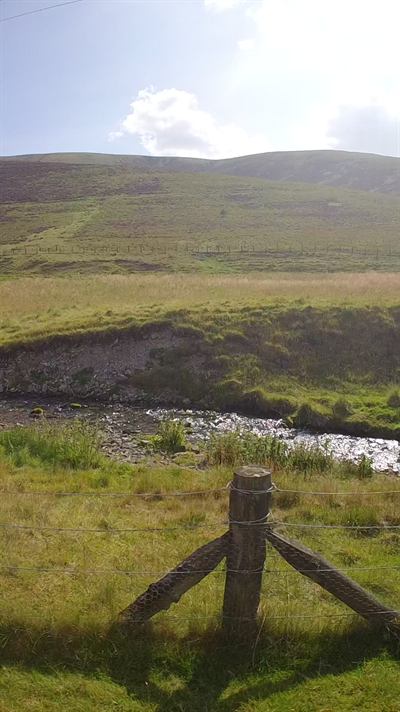
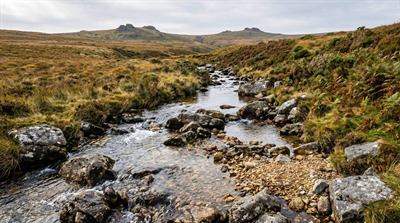
The Mawddach tributaries are typical upland Welsh streams — moderate to steep gradient, mixed cobble and boulder beds, exposed slate or mudstone bedrock at intervals, occasional pools and short riffles, gravel bars at the inside of every meaningful meander, and a heavy summer canopy of oak, birch and ash through the lower wooded sections. The technique is identical to that on a Scottish Highland burn but with one practical caveat: Welsh streams in the Dolgellau gold belt run slightly more turbid than their Highland equivalents in any rainfall event, because the catchment has more clay-rich slate and shale country than the typical Highland glen. Plan for the post-flood window two to six weeks after a spate rather than working a freshly-risen river. Full technique is in our river-reading guide.
What you'll actually recover
Welsh alluvial gold from the Mawddach catchment is characteristically fine and slightly redder in colour than the typical Scottish placer, reflecting the granite-free, slate-and-mudstone host geology and the relatively low silver content of the Dolgellau primary gold. A productive day on a permitted Mawddach-system stretch is fine flake gold and a snuffer bottle of black sand worth bottling for proper home processing. Pickers come up rarely; nuggets are exceptional in the historic record and would be national news today. The romance of recovering Welsh gold from the country that supplied the royal rings is, however, considerable and is part of why Welsh prospectors persist with what is, by Scottish standards, a hard administrative and a modestly productive activity.
Dolaucothi — the Roman Gold Mine
Dolaucothi Gold Mines at Pumpsaint in Carmarthenshire is the only confirmed Roman gold mine in Britain and the practical entry point for any newcomer to Welsh gold prospecting. The site is owned by the National Trust and operates as a heritage attraction with underground tours through the surviving Roman and Victorian workings, surface walks across the engineering landscape of the aqueducts and hushing tanks, and a guided gold-panning experience using gold-bearing material from the site.
The Roman operation at Dolaucothi ran from roughly the late first century AD into the early third — perhaps 75 AD through to 220 AD on the generally accepted chronology — and combined three techniques: opencast quarrying of the surface auriferous quartz, deep adits driven into the hillside to follow the richer veins, and large-scale hydraulic engineering using aqueducts to deliver controlled volumes of water to hushing tanks on the upper slopes. The hushing tanks were used to wash overburden off the ore body and to break up promising quartz vein material for processing. The aqueduct channels, leats and tanks remain identifiable on the ground and constitute one of the most complete Roman gold-mining landscapes outside Spain.
One practical point that catches some first-time visitors out: recreational gold panning is not available as a self-directed activity at Dolaucothi. The site is a scheduled ancient monument — the highest category of heritage protection in UK law — and the archaeological record of the Roman workings extends through the ground, including into the stream and alluvial deposits adjacent to the mine. Disturbing those deposits without professional archaeological supervision would risk irreversible damage to an internationally significant heritage site that has survived in recognisable form for nearly two thousand years. The National Trust manages this by providing the guided panning experience as a controlled and supervised route, using prepared gold-bearing material that does not compromise the scheduled monument or the underlying archaeology. Visitors who arrive expecting to pan the local river freely will find it is not possible, and for the same reason that the Roman aqueduct channels are still identifiable on the hillside above the site today.
Why Dolaucothi matters for a beginner
The guided panning experience at Dolaucothi is, in 2026, the only fully legal, instructor-led route into recreational gold panning anywhere in Wales. It is the closest Welsh equivalent of the Wanlockhead Museum of Lead Mining experience in Scotland, with the same fundamental package: a beginner with no kit, no experience and no contacts can turn up, pay the entry fee, take the panning session under instruction, and recover real Welsh gold in the course of an afternoon.
The recoveries are modest — small flake gold in a vial, of the kind any genuine Welsh placer session would produce — and the educational value is high. Anyone planning further work in the Mawddach catchment under landowner permission should treat Dolaucothi as the first step and the practical equivalent of a beginner's course. Booking and current opening details are on the National Trust website.
Welsh Gold-Panning Law
The legal framework for recreational gold panning in Wales is closely aligned to the English framework on either side of it, with the same royal prerogative vesting unworked gold in the Crown and the same Crown Estate administration of the Crown's mineral rights across England and Wales. Welsh-specific bodies handle the in-river regulation, the conservation designations and the National Park byelaws.
Layer 1 — Crown ownership
Royal prerogative (the Case of Mines, 1568) vests all unworked gold and silver in England and Wales in the Crown. The rights are administered by the Crown Estate. The credibility-defining point — the same as for England — is that the Crown Estate does not issue recreational gold-panning licences. There is no Welsh equivalent of the three Scottish permit schemes; there is no landowner arrangement in Wales that has formalised a recreational fee structure at the scale of Suisgill Estate's Kildonan scheme or Buccleuch Estate's Wanlockhead licence. The Crown's position on recreational removal of gold from Welsh rivers is restrictive in principle and largely un-enforced against compliant recreational activity in practice, but the legal architecture sits there nonetheless.
Layer 2 — landowner permission
Wales does not have a statutory right of responsible access equivalent to the Land Reform (Scotland) Act 2003. Access to most rural Welsh land operates under the Countryside and Rights of Way Act 2000 (which gives access to mapped "open access" land but explicitly excludes ground-disturbing activity) and under specific permissive paths and rights of way. For gold panning the working assumption is that direct landowner permission for the specific riverbank is required for every session, ideally in writing, with the scope of the permitted activity clearly described.
Layer 3 — Natural Resources Wales and the protected sites
Natural Resources Wales (NRW) is the body responsible for in-river regulation in Wales, parallel to SEPA in Scotland and the Environment Agency in England. NRW's good-practice criteria for recreational panning cover hand-tool-only working, refilling any disturbance the same day, the salmon-spawning closure that applies where the catchment supports salmonids, and any catchment-specific conditions for protected species. The Mawddach is a salmon and sea-trout river of significant conservation importance and any session on the catchment needs to be planned with explicit reference to its protected status.
Layer 4 — National Parks and AONBs
Three National Parks cover much of the gold-bearing country: Eryri (Snowdonia), Pembrokeshire Coast and Bannau Brycheiniog (the Brecon Beacons). The Dolgellau Gold Belt sits inside the southern half of Eryri/Snowdonia and most of its productive country is within the National Park boundary, which adds the Park Authority's byelaws on ground disturbance and removal of natural materials to the other layers. AONB designations in the Lleyn Peninsula, the Clwydian Range, and the Wye Valley overlap further gold-relevant country. Full legal detail is in our UK gold panning laws guide.
Welsh Gold Pricing and the Premium
Welsh gold sells at a substantial premium over bullion spot when worked into hallmarked jewellery within a verified chain-of-custody framework. The premium is built principally on the royal tradition and on the limited supply: there is no commercial Welsh gold production in 2026, and the Clogau and Gwynfynydd stockpiles represent a finite and slowly diminishing resource.
The brand framework
Two principal brands trade on the Welsh gold premium in 2026. Clogau Gold of Wales markets Welsh-gold jewellery drawn from the historical Clogau stockpile and from related sources, with a chain-of-custody framework that lets the company claim Clogau provenance for pieces containing Clogau-origin metal. Cambrian Gold markets a related range of Welsh-gold pieces under a separate brand framework. Both companies trade on the royal tradition and on the cultural premium that the Welsh gold story has built up over a century.
The honest reality for recreational specimens
The brand premium attaches to verified, chain-of-custody mined Welsh gold worked into hallmarked jewellery. It does not automatically attach to recreational placer specimens recovered by a hobbyist from the Mawddach catchment, because those specimens sit outside the brand chain-of-custody and have no formal provenance documentation. Individual flakes can sometimes be sold to Welsh jewellers for setting into custom pieces, and prices for such material can be modestly above spot, but the multi-fold premium that Clogau or Cambrian Gold can charge for branded pieces is not reachable for recreational specimens alone.
The pragmatic framing for any recreational prospector: the value of a vial of Welsh flake gold is the satisfaction of having recovered it, the context of having worked the country that built the royal tradition, and the marginal melt value of the metal itself. Selling small recreational specimens to commercial jewellers is possible but not lucrative. The cultural premium is on the chain of custody and the brand, not the metal.
Best Season, Conditions and Realistic Expectations
The Welsh hydrological and ecological seasons follow the broader UK pattern with some regional specifics worth understanding before planning a trip.
The hydrological window
Low summer water — typically mid-June through mid-September in an average year — is the productive condition across the Mawddach catchment. Welsh summers are wetter and more variable than the equivalent Highland summers, and Welsh streams in the Dolgellau belt tend to run slightly more turbid than the Highland equivalents because of the clay-rich slate and shale catchment geology. Plan for the post-flood window two to six weeks after a spate rather than working a freshly-risen river. A settled spell of dry weather in late July or August is the gold-standard hydrological setup for any Mawddach-system session.
The ecological window
The Mawddach and its tributaries support salmon and sea-trout populations and fall within the NRW salmon-spawning closure framework, which broadly mirrors SEPA's Scottish equivalent — no panning between 1 November and 31 May where the catchment supports salmonids. The closure is conservative and brackets the spawning, the over-wintering eggs and the emergence of juveniles. NRW publishes the current good-practice framework; verify it before any session.
Equipment and approach
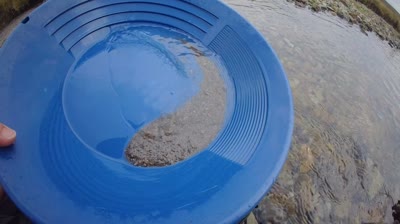
The standard Welsh kit is the same as for any UK alluvial session — a 10-inch plastic pan, a 1/4-inch classifier, a trowel, a snuffer bottle and a couple of vials. Wellies are adequate for shorter sessions; neoprene waders are useful for sustained work in cooler weather. Powered equipment is prohibited universally; sluices are a permit-by-permit question and, for recreational landowner-permission sessions, are typically not permitted. Full kit detail is in our UK equipment guide.
Realistic expectations
An honest summary of what a Welsh recreational prospector can expect: fine flake gold from the Mawddach catchment under landowner permission, a guided session with a small recovery at Dolaucothi, and no realistic prospect of a substantial picker or nugget. Wales is the country with the highest cultural premium on its gold and the lowest practical accessibility for the hobbyist. The pragmatic Welsh prospector pairs a Dolaucothi visit with a season's slow work on a permitted Mawddach stretch, and once a year takes the longer trip north to Wanlockhead, Tyndrum or Kildonan for the productive Scottish weekend. The full Scottish picture is in our Scotland locations guide.
Wales is where the gold has the highest cultural premium and the lowest practical accessibility. Dolaucothi is the entry point. The Mawddach catchment is the recreational reality. The royal tradition is the backdrop. Set expectations accordingly.
Frequently Asked Questions
Where can I legally pan for gold in Wales?
There is no permit-backed recreational scheme in Wales equivalent to the Scottish Kildonan, Wanlockhead or Tyndrum sites. The legal route is direct landowner permission for the specific stretch of riverbank, combined with Natural Resources Wales compliance for the in-river activity and any National Park, AONB or SSSI conditions that apply to the site. The Crown Estate, which administers the Crown's ownership of unworked gold in England and Wales, does not issue recreational gold-panning licences. The most accessible legal route into Welsh gold is the guided panning experience offered at the National Trust's Dolaucothi Gold Mines site in Carmarthenshire.
Is Welsh gold really used in royal wedding rings?
Yes. The Royal Welsh gold tradition began in 1923 when Lady Elizabeth Bowes-Lyon, later the Queen Mother, was given a wedding ring made from gold supplied from the Clogau St David's mine near Bontddu. Since then several royal wedding rings have used Welsh gold from either Clogau or Gwynfynydd — most prominently Queen Elizabeth II (1947), Princess Margaret, Princess Anne, Diana Princess of Wales (1981) and Catherine, Princess of Wales (2011). The tradition is unique in world jewellery — no other royal house has built a comparable century-long single-source wedding-ring lineage.
Are Clogau and Gwynfynydd mines still operating?
Neither mine is in active commercial production in 2026. Clogau St David's mine near Bontddu was in long-term decline through the twentieth century and is dormant; Gwynfynydd, in the upper Mawddach catchment, closed for commercial production in the late 1990s. Both mines retain stockpiles of mined Welsh gold that continue to supply hallmarked jewellery, and both have been the subject of intermittent reopening discussions over the last two decades. The Clogau and Cambrian Gold brand names continue to market Welsh-gold jewellery from a combination of stockpiled, refined and historic-source material.
How much is Welsh gold worth compared to ordinary gold?
Brand premium varies dramatically. Verifiably-sourced Welsh gold worked into hallmarked jewellery under a chain-of-custody framework — particularly pieces using Clogau or Gwynfynydd stockpiled material — has historically sold for substantial multiples of the bullion spot price, with collector premia driven by the royal tradition and the limited supply. Recreational placer specimens recovered by a hobbyist from the Mawddach catchment do not automatically attract the same premium because they sit outside the brand chain-of-custody, but individual flakes can sometimes be sold to Welsh jewellers for setting. The honest framing is that the premium is on the verified provenance, not on the metal itself.
Can I visit Dolaucothi and pan there?
Yes. Dolaucothi Gold Mines at Pumpsaint in Carmarthenshire is a National Trust property and offers underground mine tours through the surviving Roman and Victorian workings plus a guided gold-panning experience using gold-bearing material from the site. This is the only place in Wales where a complete beginner can pan for real Welsh gold under a fully legal, supervised arrangement. The site is the only confirmed Roman gold mine in Britain and is the practical starting point for any newcomer to the Welsh hobby. Check the National Trust's current opening and booking details before travelling.
Do I need a permit to pan for gold in Wales?
There is no equivalent of the three Scottish permit schemes in Wales. The legal route to recreational panning is direct landowner permission for the relevant stretch of riverbank, plus Natural Resources Wales compliance for the in-river activity, plus any National Park, AONB or SSSI conditions that apply. The Crown Estate does not issue recreational gold-panning licences. Welsh law on this point is essentially identical to the English position, and the practical effect is that any Welsh session needs to be planned site-by-site rather than booked through a central permit office. Full legal detail is in our UK gold panning laws guide.
What's the best river to pan in Wales?
The most documented recreational gold-bearing system in Wales is the Mawddach catchment, including the river itself and its main feeder tributaries draining the Dolgellau Gold Belt. Specific named tributaries that have produced recorded recreational finds include the Wnion and the Cain on the upper Mawddach, alongside the smaller burns draining the Coed-y-Brenin forest country. None of these is set up as a permit-backed site — every session requires direct landowner permission. The realistic outcome on a permitted Mawddach-system stretch is fine flake gold and a snuffer bottle of black sand.
How does Welsh gold compare to Scottish gold?
Welsh primary gold from the Dolgellau belt has historically been higher purity and more concentrated than the average Scottish placer gold, which is reflected in the historic mining productivity of Clogau and Gwynfynydd. For a recreational prospector, however, Wales is materially less accessible than Scotland because there is no permit-backed recreational scheme — the legal route runs through landowner permission and Natural Resources Wales compliance for every session. The practical comparison is that Scotland is easier to access but produces less spectacular gold; Wales is harder to access but the cultural premium on the metal is higher. Full Scottish detail in our Scotland locations guide.
Where should a Welsh-region beginner start?
Dolaucothi Gold Mines in Carmarthenshire. The National Trust property's guided panning experience is the only fully legal, instructor-led route into recreational gold panning in Wales — it covers the technique, the geology and the cultural context with material that genuinely produces recoveries on a half-day session. Use it as the entry point, build technique under instruction, and then approach the Mawddach catchment with the experience to identify productive features and the awareness to organise landowner permission for any subsequent session. The full beginner's framework is in our beginner's guide.
Do you need a licence to pan for gold in Wales?
No — there is no recreational gold-panning licence in Wales. Gold in Wales belongs to the Crown by royal prerogative and is administered by the Crown Estate, but the Crown Estate does not issue recreational gold-panning licences and there is no central permit scheme like the three Scottish sites. In practice the legal route is the landowner's permission for the specific stretch of riverbank plus compliance with Natural Resources Wales rules and any National Park, AONB or SSSI conditions. The one place you can pan legally without arranging any of that is the National Trust's guided experience at Dolaucothi Gold Mines. Full detail is in our UK gold panning laws guide.
What is the history of Welsh gold?
Welsh gold has been worked for around two thousand years. The Romans mined it at Dolaucothi in Carmarthenshire from roughly the first century AD — the only confirmed Roman gold mine in Britain. The modern story centres on the Dolgellau Gold Belt in southern Eryri (Snowdonia), where a Victorian gold rush took off in the 1860s after rich finds in the Mawddach catchment; the Clogau St David's mine near Bontddu and Gwynfynydd in the upper Mawddach became the two most productive Welsh gold mines. In 1923 a wedding ring made from Clogau gold began the Royal Welsh gold tradition that still continues. The geology behind it all is the Cambrian-age Clogau Shale of the Harlech Dome. The full chronology of British strikes is in our UK Gold Rushes hub.
How can you identify genuine Welsh gold?
There are two different questions hidden in this. Telling real gold from fool's gold is about physical properties — real gold is soft, heavy, non-brittle and stays bright in shade, whereas pyrite and mica are brittle and glitter only in direct light; our UK gold minerals guide covers the field tests. Telling genuinely Welsh-sourced gold from any other gold is not something you can do by eye — placer gold from the Mawddach looks like placer gold anywhere, and the Welsh gold premium rests entirely on verified provenance, not appearance. That is why branded Welsh-gold jewellery relies on chain-of-custody documentation and hallmarking rather than any visual test. A flake you pan yourself is genuinely Welsh by virtue of where you recovered it, but it carries no certificate, which is why it sits outside the branded premium.
Important: All UK gold panning is subject to Crown gold rights (royal prerogative in England & Wales, the Royal Mines Act 1424 in Scotland), and to country-specific access, environmental and protected-site law. The Crown Estate does not issue recreational gold-panning licences. There is no permit-backed recreational scheme in Wales equivalent to the three Scottish sites. Always check current landowner permission, SSSI/SAC status, National Park (Eryri/Snowdonia, Pembrokeshire Coast, Bannau Brycheiniog), AONB and NRW conditions before working any river. Never dig the bank. This article is general guidance, not legal advice — verify current law with Natural Resources Wales, Cadw or the relevant authority for your area. Full detail in our UK gold panning laws guide.
200 verified UK gold locations including the documented Welsh sites — Mawddach catchment, Dolgellau belt, Dolaucothi and beyond.
Open the Interactive Map →Free Beginner's Pack — 16-page PDF: top 10 UK locations with GPS, equipment checklist, legal cheat sheet and app tutorial.
Get the Free Pack →