Short answer
Yes — the UK has one working commercial gold mine, Cononish near Tyndrum in the Scottish Highlands, plus a scatter of historic and proposed mines across Scotland, Wales and Northern Ireland — and one Roman mine, Dolaucothi in Carmarthenshire, that you can actually visit, tour underground and pan at. Wales's two great mines (Clogau and Gwynfynydd) are worked out and closed; Northern Ireland's deposits at Curraghinalt and Cavanacaw are proposed or in development rather than fully operating. The working Cononish mine is not open to the public. Britain has never been a major gold producer: its gold sits in small, scattered hard-rock veins, and only recent record prices make marginal deposits viable.
The story of gold mining in Britain runs from a legion's pick-marks two thousand years ago to a gold pour in a Highland glen in our own decade. It takes in Welsh metal beaten into royal wedding rings, a modern Scottish mine that poured its first bar, collapsed into administration, and rose again under new owners just as gold hit record prices, and a high-grade Northern Irish deposit caught in the planning system. There are not many UK gold mines — but the few there are carry a remarkable amount of history.
Below you will find every significant UK gold mine — where it is, who owns it, whether it is working, and whether you can visit — alongside the law that governs all of it (gold is Crown property) and the economics that explain why a country with gold in the ground has produced so little of it. Every status here is dated and hedged; precision is the point. You can see the working sites and historic ground on the UK Gold Prospector interactive map, and the wider picture in our guide to where to pan for gold in the UK.
In this guide
- Gold mines in the UK at a glance
- Who owns the gold? The law of Mines Royal
- Scotland: Cononish, the UK's only commercial gold mine
- Wales: the Dolgellau Gold Belt (Clogau & Gwynfynydd)
- Wales: Dolaucothi — the mine you can visit
- Northern Ireland: Curraghinalt & Cavanacaw
- Historic mines and panning grounds
- Why UK gold mining is marginal
- Frequently asked questions
See every UK gold site on the live map
Working mines, historic workings and panning grounds across Scotland, Wales, Northern Ireland and England — with access notes and 200 verified locations.
Gold mines in the UK at a glance
There is a great deal of confusion online about UK gold mines, partly because the situation keeps changing — ownership transfers, administrations, restarts and planning inquiries are all in play right now. The table below is the quick reference; the sections that follow give the carefully-sourced detail behind each line. The headline is simple: of the six main UK gold mines, exactly one is a working commercial mine (Cononish, Scotland) and exactly one is open to the public (Dolaucothi, Wales) — and they are not the same place.
| Mine | Nation | Status (as of 2026) | Can you visit? |
|---|---|---|---|
| Cononish (Tyndrum) | Scotland | Working — returned to production under Acrux in late 2025; owner reported stable production April 2026 | No — active industrial site |
| Clogau St David's | Wales | Closed 1998 — worked out; most royal-wedding gold | No |
| Gwynfynydd | Wales | Closed 1999 — worked out | No |
| Dolaucothi | Wales | Roman/historic — National Trust visitor attraction | Yes — tours & gold panning |
| Curraghinalt | N. Ireland | Proposed (Dalradian) — awaiting planning decision after public inquiry | No — not built |
| Cavanacaw / Omagh | N. Ireland | In development / not in full commercial production; majority Ocean Partners since late 2025 (per filings) | No |
Who owns the gold? The law of Mines Royal
Before any discussion of mines, the single most important fact: in the United Kingdom you do not own the gold under your feet, even if you own the land. All gold and silver are vested in the Crown as Mines Royal, a position rooted in the Crown's prerogative (the Case of Mines, 1568) and later qualified by the Royal Mines Acts 1688 and 1693. Gold rights in England, Wales and Northern Ireland are administered by the Crown Estate; in Scotland they sit with Crown Estate Scotland.
The practical consequence is that operating a gold mine is a heavily regulated undertaking. A would-be miner needs, at minimum, a Crown lease or option over the gold, the landowner's agreement for surface access, environmental permits and consents, and full planning permission — which is exactly where projects like Curraghinalt get stuck. Recreational gold panning, by contrast, is a separate and far smaller activity that is tolerated as a grey area in some places (the permit scheme at Wanlockhead being the best-known example), but it still requires permission and is not the same as mining. Read it plainly: you can sometimes pan, but you cannot simply mine.
In short: the gold belongs to the Crown. Even commercial operators lease the right to extract it; ordinary prospectors have no automatic right to dig for or keep gold without permission. Panning is tolerated in places; mining is a major regulated project.
Scotland: Cononish, the UK's only commercial gold mine
If you want to point to a working gold mine in Britain, there is exactly one: Cononish, in Cononish Glen near Tyndrum, within the Loch Lomond and the Trossachs National Park on the southern edge of the Scottish Highlands. It is the source of what is marketed as "Scottish gold," and it is the only modern commercial gold mine the UK has.
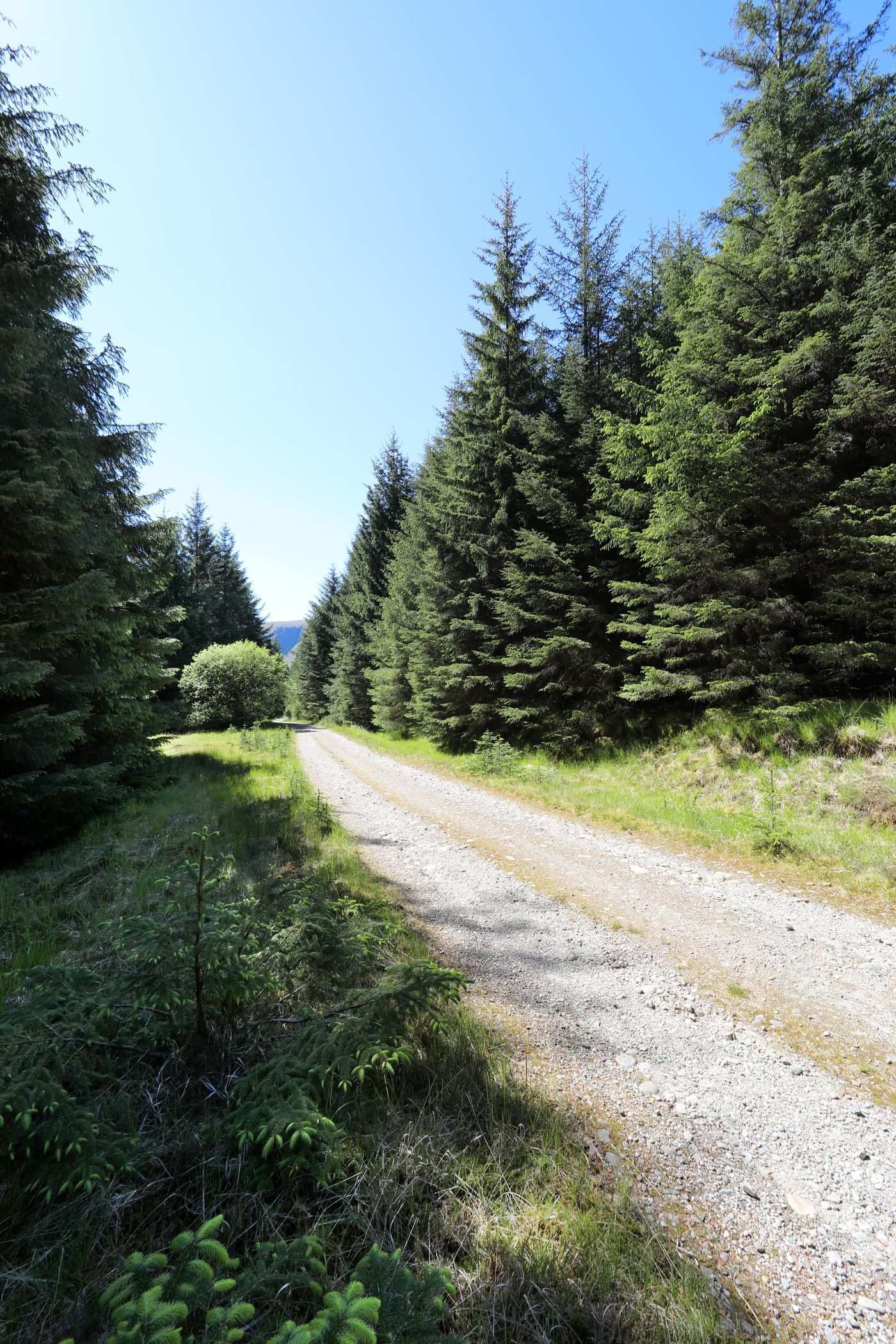
Its recent history is a cautionary tale about UK gold economics, and reads like a drama in three acts. The mine was developed by Scotgold Resources, which achieved its first commercial gold pour on 30 November 2020 — a genuine milestone, the first commercial Scottish gold in modern times. Despite that, Scotgold ran into financial and operational difficulty; staff were put on unpaid leave from late September 2023 and Scotgold Resources entered administration in November 2023. In March 2025 the mine was acquired by a South African firm, Acrux (Acrux Sorting Technology). Cononish returned to production in late 2025 (reported in January 2026), amid record gold prices, with a reported workforce of around 70 and a stated ambition in the region of 2,000 ounces per month. A dated timeline of the deposit, from its discovery in 1985 to the owner's April 2026 update, is in the story of Cononish.
Cononish returned to production in late 2025 under new owner Acrux, after previous operator Scotgold Resources went into administration in November 2023. Operating figures here are drawn from press reports and company statements rather than independently verified output; because ownership and output have changed several times, treat any figure as a snapshot and verify the current position before relying on it.
One question we are asked constantly: can you visit Cononish? No — it is a working commercial mine inside a national park, not a tourist attraction, and there are no public underground tours. What you can do is pan the alluvial gold shed by the same Dalradian geology nearby, in the separate Tyndrum Community Woodland, under a recreational permit scheme run by the local community trust. The full how-to is in our gold panning at Tyndrum guide, and you can browse Scottish sites on the map's Scotland view.
Wales: the Dolgellau Gold Belt (Clogau & Gwynfynydd)
Wales has the most romantic gold story in Britain — and almost no working mines to show for it. The Dolgellau Gold Belt is an arc of gold-bearing Cambrian rock around the Harlech Dome in southern Eryri (Snowdonia), Gwynedd. It produced the "Welsh gold" famously used in royal wedding rings, and it held the two greatest Welsh gold mines.
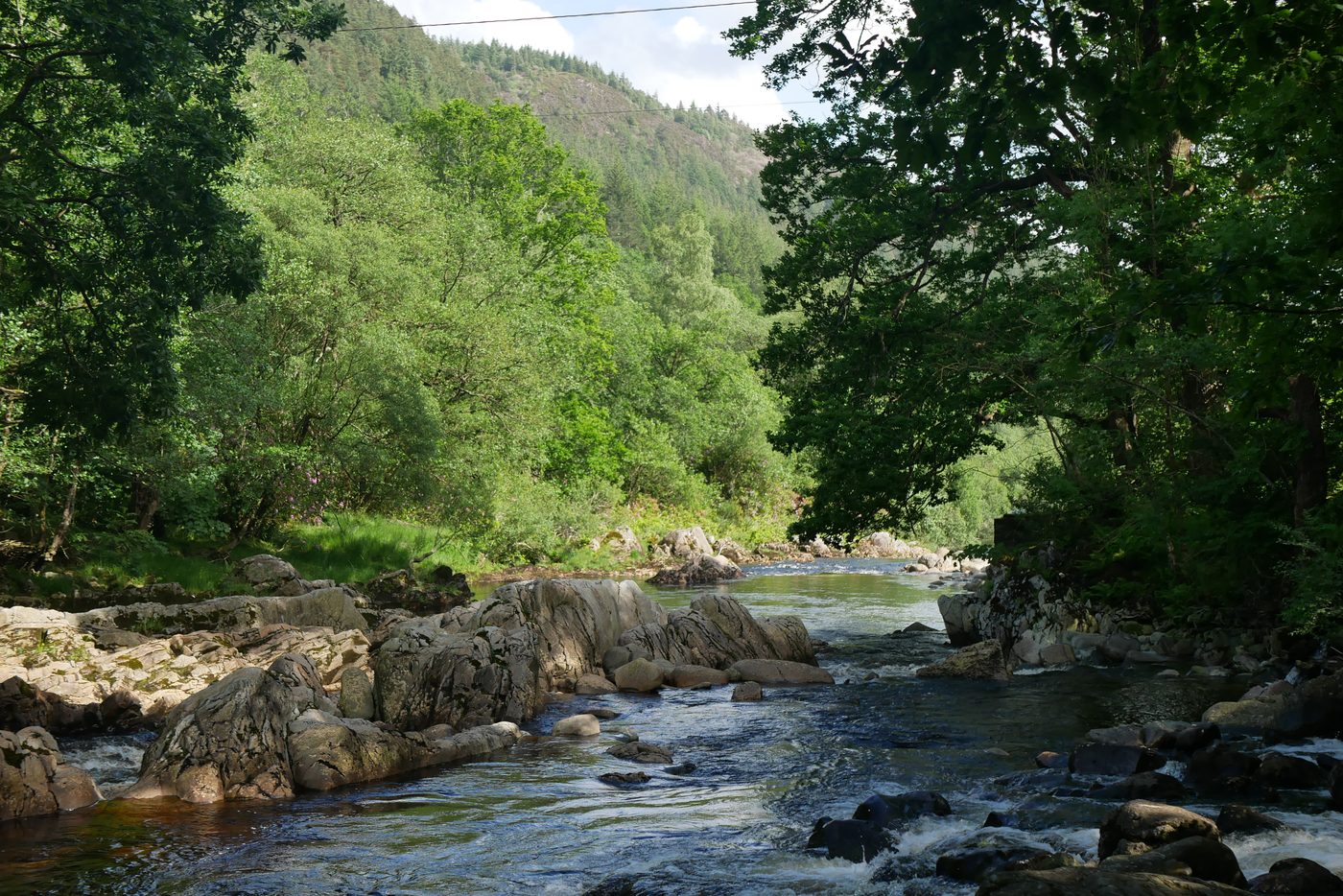
Clogau St David's Mine, above Bontddu near Barmouth, was the most productive Welsh gold mine and the source of much royal wedding-ring gold. It closed in 1998. Gwynfynydd Mine, near Ganllwyd on the upper Mawddach, was the second great Welsh mine; it closed in 1999. Both are worked out and are not open to the public for mining or panning.
It is worth being blunt about access here, because people get caught out. The upper Mawddach country, including Coed y Brenin, is Natural Resources Wales land where panning is not permitted — a man was reportedly fined over £3,000 for illegal panning in the area in 2021 to 2022. Welsh gold remains highly prized and is sold at a significant premium by jewellers precisely because so little of it now reaches the surface. For the full Welsh picture, see our guides to the Dolgellau Gold Belt and Welsh gold from Clogau and Dolgellau.
Wales: Dolaucothi — the mine you can actually visit
This is the answer to the question almost everyone is really asking — can I visit a gold mine in the UK? The answer is the Dolaucothi Gold Mines, near Pumsaint in Carmarthenshire — and they are special twice over. At Dolaucothi, Roman engineers cut gold from the Welsh hills in the first and second centuries AD: these are the only known Roman gold mines in Britain. They drove tunnels by hand and fed aqueducts to wash the rock, leaving workings later picked up again by Victorian and 1930s miners. Today the site belongs to the National Trust, which is what makes it the one genuinely public gold-mining experience in the country.
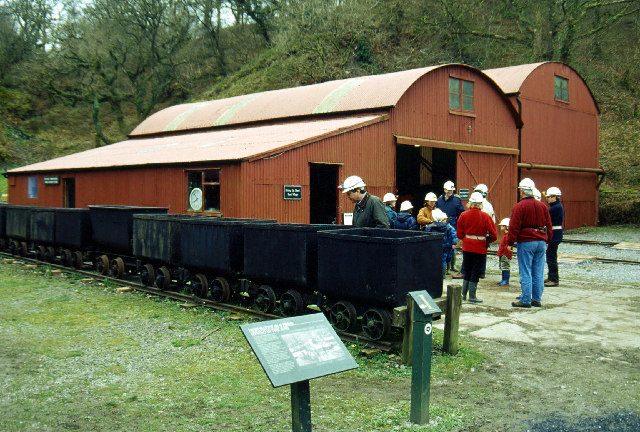
At Dolaucothi the public really can go inside a gold mine. The National Trust runs underground guided tours — typically including Victorian and 1930s "Levels" tours plus a Roman mine trail — alongside a mine yard with historic machinery, and a dedicated gold-panning area where visitors can pan and keep what they find. Booking is essential and tours are released on a rolling basis. Opening days vary through the season (often midweek plus Sundays and school holidays), so always check the National Trust website for current opening days, tour times and prices before you travel; we deliberately do not quote a price here because it changes.
If you only visit one UK gold mine, make it Dolaucothi. It is the single site that combines genuine mine history — Roman, Victorian and twentieth-century — with underground access and a panning area open to the public. It is heritage, not commercial production, but it is a real gold mine and the panning is real. Active commercial mines like Cononish are working industrial sites and are not open for tourism. Confirm current opening details with the National Trust before visiting.
Northern Ireland: Curraghinalt & Cavanacaw
Northern Ireland holds arguably the most valuable gold ground in the UK, in the Sperrin Mountains of Co. Tyrone — but as of 2026 it has no fully operating commercial gold mine, only a proposed one and one in protracted development.
Curraghinalt (proposed)
Curraghinalt, near Greencastle in the Sperrins, is described as one of the world's highest-grade undeveloped gold deposits. It is a proposed underground mine, advanced by Dalradian Gold. It is not operating: it remains at the planning stage. A public inquiry before the Planning Appeals Commission opened in January 2025, was suspended, and reconvened in April 2026; as of 2026 a decision is pending. The project is locally controversial, with significant environmental objections (including over the historic proposal to use cyanide in processing). The honest status, then, is: high-grade, proposed, and awaiting a planning decision after a public inquiry.
Cavanacaw / Omagh (Galantas, now Ocean Partners JV)
The Cavanacaw mine, also called the Omagh Gold Mine, near Omagh in Co. Tyrone, was operated by Galantas Gold. Its open pit produced roughly 14,540 ounces of gold between 2006 and 2008; underground development followed from 2018 but the operation never reached full commercial output. In September 2025, per company filings, Galantas sold an 80 per cent interest in the Omagh project to Ocean Partners UK Ltd in a joint venture, retaining a 20 per cent stake and shifting its focus elsewhere. Its status today is best described as in development and not in full commercial production, majority-owned by Ocean Partners since late 2025. For more on the region, see our guide to where to find gold in Northern Ireland.
Historic mines and panning grounds
Beyond the commercial picture, the UK is dotted with historic gold workings and recreational panning grounds that people often (loosely) call "gold mines." They matter for context — and several are far more accessible to a hobbyist than any working mine.
- Sutherland / Kildonan, Highland. The Kildonan Burn gold rush of 1868, in the Strath of Kildonan near Helmsdale, drew prospectors to small historic workings. The rush was brief, but Kildonan is still a noted recreational panning spot today — not a mine. See our pieces on the 1868 Sutherland gold rush and panning at Kildonan and Helmsdale.
- Wanlockhead and Leadhills, southern Scotland. A historic lead-and-gold district nicknamed "God's Treasure House," now best known for a recreational panning permit scheme rather than active mining.
- Cornwall and Devon. Gold here was only ever a by-product of alluvial tin-streaming; there was never a commercial gold mine. See is there gold in Cornwall for the detail.
Why UK gold mining is marginal
So why, with gold in Scotland, Wales and Northern Ireland, has the UK produced so little? The geology is the answer. UK gold mostly occurs in small, scattered, hard-rock veins — expensive to find, expensive to access and expensive to process. There are no vast, easily-worked deposits of the kind that built the great gold-mining nations. Cononish is genuinely small by world standards.
What has changed the calculus recently is the gold price. Sustained record-high prices are precisely what make marginal British deposits — Cononish today, potentially Curraghinalt tomorrow — economic to mine at all. Strip away high prices and most UK gold "mining" reverts to what it has always really been: heritage, the jewellery premium on Welsh and Scottish gold, and recreational panning, rather than large-scale extraction. That is the honest frame for the whole subject.
Where can you actually go?
Skip the working mines and head for the panning grounds. The UK Gold Prospector map shows 200 verified sites with access notes — including the historic and recreational ground near the mines above.
Frequently Asked Questions
Are there gold mines in the UK?
Yes. The UK has one working commercial gold mine, Cononish near Tyndrum in the Scottish Highlands, plus a scatter of historic and proposed mines across Scotland, Wales and Northern Ireland. The Welsh royal-gold mines of Clogau and Gwynfynydd are worked out and closed, the Roman mines at Dolaucothi are preserved by the National Trust, and the Curraghinalt deposit in Northern Ireland is proposed but not yet operating. The UK has never been a major gold producer because its gold sits mostly in small, scattered hard-rock veins.
Is there a working gold mine in the UK?
Yes, one. Cononish, near Tyndrum in the Loch Lomond and Trossachs area of the Scottish Highlands, is the UK's only modern commercial gold mine and the source of so-called Scottish gold. It was developed by Scotgold Resources, which produced its first commercial gold pour on 30 November 2020, then went into administration in late 2023. It returned to production in late 2025 under a new owner, the South African firm Acrux, amid record gold prices. Confirm the current operating status before treating any of this as settled, as ownership and output have changed several times.
Can you visit a gold mine in the UK?
Yes. The Dolaucothi Gold Mines near Pumsaint in Carmarthenshire, the only known Roman gold mines in Britain, are owned by the National Trust and open to visitors. You can take an underground guided tour, walk the Roman mine trail, see the historic machinery in the mine yard, and pan for gold in a dedicated area, keeping what you find. Booking is essential and opening days vary, so check the National Trust website for current days, tour times and prices before you travel. Working commercial mines such as Cononish are not open for casual public tours.
Where is the Scottish gold mine?
The Scottish gold mine is Cononish, in Cononish Glen near Tyndrum, within the Loch Lomond and the Trossachs National Park on the southern edge of the Scottish Highlands. It is the UK's only commercial gold mine and the source of Scottish gold. It is a working industrial site, not a public attraction. The public pan in the separate Tyndrum Community Woodland under a local permit scheme, not at the mine itself.
Are there gold mines in Wales?
Wales has historic gold mines but no working commercial gold mine today. The Dolgellau Gold Belt around the Harlech Dome in southern Eryri (Snowdonia) held the two great Welsh mines, Clogau St David's (which closed in 1998) and Gwynfynydd (which closed in 1999). Both are worked out and closed to the public for mining or panning. The exception is the Roman Dolaucothi mine in Carmarthenshire, run by the National Trust, where the public can tour and pan. Welsh gold remains highly prized for royal wedding rings and sells at a premium.
Is there a gold mine in Northern Ireland?
Northern Ireland has gold deposits in the Sperrin Mountains of Co. Tyrone but no fully operating commercial gold mine. Curraghinalt, near Greencastle, is one of the world's highest-grade undeveloped gold deposits, proposed as an underground mine by Dalradian Gold; as of 2026 it is at the planning stage, awaiting a decision after a public inquiry. The Cavanacaw/Omagh mine, operated by Galantas Gold, produced gold from open pit between 2006 and 2008 but never reached full commercial output; in September 2025 Galantas sold an 80 per cent interest in the Omagh project to Ocean Partners UK Ltd, per company filings.
Can you mine gold in the UK legally?
Not freely. Gold and silver in the UK generally belong to the Crown as Mines Royal (royal prerogative in England, Wales and Northern Ireland; the Royal Mines Act 1424 in Scotland). To actually mine gold you need a Crown Estate (or Crown Estate Scotland) lease, the landowner's permission, environmental consents and planning permission, which makes mining a major regulated activity. Small-scale recreational panning is a separate, tolerated grey area in some places, such as the permit scheme at Wanlockhead, but it still requires permission and the gold itself remains Crown property.
What is the UK's only commercial gold mine?
The UK's only commercial gold mine is Cononish, near Tyndrum in the Scottish Highlands. It produced its first commercial gold pour on 30 November 2020 under Scotgold Resources, which entered administration in November 2023. The mine was acquired by Acrux in March 2025, and it returned to production in late 2025. It is small by world standards; high recent gold prices are a large part of what makes it viable, and it is not open for public visits or panning.
Important: All gold and silver in the UK is Crown property by royal prerogative (and under the Royal Mines Act 1424 in Scotland), and mining is a major regulated activity requiring Crown, environmental and planning consents. Operating statuses above (Cononish/Acrux, Galantas/Ocean Partners, Dalradian/Curraghinalt) change frequently and are drawn from press reports and company filings as of June 2026 — verify the current position before relying on it. Active mines are not open to the public. Visiting arrangements (notably Dolaucothi) are set by the National Trust and vary by season; always confirm opening days, tours and prices on the official site. For recreational panning, always obtain landowner permission and confirm designation and access first. This article is general guidance, not legal advice; full detail in our UK gold panning laws guide.
The UK's gold ground is on the UK Gold Prospector map
Working mines, historic workings and panning grounds across Britain — 200 verified sites with GPS coordinates, geology and access notes.
Free Beginner's Pack — 16-page PDF: top 10 UK locations with GPS, equipment checklist, legal cheat sheet and app tutorial.
Get the Free Pack →