Short answer
Finding Gold: My life-changing treasure hunt with nature is a memoir by Vincent Thurkettle, a former Forestry Commission manager who became a British and world gold panning champion. Published by Short Books on 4 June 2026, it is less a how-to than an answer to a different question: why would anyone stand in a cold river with a pan? In Vince's words, "there are a hundred reasons to go gold prospecting, and money is not one of them."
Who is Vincent Thurkettle?
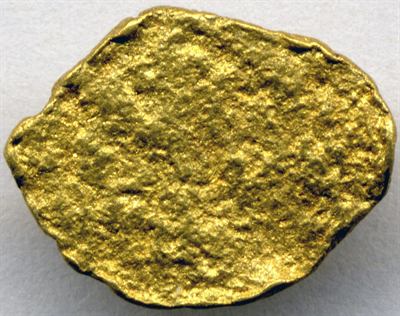
Vince is one of the best-known gold panners in Britain, and the credentials speak for themselves. He is a multiple-time British gold panning champion and became World gold panning champion in 2007, winning his first world gold medal in Canada. He was President of the World Goldpanning Association for seven years. In 2012, while diving off Anglesey, he found a 96.24g nugget, the largest single piece of gold recorded in Britain. Two more pieces lay close by, of 29.62g and 8.32g, probably all one nugget broken into three by the force of a storm. Counted as one broken nugget, they weigh 134.18g.

Before all that he worked for the Forestry Commission as a woodland manager (Country Life says 28 years, rising to deputy director for the East of England). He left in 2005, aged 49, to pursue gold full time. Gold runs in the family: at the 2026 British championships he came fourth, behind the current British champion, his daughter Daisy. He is based in Norfolk and, in winter, grows and sells Christmas trees. He also wrote The Wood Fire Handbook and contributes to BBC Countryfile.


A declaration of interest: while building UK Gold Prospector I read and watched a good deal of Vince's work, and he has been generous and fair about the app. That is why his book is the first entry in our new reading section, and why I can say plainly that he has earned the right to be listened to.
Why would anyone give up a good job to go gold prospecting?
That is the premise of the book. Vince was a long-serving civil servant at the peak of his career. He gave up a good job and a pension to follow a dream of hunting for gold. By the publisher's account, he was not expecting to get rich. He wanted to feel alive.
In the book, finding the metal is only a small part of the story. The bigger part is feeling alive again, new friendships and a sense of purpose. He had a lovely big desk in a room with two windows, "as good as an office-man could hope for", and yet, as he told us: "There has not been one minute of any day, when I wished I was back at my office desk."
If you have ever sat at a desk on a Sunday evening wondering whether this is it, you will understand why that lands.
Is there any money in gold panning?
Not in any way that should drive you. Vince is clear on this, and he put it plainly in an email to UK Gold Prospector:
"There are a hundred reasons to go gold prospecting, and money is not one of them."Vincent Thurkettle
That is a refreshing thing to hear from a world champion. It is also useful. British gold is small. As Vince told Country Life: "They're not the size of baked beans - they're the size of full stops," adding, "A full stop would be a generous one." He is blunt about the big-nugget videos online, too: "On YouTube, half the people finding big gold nuggets are lying. They're painted stones."
If you go expecting a payday, an afternoon with a few flecks in the bottom of the pan will feel like failure. If you go for the reasons Vince gives, the same afternoon can be a very good one.
What do people actually get out of it?
The reasons are ordinary and solid:
- Being in the moment. Vince told The Scotsman Magazine that the book is about being "immersed in the moment" in a beautiful place, ideally with good company. Panning needs your hands, eyes and attention, and there is not much room left for the inbox.
- Beautiful places. His own search has taken him to the mountains of Scotland, the rivers of Lapland, the Yukon, sun-baked Australia, the west coast of New Zealand, and diving on the UK's richest shipwreck.
- Something to hold on to. Vince told Country Life that maybe a quarter of the people who come to learn from him are "hurting". Panning will not fix that, but a quiet river and a task that needs your full attention can help, and the people who do it tend to know that.
- Company. New friendships run through the book, and the pastime tends to produce them.
- Purpose. A small, clear task - find the colour - is a surprisingly good way to spend a day.


It is the same pull people feel from fishing, hill walking or foraging, with the extra thrill that the river might just show you something.
What is a day on the river with Vince like?
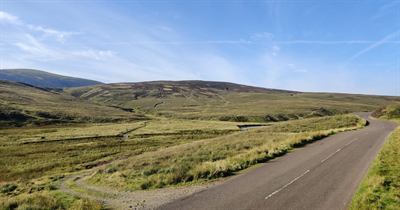
In 2026 Country Life writer Lotte Brundle spent a day panning with him near Wanlockhead, and her account is a good picture of the man. "It is a treasure hunt," he told her. "The river has hidden a few tiny specks of gold, and it's an incredible challenge to find them."
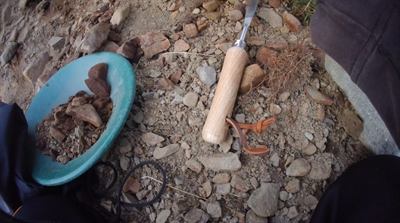
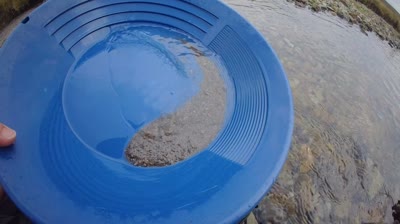
He picked a shallow cranny in the river bed and worked it until it was "clean", raking off the lighter material and swirling the rest away a little at a time. When she shouted at the first glint, he answered with the old saying: "If you think that it's gold, it isn't." It was a shiny stone. His own first find that day was a speck about a quarter of the size of a grain of sugar. "To be a gold prospector in Britain you need to have good eyesight," he joked.
Then her own pan turned up around 20 small pieces. "You've experienced the best of it," he told her. That, more than any nugget, is what the book is about. You can read the full piece at Country Life, and our Wanlockhead and Leadhills guide covers the area.

What is Finding Gold not?
Be clear about what you are buying. It is not a step-by-step guide to panning technique, it is not a list of secret spots, and it is not a get-rich story. It is a memoir. Look closely, though, and you will notice Vince uses a completely different gold prospecting technique in each chapter, a deliberate touch for readers interested in how gold is actually recovered. Think of the book as the reason, and our how to start gold prospecting in the UK guide as the method.
How different is panning now from when Vince started?
Very. In 1978 he struggled even to buy a gold pan in the UK. He learned largely by trial and error, and went years before meeting another panner. As he described it to UK Gold Prospector, it was "like meeting Livingstone in Africa".
Today, he says, "every gold river has a scatter of people panning". That is good news for a beginner: more shared knowledge, more company on the bank, and no need to work it all out alone.

What do other people say about Finding Gold?
The publisher has shared several endorsements. Three give the flavour:
- Dr Hermione Cockburn OBE, BBC Coast presenter and science communicator: "An uplifting book full of joyful nuggets of wisdom from a true adventurer!"
- Sanjay Singh, President of the World Goldpanning Association: "This is more than a story of gold. It is a reflection of a way of life."
- Annie Warburton, CEO of The Goldsmiths' Company, calls the quest "a reminder never to give up on the most improbable dream."
That middle quote is the heart of it. This is a book about a way of life that happens to involve gold.
Where should a beginner go after the book?
Once the book has you itching to get out, take these steps in order.
- Learn the basics. Our how to start gold prospecting in the UK guide covers kit and first steps.
- Find somewhere to try. Our interactive UK gold map shows known areas. As Vince told us, "knowing a location is only the first step!" Technique, patience and respect for the place are what make a day work.
- Get a sense of scale. Our biggest gold nuggets in the UK guide shows what has been found, and how rare it is.
- Check the rules. Panned gold belongs to the Crown (Mines Royal), so you need permission or a permit. See our gold panning laws and permits guides.
Where can I buy Finding Gold?
Finding Gold is on sale in hardback at £22, with ebook and audiobook editions. You can buy it from any bookseller; the Amazon link below is ours.
Frequently Asked Questions
What is Finding Gold by Vincent Thurkettle about?
It is a memoir and natural history book about a long-serving civil servant who gave up a good job and pension to hunt for gold. It is mostly about feeling alive again, new friendships and purpose, with the gold a small part of the story.
When was Finding Gold published, and in what formats?
It went on sale on 4 June 2026 from Short Books, an imprint of Octopus Books under the Hachette umbrella, as a hardback (£22, ISBN 9781804194188), an ebook and an audiobook.
Is Finding Gold the best gold panning book for UK beginners?
It is a different kind of book. It is not a how-to guide (although each chapter features a different prospecting technique), but if you want to understand why people pan and what the hobby can give you, it is an excellent place to start. Pair it with our beginner's guide for technique.
Can you make money gold panning in the UK?
In Vince's words, "there are a hundred reasons to go gold prospecting, and money is not one of them." Treat any gold you find as a bonus.
How big is the gold you find panning in UK rivers?
Usually tiny. Vince puts it this way: "They're not the size of baked beans - they're the size of full stops." Most finds are flakes and specks rather than nuggets.
Who is Vincent Thurkettle?
A former Forestry Commission woodland manager, multiple-time British gold panning champion, World gold panning champion in 2007 and President of the World Goldpanning Association for seven years. In 2012, while diving off Anglesey, he found a 96.24g nugget, the largest single piece of gold recorded in Britain.
Ready to try it yourself?
The UK Gold Prospector map shows 300+ UK gold locations, with the rules for each area. Knowing a location is only the first step, but it is a good one.
Free Beginner's Pack — 16-page PDF: top 10 UK locations with GPS, equipment checklist, legal cheat sheet and app tutorial.
Get the Free Pack →