Short answer
Gold panning is legal in Wales only in limited circumstances: it is prohibited on all land managed by Natural Resources Wales - which covers the prime Dolgellau gold belt rivers such as the Afon Wen and Afon Mawddach - and everywhere else you need the landowner's permission, while the gold itself belongs to the Crown. There is no recreational Welsh gold panning licence. The guaranteed legal routes are the National Trust's panning experience at Dolaucothi and supervised experiences near Dolgellau.
Wales has the richest gold country in Britain - and the strictest practical rules around panning it. This is the Wales-specific legal guide: what the reported "ban" actually is and where it applies, who owns native Welsh gold and why, how the Crown Estate's licensing process really works (and who it is for), what happened when Natural Resources Wales prosecuted a panner in 2022, and the routes that are genuinely legal. For where the gold actually is, see where to find gold in Wales; for the UK-wide picture, see the UK gold panning laws guide.
In this guide
- Is gold panning legal in Wales?
- Is gold panning banned in Wales? What the "ban" actually is
- Who owns the gold in Welsh rivers?
- How did Welsh gold law get here? A short history
- Can you get a Welsh gold panning licence?
- What happens if you pan illegally? The 2022 prosecution
- Where can you legally pan for gold in Wales?
- How to pan legally on private land in Wales
- Wales vs Scotland vs England - the legal routes compared
- Frequently asked questions
See where the gold - and the law - actually sits
Every documented Welsh gold location on the live interactive map, with geology and access notes, so you know which water is protected before you plan a trip.
Is Gold Panning Legal in Wales?
Only in limited circumstances - and the limits bite hardest exactly where the gold is best. Three layers of law stack on top of each other in Wales, and you need to clear all three:
- The land. Wales has no public right to pan. Open-access rights under the Countryside and Rights of Way Act 2000 specifically exclude prospecting, digging and removal of materials, so every session needs the landowner's permission - and on the most gold-rich rivers the effective land manager is Natural Resources Wales (NRW), which does not permit gold panning on any land it manages.
- The designations. The core of the Dolgellau gold belt - the Afon Wen and Afon Mawddach around Coed y Brenin Forest - is designated as Sites of Special Scientific Interest (SSSI) and Special Areas of Conservation (SAC). Disturbing an SSSI without the required consent is a criminal offence under the Wildlife and Countryside Act 1981, carrying an unlimited fine.
- The gold itself. Native gold in Wales is Crown property. Landowner permission gets you onto the bank; it does not transfer ownership of the gold, and The Crown Estate issues no recreational licence to take it (more below).
None of this makes the hobby impossible in Wales - Dolaucothi and the supervised Dolgellau experiences exist precisely so people can pan Welsh gravel lawfully - but it does mean the casual "turn up at a river with a pan" trip that works at a Scottish permit site is not a legal option on the famous Welsh gold rivers. Wales is also where UK enforcement is most active, with a documented criminal conviction in 2022 (covered in the enforcement section below).
Is Gold Panning Banned in Wales? What the "Ban" Actually Is
"Gold panning Wales banned" is one of the most-searched phrases on this topic, so let's be precise about what is and is not banned. There is no Wales-wide statute that bans gold panning by name. What people call the ban is three specific, verifiable things:
- NRW's blanket position. Natural Resources Wales does not permit gold panning on any land it manages, and it operates no permit scheme. Because NRW manages Coed y Brenin Forest and the surrounding estate, this single policy closes off the heart of the Dolgellau gold belt.
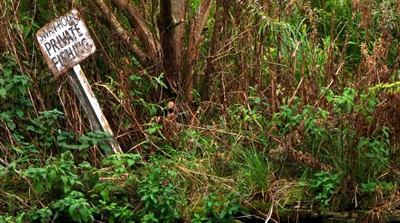
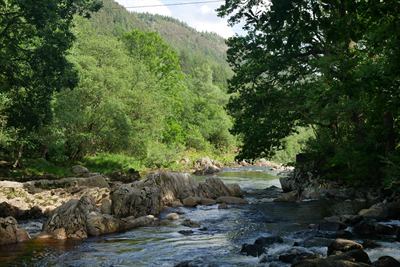
- Signed, protected rivers. The two most popular gold-panning rivers in Wales, the Afon Wen and the Afon Mawddach, have carried signs prohibiting panning since the days of the Countryside Council for Wales (NRW's predecessor), as reported by North Wales Live. Both run through SSSI- and SAC-designated country where riverbed disturbance without consent is a criminal offence, not a civil matter.
- Active enforcement. After a prospector removed tonnes of bedrock from the Afon Mawddach, North Wales Police and NRW launched a joint investigation into panning on the Afon Wen at Hermon near Dolgellau (North Wales Live, 2018), warning that offenders could face unlimited fines. In 2022 NRW took a panner to court and won - the Coed y Brenin case below.
So is it "banned"? On NRW-managed land - which includes the rivers most people mean when they say "gold panning in Wales" - yes, in effect: panning is prohibited, signed and prosecuted. Across Wales as a whole - no: on private, non-designated land, panning remains legally possible with the landowner's permission, subject to the Crown's ownership of the gold.
The reason the prohibition centres on Coed y Brenin is ecological as much as legal. These are exceptionally sensitive rivers: the last viable Welsh population of the freshwater pearl mussel (Margaritifera margaritifera) - a Schedule 5 species under the Wildlife and Countryside Act 1981 and a European Protected Species - survives in the upper Afon Eden in this same catchment, and the rivers support otter and salmon. Digging riverbed and bank damages exactly the habitat these designations exist to protect.
Who Owns the Gold in Welsh Rivers?
The Crown - and it has done for over 450 years. In the Case of Mines (1568), also reported as R v Earl of Northumberland, twelve senior common law judges held "that by the law all mines of gold and silver within the realm, whether they be in the lands of the Queen, or of subjects, belong to the Queen by prerogative". The Royal Mines Acts of 1688 and 1693 later trimmed that prerogative back so it no longer swallowed copper, tin and lead mines - but they left the Crown's title to gold and silver itself intact.
Today those minerals are known as "Mines Royal". The Crown Estate states that virtually all naturally occurring gold and silver deposited in England, Wales and Northern Ireland is owned by The Crown Estate, which manages it on the Crown's behalf. In Wales that sits alongside The Crown Estate's roughly 250,000 acres of mineral rights.
The practical consequence for a panner is the one this site repeats on every legal page, because it is the single most misunderstood point in the hobby: landowner permission is necessary but not sufficient. Permission gets you legal access to the river; it does not give you or the landowner ownership of the native gold in it. GOV.UK's official guidance on gold and silver licensing puts it bluntly: "if you find gold through panning it is unlikely that The Crown Estate will grant you permission to take it away." Whatever you may have read elsewhere, "finders keepers" is not the law in Wales. The romance of Welsh gold - the royal wedding-ring metal of Clogau and the Dolgellau mines - exists precisely because the Crown has guarded it for centuries.
One useful clarification while we are here: raw alluvial gold is not "treasure". The Treasure Act 1996 covers worked objects - coins, rings, hoards - not natural flakes and dust, so there is no coroner reporting duty for panned gold. Crown ownership under the Mines Royal rules and the Treasure Act are different laws doing different jobs.
How Did Welsh Gold Law Get Here? A Short History
Welsh gold is the most storied gold in Britain - the royal wedding-ring metal - and the law has been tangled up with it from the start. The compressed version:
- c. AD 75: Rome opens Dolaucothi in Carmarthenshire - the only known Roman gold mine in the UK - and works it for generations.
- 1568: The Case of Mines confirms that gold and silver in the ground belong to the Crown - the legal foundation that still decides who owns a Welsh flake today.
- 1693: The Royal Mines Act settles the modern "Mines Royal" position.
- 1860-1862: The Dolgellau gold rush. Gwynfynydd is discovered in 1860 and the Clogau mine turns to gold in 1862; Clogau alone is recorded as producing 78,507 troy ounces before large-scale working ended in 1911.
- 1923: Lady Elizabeth Bowes-Lyon marries the future George VI with a ring of Welsh gold - beginning the royal wedding-ring tradition that runs through Queen Elizabeth II, Princess Diana (1981), Catherine (2011) and Meghan (2018).
- 1998-1999: The last commercial workings close - Clogau in 1998, Gwynfynydd in January 1999. With the mines shut, the riverbeds became the only place left to look, and recreational pressure on the Mawddach system grew.
- 2010s-2022: Warning signs go up on the Afon Wen and Afon Mawddach under the Countryside Council for Wales; NRW inherits the estate in 2013, maintains that panning is not permitted on its land, and in 2022 secures the conviction that made national news.
That is why the Welsh position is stricter in practice than England's despite near-identical underlying law: the gold is concentrated in a few famous, fragile, publicly managed valleys. For the full mining story, see our guides to Welsh gold, Clogau and Dolgellau and the Dolgellau gold belt.
Can You Get a Welsh Gold Panning Licence?
Short answer: not as a hobbyist. There is no recreational gold panning licence in Wales - not from NRW, not from The Crown Estate, not from Eryri (Snowdonia) National Park, not from anyone. When people search "Welsh gold panning licence", the licence that actually exists is a commercial mineral-exploration instrument. Here, as of 2026, is how that real process works:
- The instrument. The Crown Estate grants an "agreement for lease" (also called an option to lease Mines Royal) permitting commercial exploration for gold and silver in England and Wales. It is listed on GOV.UK under "Gold and silver agreement for lease".
- Who to contact. Applications start with an informal discussion with The Crown Estate's appointed mineral agent - named by GOV.UK as Wardell Armstrong LLP.
- What an application involves. There is no standard form; applicants must submit a programme of proposed works plus financial and technical details - previous mineral exploration activity, an exploration programme, key personnel and a cash flow forecast. Exploration must meet statutory requirements and high environmental standards.
- What it does not include. The option covers the Crown's minerals only. Access to the land must be negotiated separately with the landowner, and all planning and environmental consents still apply.
Who actually holds one? Mining companies. The best-known Welsh example: Gold Mines of Wales, a subsidiary of AIM-listed Alba Mineral Resources, was awarded an exclusive option agreement by The Crown Estate from 10 February 2015 over a 107 sq km area covering the Clogau-St David's mine and most of the Dolgellau gold belt, later extended and supplemented by a further "Option to Lease Mines Royal" between the belt's northern and southern segments. That is the scale the licensing system is built for - corporate exploration programmes, not a person with a pan.
The plain-English summary: the "Welsh gold panning licence" people search for does not exist. The Crown Estate licenses commercial exploration companies; NRW issues no panning permits at all; and no Welsh body operates anything like the Scottish permit sites at Kildonan, Wanlockhead and Tyndrum. A hobbyist's legal options in Wales are the managed experiences and private-land route in the legal-routes section below.
What Happens If You Pan Illegally in Wales? The 2022 Prosecution
Wales is the one UK nation with a recent, fully documented criminal conviction for recreational gold panning - which is why this page treats enforcement as fact, not scare-mongering.
Between 14 July and 19 August 2021, Natural Resources Wales officers caught a man panning the Afon Wen at Coed y Brenin, near Dolgellau, on four separate occasions - a river inside a Site of Special Scientific Interest and Special Area of Conservation, where NRW had posted signs prohibiting panning. On 26 May 2022 at Llandudno Magistrates Court, District Judge Gwyn Jones found the defendant guilty of three offences: two of digging up or removing gravel, sands or minerals from land of the forestry authority, and one of operating a metal detector on that land. He was fined £600 and ordered to pay £2,400 in costs - just over £3,000 in total. His defence that he was only giving a "demonstration" did not persuade the court (North Wales Live; Cambrian News). Enforcement has continued since: on 14 September 2026 at Llandudno Magistrates Court a repeat offender was ordered to pay £400 and £1,500 in fines and £2,800 in costs for panning at Pont Wen on the Afon Wen, Coed y Brenin (NRW, 15 September 2026).
NRW's operations manager for the area, Dylan Williams, set out the agency's reasoning: "Illegal gold panning has the potential to adversely impact the river ecosystem. The process of digging up the riverbed and bank can result in direct damage to plants or invertebrates, and fish spawning grounds can be damaged. The flow of the river can also be altered."
Beyond that case, the exposure for an illegal panner in Wales stacks up quickly:
- SSSI offences - intentionally or recklessly damaging an SSSI's notified features without consent is an offence under the Wildlife and Countryside Act 1981, carrying an unlimited fine.
- Protected species offences - disturbing or destroying the shelter of European Protected Species such as otters or freshwater pearl mussels (Wildlife and Countryside Act 1981; Conservation of Habitats and Species Regulations 2017) carries unlimited fines and up to six months' imprisonment.
- Byelaw and removal offences - removing gravel, sand or minerals from NRW/forestry land is a standalone offence, as the 2022 Coed y Brenin conviction shows; metal detecting on that land was charged separately.
- Fisheries harm - disturbing salmon spawning gravels risks offences connected to the Salmon and Freshwater Fisheries Act 1975; the British Gold Panning Association recommends avoiding spawning gravel from 1 October to 31 May.
Every one of the famous Welsh gold rivers sits inside Eryri (Snowdonia) National Park as well, where the density of designations is highest. A conviction also lands on the whole hobby: each prosecution makes access harder for every responsible panner who follows.
Where Can You Legally Pan for Gold in Wales?
Run it as a decision tree - three questions, in the order a practical prospector should ask them.
Q1. Just want to pan Welsh gold this weekend, guaranteed legal? Go to Dolaucothi
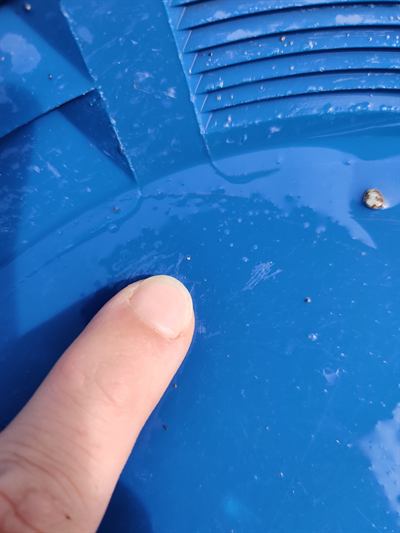
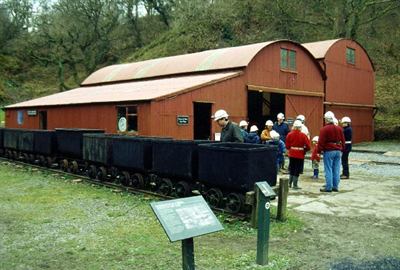
The simplest, guaranteed-legal way to pan for gold in Wales is at Dolaucothi Gold Mines at Pumsaint, Llanwrda, Carmarthenshire (SA19 8US) - the UK's only known Roman gold mine, worked from at least 2,000 years ago until just before the Second World War and now owned by the National Trust. The Trust runs gold panning as a visitor activity in the mine yard: pans, instructions and panning troughs at varying heights are provided, and taking home what you pan from the troughs is part of the experience. It sits within a 2,500-acre estate with SSSI status and 25 km of footpaths, and there is a small museum of finds from the Roman fort at Pumsaint. Check the National Trust's Dolaucothi page for current opening times and prices before travelling.
Q2. Set on the Dolgellau gold belt itself? Book a supervised experience
Commercial operators in the Dolgellau area run supervised panning experiences in the gold belt - the legal way to get a pan into the water in Eryri's gold country, because the operator holds the necessary arrangements. Options and background are covered in our where to find gold in Wales guide. If the wild stretch you had in mind is in Coed y Brenin or on the Afon Mawddach, Afon Wen or Afon Eden, stop there - no landowner conversation fixes it, because NRW policy and the SSSI/SAC designations bind the landowner too.
Q3. Found private, non-designated water? Conditional - run the checklist
Away from NRW land and protected sites, Wales works like England: panning is legally possible on private land with the landowner's permission, subject to the designation checks and the Crown's ownership of the gold. The next section is the checklist. For which rivers carry gold in the first place, start with the Dolgellau gold belt guide and the interactive map - and note that the best-documented water is precisely the water that is off limits.
How to Pan Legally on Private Land in Wales
If you have identified private water outside the protected catchments, clear these five gates in order. Skipping any one of them is how panners end up in a magistrates court.
- Confirm it is not NRW-managed. NRW does not permit panning on any land it manages - Welsh Government woodland, Coed y Brenin and much of the upland estate. If NRW manages it, stop there.
- Check designations before asking anyone. Use NRW's online designated-sites mapping to check SSSI and SAC status, and Cadw's records (Coflein) for Scheduled Monuments - many old Welsh gold workings are scheduled. On an SSSI, the landowner would need NRW consent before permitting riverbed disturbance, and on the gold belt rivers that consent should be assumed unavailable.
- Get written landowner permission for the exact stretch - bed and bank, often both banks, since the riparian owner typically owns the bed to the centre line. Scope the ask tightly: hand pan only, riverbed gravel only, no bank digging, holes refilled the same day.
- Respect wildlife and season. Never dig the bank (otter holts and water vole burrows make that a criminal offence), stay clear of pearl mussel habitat, and avoid salmon spawning gravel from 1 October to 31 May per British Gold Panning Association guidance. Hand tools only - powered kit needs separate NRW authorisation.
- Understand the gold's status. Native gold remains Crown property, and The Crown Estate issues no recreational licence to remove it. Know that legal position before you start, and make informed decisions accordingly - this site will never tell you that panned gold automatically belongs to you.
Wales vs Scotland vs England: The Legal Routes Compared
| Route | Legal status | Key authority / law | Practical reality |
|---|---|---|---|
| Dolgellau gold belt rivers (Afon Wen, Afon Mawddach, Coed y Brenin) |
Prohibited - panning not permitted, signed and enforced | NRW policy; SSSI/SAC under Wildlife and Countryside Act 1981 | 2022 conviction: £600 fine + £2,400 costs. Do not pan here. |
| Dolaucothi (National Trust) Pumsaint, Carmarthenshire |
Legal - managed visitor activity | National Trust, on its own estate | Pans and troughs provided; the easy, family-friendly option. |
| Supervised Dolgellau experiences | Legal - operator holds the arrangements | Commercial operators, Dolgellau area | The way to pan real gold-belt gravel lawfully. |
| Private Welsh land (non-designated) |
Conditional - permission required | Landowner + CRoW Act 2000 exclusions; Crown owns the gold | Written permission, designation checks, hand tools, no bank digging. |
| Crown Estate "Mines Royal" option | Legal - commercial only | The Crown Estate via its mineral agent | For mining companies (e.g. 107 sq km Clogau option, 2015) - not hobbyists. |
| Scotland comparison | Permit sites exist | Kildonan, Wanlockhead, Tyndrum permit schemes | The nearest thing to a legal-clarity panning day in the UK - see the UK laws guide. |
That last row is the honest advice hiding in the comparison: if what you want is a full legal day on gold-bearing gravel with a permit in your pocket, Wales cannot currently offer it - Scotland can. If what you want is to pan in Wales, Dolaucothi and the supervised experiences are the law-proof ways to do it.
Plan around the law, not into it
The UK Gold Prospector map shows every documented Welsh gold occurrence alongside the sites where panning is genuinely workable elsewhere in Britain - so your first trip is a legal one.
Important: Gold and silver in Wales are Crown property under the Case of Mines 1568, administered by The Crown Estate, which does not issue recreational gold panning licences. Gold panning is not permitted on land managed by Natural Resources Wales, and unauthorised panning on SSSI/SAC rivers is a criminal offence. This article summarises the position as of July 2026 and is general guidance, not legal advice - verify current rules with Natural Resources Wales, The Crown Estate or the relevant authority before any trip. UK-wide detail in our UK gold panning laws guide.
Frequently Asked Questions
Is gold panning legal in Wales?
Gold panning is legal in Wales only in limited circumstances. It is prohibited on all land managed by Natural Resources Wales (NRW) - which includes the most gold-rich rivers of the Dolgellau gold belt, such as the Afon Wen and Afon Mawddach around Coed y Brenin, where SSSI and SAC designations make unauthorised panning a criminal offence. Everywhere else you need the landowner's permission for the exact stretch of river, and the gold itself belongs to the Crown under the Case of Mines 1568. The guaranteed legal options are the National Trust's gold panning experience at Dolaucothi in Carmarthenshire and supervised panning experiences in the Dolgellau area.
Is gold panning banned in Wales?
There is no Wales-wide statute that bans gold panning by name. The "ban" people search for is real but narrower: Natural Resources Wales does not permit gold panning on any land it manages, and it has posted signs and enforced that prohibition on the prime Dolgellau gold belt rivers - the Afon Wen and Afon Mawddach in and around Coed y Brenin Forest, which are designated Sites of Special Scientific Interest and Special Areas of Conservation. Panning there without consent is a criminal offence, and NRW prosecuted a panner at Llandudno Magistrates Court in 2022. Away from NRW land and protected sites, panning remains a question of landowner permission and Crown ownership of the gold.
Do you need a licence to pan for gold in Wales?
There is no recreational gold panning licence in Wales - nothing you can buy or apply for as a hobbyist. Naturally occurring gold and silver are "Mines Royal" owned by the Crown, and The Crown Estate licenses them only to commercial ventures: applicants approach its appointed mineral agent with a programme of works plus financial and technical details, and successful applicants receive an option to lease Mines Royal - as Alba Mineral Resources' subsidiary Gold Mines of Wales did over a 107 sq km area of the Dolgellau gold belt from 2015. GOV.UK states plainly that if you find gold through panning it is unlikely The Crown Estate will grant you permission to take it away.
Can you keep gold you find panning in Wales?
The legal position is that you have no automatic right to keep it. Since the Case of Mines 1568, later qualified by the Royal Mines Acts 1688 and 1693, naturally occurring gold in Wales belongs to the Crown, administered by The Crown Estate - and The Crown Estate does not issue recreational panning licences, so there is currently no formal route for a hobbyist to take native Welsh gold away. The exception is a managed visitor activity such as the National Trust's panning troughs at Dolaucothi, where taking home what you pan is part of the experience the Trust provides.
Where can you legally pan for gold in Wales?
Two routes are unambiguous. First, the National Trust's Dolaucothi Gold Mines at Pumsaint, Carmarthenshire - the UK's only known Roman gold mine - runs a gold panning experience in its mine yard with pans, troughs and instructions provided. Second, supervised commercial gold panning experiences operate in the Dolgellau area. Beyond those, panning on private land elsewhere in Wales requires the landowner's written permission for the exact stretch, confirmation the site is not an SSSI, SAC or Scheduled Monument, and awareness that the gold itself remains Crown property. NRW-managed land, including the Coed y Brenin rivers, is off limits entirely - see where to find gold in Wales for the wider picture.
Can you pan for gold in Snowdonia (Eryri)?
Not realistically, no. The gold-bearing rivers of southern Eryri (Snowdonia) - the Afon Mawddach, the Afon Wen and the streams of Coed y Brenin Forest Park - run largely through land managed by Natural Resources Wales, which does not permit gold panning, and the principal rivers are SSSI and SAC-designated, with the Afon Eden tributary protected for Wales's only viable population of freshwater pearl mussel. NRW prosecuted an illegal panner from this catchment in 2022. Treat the Eryri gold belt as look-but-do-not-pan, and get your hands wet legally at Dolaucothi in Carmarthenshire instead.
What happens if you get caught gold panning illegally in Wales?
Prosecution is a documented reality, not a theoretical risk. In May 2022, District Judge Gwyn Jones at Llandudno Magistrates Court convicted a man of three offences after NRW officers caught him panning the Afon Wen at Coed y Brenin four times between 14 July and 19 August 2021 - digging up or removing gravel, sands or minerals from land of the forestry authority, and operating a metal detector. He was fined £600 and ordered to pay £2,400 costs. Separately, damaging an SSSI without consent carries an unlimited fine under the Wildlife and Countryside Act 1981, and disturbing protected species such as the freshwater pearl mussel, whose last viable Welsh population lives in the Afon Eden, can bring further charges.