Short answer
Yes, there is gold near Exeter and Plymouth. Devon has more gold records than any other county on the UK Gold Prospector map: 76 sites, 22 of them verified and 54 unverified Pro research records. Counting both kinds, 45 are within 30 miles of Exeter and 66 within 30 miles of Plymouth. The gold is mostly fine, scarce and a by-product of tin, from Dartmoor rivers such as the Dart, Erme and Yealm. England has no permit sites, so every stretch needs the landowner’s permission.
If you live in Devon, the question is not whether there is gold near you but which of the county’s many records is worth a trip. This page breaks down every Devon site on our map by type and by distance from Exeter and Plymouth, and names the rivers already covered in our guides. For the history and geology, read is there gold in Devon?
Open the River Dart pin free
The River Dart, Dartmoor pin opens on the free UK Gold Prospector map. The £29.99 full map opens Devon’s 22 verified standard sites; Pro (£9.99 a month) adds the other 54 Devon research sites.
How Many Gold Sites Are There in Devon?
The UK Gold Prospector map holds 76 Devon gold sites, more than any other county. They split into three kinds, and only one of them is panning water.
| Kind of site | Devon sites | What it means for you |
|---|---|---|
| Rivers and streams | 27 | Alluvial gold in gravels: the ones you can pan, with permission |
| Old workings | 18 | Historic mines and lodes, such as North Molton; heritage, not panning |
| Survey prospects | 31 | Gold recorded in rock or survey samples, such as the Crediton Trough |
22 of the 76 are standard, verified sites. The other 54 are Pro research sites: reported occurrences we list for serious prospectors, none of them verified yet.
| Distance | From Exeter | From Plymouth |
|---|---|---|
| Within 30 miles | 45 sites (22 verified) | 66 sites (21 verified) |
| Within 60 miles | 90 sites (30 verified) | 143 sites (38 verified) |
The Plymouth figures include Cornwall’s tin-stream valleys, which start within 30 miles of the city. See is there gold in Cornwall?
Which Devon Rivers Have Gold?
These rivers are already named in our gold-bearing rivers list:
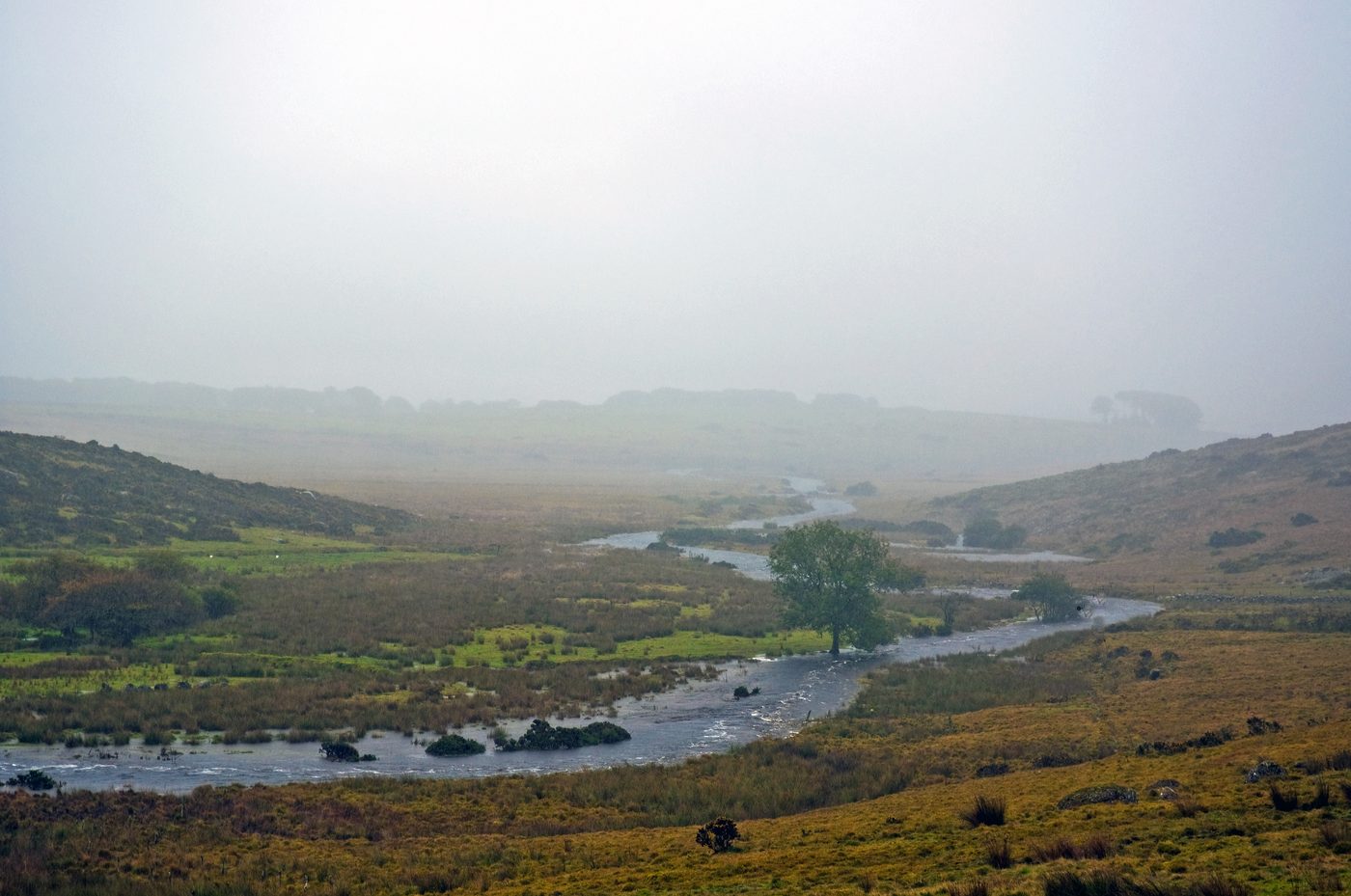
- River Dart, Dartmoor — about 19 miles from Exeter and 18 from Plymouth. Confirmed by multiple independent prospectors; flakes up to 5 mm recovered from a channel deposit with alluvial tin.
- River Erme — about 10 miles from Plymouth. Gold confirmed by sampling at multiple points along the valley.
- River Yealm, Newton Ferrers — about 7 miles from Plymouth. Gold recorded in the river in small amounts.
- River Avon, Aveton Gifford — small amounts found in surveys, fed by gold-bearing streams off southern Dartmoor.
- River Teign, Gravel Point — amateur prospectors have panned minute grains from the estuary gravels.
Near Exeter, the closest records are not panning rivers but survey prospects: the Crediton Trough, about 6 miles out, holds an unusual palladium-telluride type of gold, recorded in carbonate veins.
What Will You Realistically Find in Devon?
Fine gold, in small amounts. Devon is gold-poorer than Cornwall, Wales or Scotland, and most of its alluvial gold was recovered as a by-product of Dartmoor’s tin-streaming. A good day is a few specks in the bottom of the pan. Learn to recover fine gold from black sand before you go: in Devon that is where the gold hides.
Is Gold Panning Legal in Devon?
There is no general right to pan in England. Gold and silver are Crown property as mines royal, and you need the landowner’s permission for the exact stretch you pan. Open access land under the CRoW Act 2000 lets you walk there; it does not let you remove minerals, and National Park status gives no right to pan either.
Some Devon sites sit next to protected sites: the River Erme record, for example, is beside the Erme Estuary SSSI. Where a designated site is nearby, the pin on the map notes it. Full detail is in our UK gold panning law guide.
Frequently Asked Questions
Where can I pan for gold in Devon?
The Dartmoor rivers carry Devon’s best alluvial gold: the River Dart, where flakes up to 5 mm have been recovered, the Erme, the Yealm at Newton Ferrers and the Avon at Aveton Gifford. England has no permit sites, so you need the landowner’s permission for the exact stretch you pan.
Is there gold near Exeter?
Yes. There are 45 gold sites on the UK Gold Prospector map within 30 miles of Exeter, 22 of them verified. The closest are survey prospects in the Crediton Trough, about 6 miles away; the River Dart on Dartmoor, about 19 miles away, is the nearest well-known panning river.
Is there gold near Plymouth?
Yes. 66 gold sites on the map are within 30 miles of Plymouth, 21 of them verified, including the River Yealm at Newton Ferrers (about 7 miles) and the River Erme (about 10 miles), plus the Cornish tin-stream valleys.
Can you pan for gold on Dartmoor?
Gold occurs in Dartmoor rivers such as the Dart and the Erme, but National Park status and open access give no right to pan or remove minerals. You need the landowner’s permission for the stretch you want to pan.
Legal disclaimer: This page is general information, not legal advice. Site counts and distances come from the UK Gold Prospector map on 11 October 2026; permit prices and seasons were taken from each issuer’s own website in October 2026 and can change. Always confirm permission with the landowner before you pan.
Every site on this page is a pin on one map, with its exact location, access notes, the landowner situation and the evidence behind it. A one-off £29.99 unlock opens every standard site in the UK; region maps are £19.99; Pro (£9.99 a month) adds the BGS geology overlay and 100+ research sites.
Open the Interactive Map →Free Beginner's Pack — 16-page PDF: top 10 UK locations with GPS, equipment checklist, legal cheat sheet and app tutorial.
Get the Free Pack →