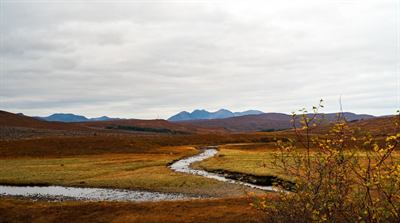
Britain has had exactly one gold rush in the strict sense of the word — the 1868–69 Strath of Kildonan rush in Sutherland, fifteen months of frenzied prospecting on a Highland burn before the Duke shut it down. Around that single event sits a much longer story: two thousand years of Roman, medieval and Victorian mining, a royal wedding-ring tradition unique in world jewellery, two record-breaking modern nuggets, and one commercial mine still pouring gold at Tyndrum today. This is the hub guide to all of it.
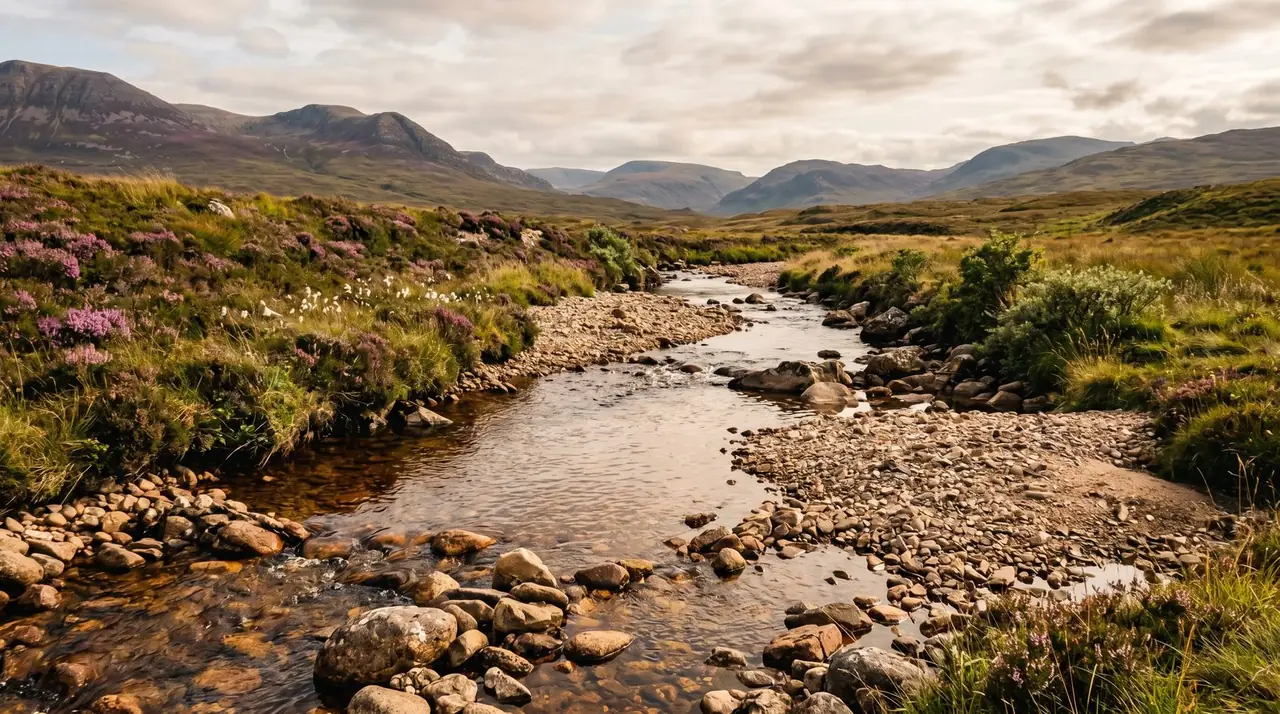
Each major event below has its own deep-dive article either already published or being prepared. Treat this page as the map. If you only know one British gold story — the 1868 Sutherland rush, the Clogau royal ring, the Roman mine at Dolaucothi — you will find the next layer below, plus the half-dozen smaller strikes that get lost in the gaps. Every named river and mine in this article is also on the UK Gold Prospector interactive map with current access notes.
In this guide
See these historic goldfields on the live map
200 verified UK gold sites with GPS coords, access notes and geology — including every historic strike covered below.
Why the UK Has a Gold History at All
The British Isles sit on a geological collage that was assembled over the last 600 million years out of fragments of three different ancient continents. The collisions that built that collage — the Caledonian orogeny that closed the Iapetus Ocean, the later Variscan event that crumpled the south-west, the long quiet erosion in between — pushed hot mineral-bearing fluids through the deep crust along fractures and fault lines. Gold went into solution in those fluids and dropped out as the fluids cooled, producing quartz veins and disseminated sulphide horizons across what is now Scotland, Wales and parts of England. The country was never going to be South Africa or the Yukon; the deposits are smaller, more scattered and more deeply weathered. But the gold is there and it has been there long enough for the rivers to find it.
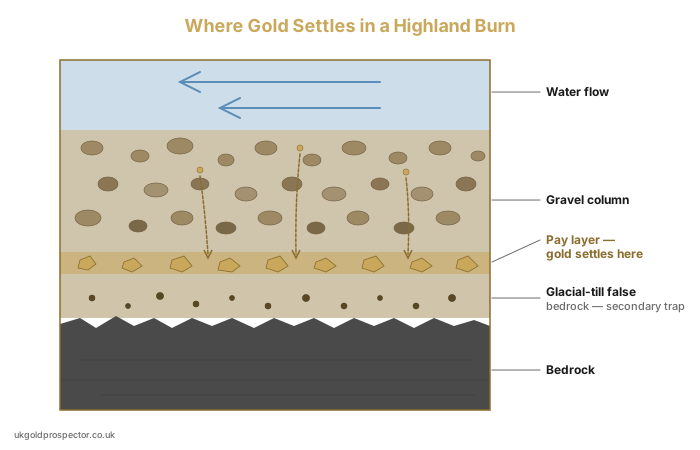
The second piece of the story is the ice age. The Pleistocene glaciation, which finished retreating across Britain only about 11,500 years ago, did the brutal work of grinding down the bedrock, liberating gold from the veins and pyritic source layers, and dumping the broken country into glacial outwash gravels. Every Highland burn, every Welsh upland stream, every Cumbrian beck has been re-sorting that gravel ever since, dropping the heavy minerals — gold, magnetite, garnet — into traps where the current slows. Almost everything a hobbyist can recover with a pan in 2026 is alluvial gold of that glacial-and-post-glacial origin.
This article works forward through what people did with that gold once they realised it was there. It is the hub for a growing series of deep-dive articles: the Roman mine at Dolaucothi, the Cistercian medieval revival in Wales, the Clogau and Gwynfynydd royal mines, the 1868–69 Sutherland rush, the Carnon Valley tin-stream finds, the modern Cononish reopening. Where a deep-dive exists, you will find a link in the relevant section. Where one is forthcoming, the section gives you the overview and flags the longer article that will follow.
The Roman and Medieval Foundation
The first systematic, large-scale gold mining in Britain was Roman. The site is Dolaucothi at Pumpsaint in Carmarthenshire — the only confirmed Roman gold mine in Britain, and one of only a handful of confirmed Roman gold mines anywhere in the western Empire. Workings began in roughly the late first century AD, not long after the Roman conquest of Wales, and continued under imperial control into the early third. The Romans combined three techniques on the site: opencast quarrying of the surface auriferous quartz, deep adits driven into the hillside to follow the richer veins, and large-scale hydraulic engineering using aqueducts and hushing tanks to wash overburden off the ore body. The surviving aqueduct channels, leats and tanks at Dolaucothi remain the most legible Roman gold-mining landscape outside Spain.
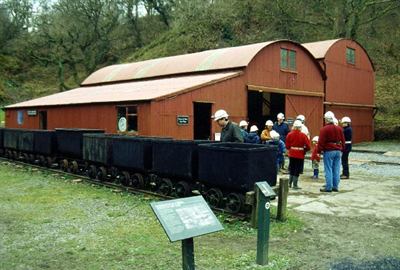
Production estimates for the Roman period are speculative and the literature ranges widely; what is not in dispute is that the operation was state-organised, garrisoned for at least part of its life, and supplied gold into the imperial system rather than into local circulation. After the Roman withdrawal in the early fifth century the workings fell out of use. They were partially reopened in the medieval and early modern periods, worked again in the late nineteenth century, and finally closed in 1938. Dolaucothi is now a National Trust property with surface trails and underground tours through the Roman and Victorian workings.
Medieval Welsh gold is poorer in evidence but real. The Cistercian abbeys that arrived in north and mid-Wales from the twelfth century — Cymer, Strata Florida, Margam — are recorded in places as having held rights to gold and silver as well as more conventional grants of land and pasture. There is documentary reference to gold being worked in the Mawddach catchment in the medieval period and to small-scale extraction elsewhere along the line of the Dolgellau belt. None of this constituted a rush. Medieval Welsh gold extraction was a slow, low-volume background activity, dependent on a handful of religious and lay landowners, and it does not appear ever to have produced more than a fraction of what the Roman operation at Dolaucothi delivered at its peak.
The relevance of the Roman and medieval period to a modern prospector is twofold. It proves the geology — if the Romans could profitably mine gold at Dolaucothi for a century and a half, the source rocks of the Welsh gold belt are real. And it sets the deep cultural backdrop against which the Victorian Welsh and Scottish events later played out. The full Welsh story continues in our guide to the Dolgellau gold belt.
The Welsh Royal Gold Tradition
The Dolgellau Gold Belt is a strip of country roughly twenty kilometres long running north-east from the head of the Mawddach Estuary in north-west Wales. The bedrock is Cambrian sedimentary rock — slates, mudstones, sandstones — laid down before any animal larger than a sea-floor worm existed, and intruded much later by quartz veins carrying gold, silver and minor base metals. There are perhaps twenty individual mining sites distributed along the belt. Two of them, Clogau St David's near Bontddu and Gwynfynydd in the upper Mawddach catchment, dominate the modern story.
Clogau St David's — the original royal mine
Clogau was worked intermittently from the early nineteenth century and reached its peak in the later 1800s after the original copper mine of the 1850s was found to carry economically significant gold in quartz veins. The mine produced steadily through the rest of the century and into the early twentieth before falling into long-term decline. Its lasting importance is not metric tonnes of gold but a single block of stockpiled material reserved for royal use. In 1923 a piece of that Clogau gold was supplied to make the wedding ring for Lady Elizabeth Bowes-Lyon, later the Queen Mother, on her marriage to the future George VI. The royal contract — informal at first, formalised by the Royal Household over the following decades — has continued from that day to this.
Gwynfynydd — the quiet partner
A short distance up the catchment sits Gwynfynydd, another belt mine that worked through the late nineteenth and twentieth centuries on the same quartz-vein style of mineralisation. Gwynfynydd closed for commercial production in the late 1990s but retained stockpiles of material reserved for royal jewellery, and the ring made for Diana, Princess of Wales, in 1981 is widely attributed to Gwynfynydd gold. The mine has not produced commercially since closure but remains intermittently in the news as different parties have explored options for reopening.
The royal rings, in order
The Welsh royal wedding-ring tradition runs from 1923 forward. The Queen Mother (1923), Queen Elizabeth II (1947), Princess Margaret, Princess Anne, Diana Princess of Wales (1981) and Catherine, Princess of Wales (2011) all received rings made wholly or principally from Welsh gold. The continuity of the tradition is the point — no other royal house has built a comparable single-country wedding-ring lineage, and the cultural premium that Welsh gold commands in the modern jewellery market rests almost entirely on the Royal Household's century of consistent choice. The fuller geological and historical picture is in our Wales locations guide.
The 1868–69 Sutherland Gold Rush
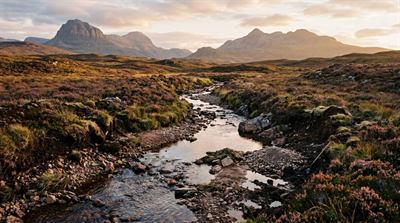
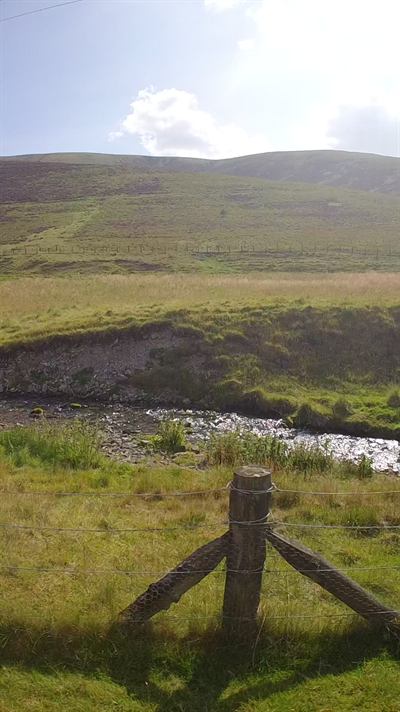
This is the one event that fits the technical meaning of "gold rush" in British history. The Strath of Kildonan is a long, sparsely-populated glen running north-west from the village of Helmsdale on the eastern Sutherland coast. The geology under the glen is Moine metasedimentary rock cut by the Strath Halladale Granite — old, structurally complex country with localised concentrations of gold associated with deeply-weathered granite zones. Native people of the strath had known about the gold for generations; the trigger for the 1868 event was Robert Nelson Gilchrist, a Kildonan-born prospector who had spent seventeen years working placer ground on the Australian goldfields and returned to apply that experience to his home river.
Gilchrist obtained the Duke of Sutherland's permission to systematically prospect the Helmsdale tributaries through 1868 and his samples were rich enough to confirm a workable field. The newspaper announcement of his findings at the end of that year detonated the rush. By January 1869 prospectors were arriving in numbers. By the spring an estimated 600 people were working the Kildonan and Suisgill Burns. Two improvised settlements appeared on the burns themselves — Baile an Òir, the "Town of Gold," on the Kildonan, and Carn na Buth, the "Hill of Tents," on the Suisgill — collections of canvas, timber and turf that housed prospectors through the season. Helmsdale's hotels were overwhelmed.
The Duke of Sutherland imposed a licensing regime from the start: roughly £1 per prospector per month with a 10 per cent Crown royalty on declared finds. Total recorded production was modest — estimates range from a few hundred to a few thousand ounces depending on which contemporary report you accept — and the Duke calculated by the end of 1869 that he was losing more in displaced sheep grazing and salmon-fishing revenue than he was earning in licence fees. He announced closure of all prospecting on the estate with effect from 1 January 1870. The rush was over in fifteen months.
The 1868–69 event remains the defining cultural moment for British recreational gold panning. It put Kildonan on the prospecting map permanently, it established the permit-and-fee model that survives today at the Suisgill Estate's modern scheme, and it produced the body of folk and oral tradition that every Scottish prospector inherits. The Timespan Museum in Helmsdale holds the surviving material culture from Baile an Òir, excavated in the late twentieth century. The full deep-dive — Gilchrist's biography, the day-by-day chronology of the rush, the Duke's accounts, the closure mechanism and what survives at the site today — is in our companion article The Sutherland Gold Rush 1868–69: The Full Story. To see the modern access framework, see our Scotland locations guide.
Forgotten English Strikes
England has the quietest gold history of the three mainland nations. There has never been an English rush in the Sutherland sense — no mass migration, no improvised settlement, no national press attention — but there is a long record of small, locally-significant finds and a handful of attempts at organised mining. They are distributed across four broad regions and they all date to the late medieval, early modern or Victorian periods.
The Lake District — Caldbeck and Coniston
The Caldbeck Fells in the northern Lake District and the older mining country around Coniston produced small quantities of gold as a by-product of base-metal mining from the sixteenth century onwards. The geology here is the northern fringe of the Lake District Volcanic Group and the Skiddaw Slates, with mineralised veins running through both. The Caldbeck gold was never the primary economic target — copper, lead and barytes paid the wages — but it was real enough to be assayed and recorded. Modern recreational interest in the Lake District rivers exists at a small scale and is constrained by Lake District National Park access conditions.
Devon and the Dartmoor rivers
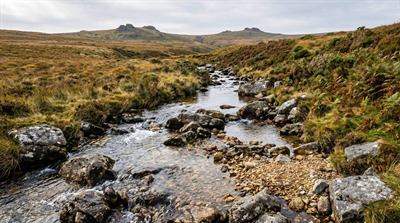
The granite mass of Dartmoor and the mineralised aureole around it carry gold in trace concentrations in the river gravels of several Devon catchments. The Bovey, the Teign and the tributaries of the Dart have all produced small recreational finds in modern times. Devon's gold is fine, scarce and slow to reward concentrated effort, and Dartmoor National Park byelaws restrict the activity in ways that the Highland or Lowther country does not.
Cornwall and the Carnon Valley tin-stream gold
Cornwall is famous for tin and copper, not gold, but the great tin-streamers who worked the Carnon Valley, the Helford and the Restronguet Creek catchments from the late medieval period onwards routinely recovered small quantities of placer gold alongside the cassiterite. The gold is present in the granite-aureole streams of the Cornubian batholith and was concentrated by the same alluvial processes that built the famous tin-stream deposits. Recorded Cornish gold finds run from the medieval period through to the present. The Cornish Mining World Heritage Site framework now constrains how much of this country can be worked recreationally.
The North Pennines
The lead-mining country of the North Pennines AONB has produced occasional gold reports across the Tyne, Wear and South Tyne catchments, again as a by-product of the dominant base-metal geology. The North Pennines was never gold country in the sense Sutherland or the Lowther Hills are, and modern recreational access to the area's rivers operates under AONB conditions plus the standard landowner-permission and Environment Agency framework. Our England locations guide covers all four regions in detail.
Modern Scottish Returns
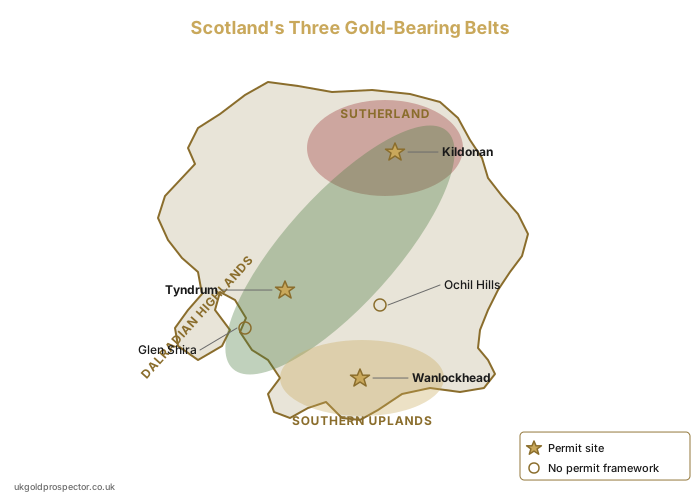
The modern story is the reopening of commercial Scottish gold mining at Cononish above Tyndrum, alongside two record-setting nugget finds from anonymous prospectors and the consolidation of a three-site permit framework for the recreational hobby. Together they represent the longest sustained period of organised UK gold activity since the Victorian era.
Cononish and Scotgold Resources
Cononish sits roughly three kilometres up Cononish Glen from Tyndrum village in the Loch Lomond and the Trossachs National Park. The deposit is the Eas Anie vein, a composite quartz vein hosted in Dalradian metasedimentary rocks close to a sub-vertical fault. Ennex International found the deposit in 1985. Full planning permission for a mine was obtained in 1995, but a low gold price stalled development, and the deposit passed through other owners, including Caledonia Mining, before Scotgold Resources acquired it in 2007. Scotgold then secured planning consent from the National Park in stages through the 2010s and reported its first commercial gold pours in 2020. The mine is the only commercial gold producer operating in the UK in 2026, and under Scotgold it supplied a chain-of-custody Scottish-gold programme used by Edinburgh jewellers including Sheila Fleet and Hamilton & Inches. What happened after Scotgold went into administration in November 2023 is covered in how Cononish changed hands.
The Reunion and Douglas nuggets
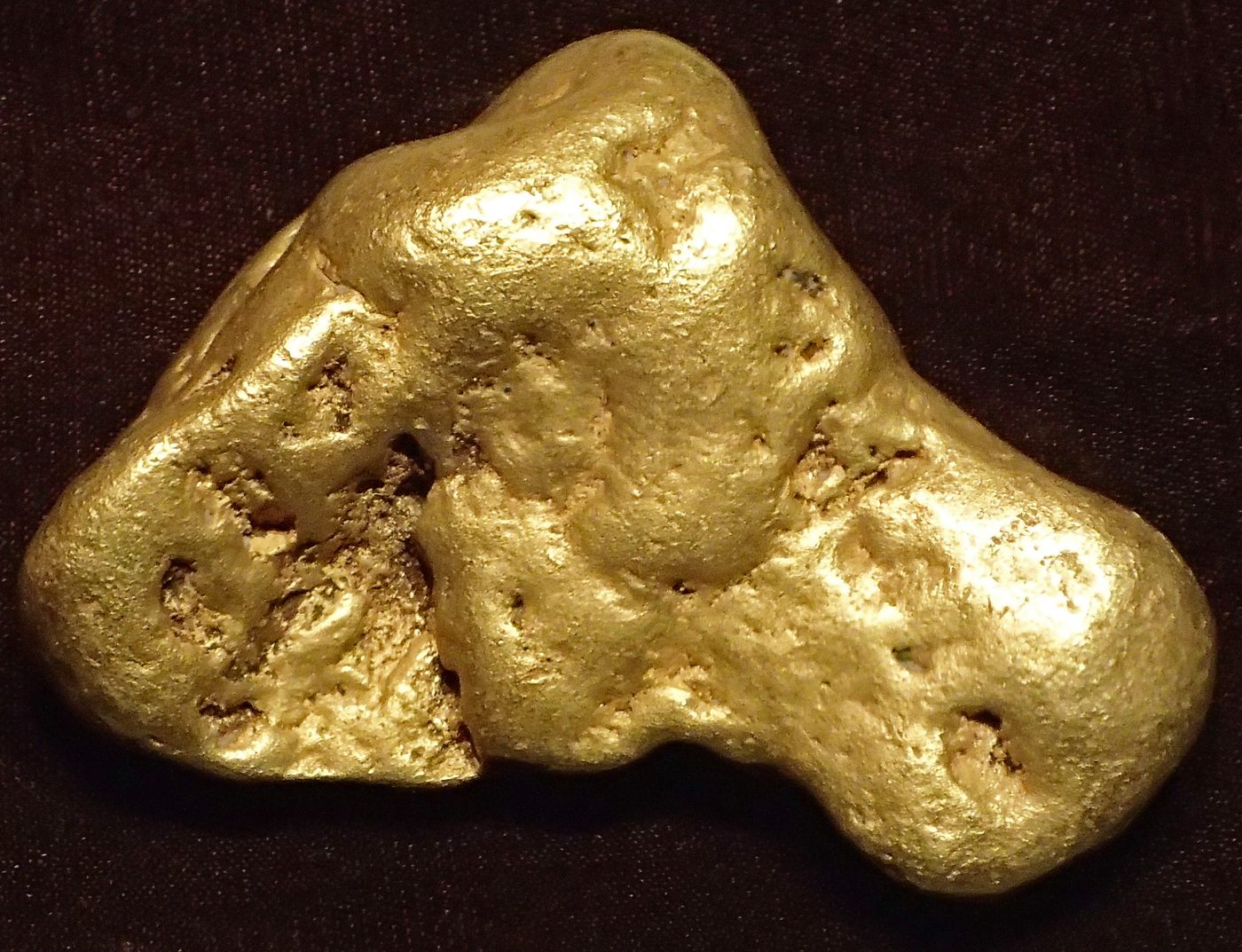
Two pieces of placer gold recovered in the last decade have re-established Scotland's reputation for producing the occasional substantial nugget. The Douglas Nugget — 85.7 grams — was found in a Perthshire river in 2017 and is now on permanent public display at the Hunterian Museum at the University of Glasgow. The Reunion Nugget — 121.3 grams, originally recovered as more than one fragment that matched cleanly into a single piece — was found in a Scottish river in 2019 by an anonymous prospector using sniping, a snorkelling-with-hand-tools technique applied to bedrock pockets in the active channel. The Reunion Nugget is widely reported as the largest gold nugget recovered from a British river in the modern era. Neither finder disclosed the exact spot (the Douglas is reported only as coming from a Perthshire river); both finds drove the cultural pull that Scottish gold panning still has, although neither changes the realistic average outcome for a normal Saturday on the water.
The three permit sites
The recreational hobby in Scotland operates today through three established permit sites: the Suisgill Estate's scheme on the Kildonan and Suisgill Burns at Kildonan, Buccleuch Estate's licensing scheme operated through the Museum of Lead Mining for the Mennock Water and Wanlock Water at Wanlockhead, and the Strathfillan Community Development Trust's scheme for the Tyndrum Community Woodland. All three are local landowner and community arrangements, not delegated Crown grants. The detail of the modern access framework — what permits cost, what equipment they permit, where the legal boundaries sit — is in our Scotland locations guide.
Why There Won't Be Another UK Gold Rush
Four overlapping layers of modern law and regulation make a 1869-style event functionally impossible in the UK in 2026. Two of them are old, two of them are recent, and all four would apply simultaneously to any future discovery.
Crown ownership
The Royal Mines Act 1424 vests all unworked gold and silver in Scotland in the Crown; royal prerogative (the Case of Mines, 1568) does the equivalent in England and Wales. Those rights are administered by Crown Estate Scotland north of the border and by the Crown Estate in England and Wales. The critical point — most commonly mis-stated by competitor websites and old guidebook copy — is that neither body issues recreational gold-panning licences. The three Scottish permit schemes at Kildonan, Wanlockhead and Tyndrum are arrangements with the relevant landowner or community trust, not delegated Crown grants. The full legal position is set out in our UK gold panning laws guide.
Environmental regulation
SEPA in Scotland, the Environment Agency in England, Natural Resources Wales and the Department of Agriculture, Environment and Rural Affairs in Northern Ireland between them control everything that happens in a watercourse. SEPA's good-practice criteria for recreational panning — hand panning only, no powered machinery, no bank digging, no panning between 1 November and 31 May where Atlantic salmon and trout are present — operate as a de facto licence-free regime that bites the moment you step outside them. England's equivalent is more restrictive in practice because there is no permit-backed framework to sit inside.
Protected sites
NatureScot, Natural England and Natural Resources Wales administer SSSIs, SACs, National Parks and AONBs across the gold-bearing regions. Most of the productive country in Scotland, Wales and England sits inside or alongside at least one designation. Designations do not prohibit gold panning automatically, but they add a consent layer that has to be cleared before any disturbance of the river gravel.
The planning system
Cononish reopened over roughly two decades of planning negotiation with the Loch Lomond and the Trossachs National Park. Any future commercial discovery on a comparable scale would proceed under the same Town and Country Planning Acts (and Scottish equivalents) — a process measured in years, not weeks, and one that puts the local planning authority and statutory consultees between the discoverer and the gold. Whatever the next major UK gold find looks like, it will not be a rush. It will be a planning application.
The honest summary: Britain had one rush, has one working mine, two record nuggets in the last decade and a century-long royal jewellery tradition. The combination is more than most countries get; none of it gives a 2026 hobbyist anything more than what the three permit sites deliver. Set your expectations accordingly.
Frequently Asked Questions
When was the biggest gold rush in UK history?
The 1868–69 Sutherland Gold Rush in the Strath of Kildonan in eastern Sutherland. It is the only event in British history that fits the technical definition of a gold rush — a short, intense, mass-migration of independent prospectors to a newly proven placer field. At its peak in spring 1869 around 600 people were working the Kildonan and Suisgill Burns. The Duke of Sutherland closed the field with effect from 1 January 1870. Every other British gold story — Welsh, Cornish, Cumbrian, Devon — is a mining history, not a rush. Full deep-dive in our Sutherland Gold Rush 1868–69 article.
Did the Romans really mine gold in Britain?
Yes, at one confirmed site. Dolaucothi at Pumpsaint in Carmarthenshire is the only confirmed Roman gold mine in Britain, worked from roughly the late first century AD into the early third. Romans used a combination of opencast workings, deep adits and large-scale hydraulic engineering — including aqueducts and hushing tanks — to break the auriferous quartz veins and process the broken rock. The site is now a National Trust property with surface walks and underground tours. The full Welsh context is in our Wales locations guide.
Is Welsh gold really used for royal wedding rings?
Yes. The Royal Welsh gold tradition began in 1923 when Lady Elizabeth Bowes-Lyon, later the Queen Mother, was given a wedding ring made from gold supplied from the Clogau St David's mine near Bontddu. Since then several royal wedding rings have used Welsh gold from either Clogau or Gwynfynydd — most prominently Queen Elizabeth II (1947), Princess Margaret, Princess Anne, Diana Princess of Wales (1981) and Catherine, Princess of Wales (2011). Both mines are now dormant for commercial production but their stockpiled gold continues to supply the tradition.
What was the largest UK gold nugget ever found?
The Reunion Nugget — 121.3 grams of high-purity native gold, recovered from a Scottish river in 2019 by an anonymous prospector working a technique called sniping (snorkelling with hand tools to inspect bedrock pockets). Estimates at the time clustered around £80,000–£100,000 with collector premium. The previous best-known river find, the Douglas Nugget at 85.7 grams (2017), is on permanent display at the Hunterian Museum at the University of Glasgow. Neither find came from the historic 1868 rush — both are modern, and neither finder disclosed the exact spot (the Douglas is reported only as coming from a Perthshire river).
Are there working gold mines in the UK today?
One commercial operation. The Cononish mine in the Dalradian Highlands above Tyndrum, now run by Acrux Gold, is the only working commercial gold mine in the UK. It targets the Eas Anie quartz vein, achieved its first commercial pours in 2020 and supplied a chain-of-custody Scottish-gold programme used by Edinburgh jewellers. The Welsh mines at Clogau and Gwynfynydd are dormant, although remaining stockpiled gold from both is still used for hallmarked jewellery. Dolaucothi is a heritage site, not a working mine.
Why is Scottish and Welsh gold worth more than the spot price?
Brand premium inside a chain-of-custody framework, not a bullion market price. Cononish gold sold inside the Scotgold programme attracted a substantial mark-up over spot when worked into hallmarked jewellery — historic auction data has shown premia of several hundred per cent for verified pieces. Welsh gold from the Clogau and Gwynfynydd stockpiles attracts a similar cultural premium because of the royal tradition. Recreational placer specimens sit outside both schemes and do not automatically attract the same premium, although individual flakes can sometimes be sold to jewellers for setting. Detail in our laws guide.
Could another gold rush happen in the UK?
No, not in the legal and regulatory sense the word implies. The Crown owns all unworked gold across Scotland (Royal Mines Act 1424) and England and Wales (royal prerogative), administered by Crown Estate Scotland and the Crown Estate respectively, and neither body issues recreational licences. Modern environmental regulation — SEPA in Scotland, the Environment Agency in England, Natural Resources Wales — adds compliance layers no 1869 prospector ever faced. A commercial discovery on the scale of Cononish would proceed under planning consent, not as a rush. The hobby continues at the recognised permit sites and at landowner-permission sessions; the rush era is finished.
Important: All UK gold panning is subject to Crown gold rights (the Royal Mines Act 1424 in Scotland, royal prerogative in England and Wales), and to country-specific access, environmental and protected-site law. Neither Crown Estate Scotland nor the Crown Estate issues recreational gold-panning licences; the three Scottish permit schemes referenced in this guide are local landowner and community arrangements, not delegated Crown grants. Always check current permit terms, landowner permission, SSSI/SAC status, and any relevant SEPA, Environment Agency or NRW conditions before working any river. Never dig the bank. This article is general guidance, not legal advice — verify current law with the relevant authority for your area. Full detail in our UK gold panning laws guide.
200 verified UK gold locations across Scotland, Wales and England — plan your next trip with current access notes and geological context.
Open the Interactive Map →Free Beginner's Pack — 16-page PDF: top 10 UK locations with GPS, equipment checklist, legal cheat sheet and app tutorial.
Get the Free Pack →